Interview with José Luis Subiza, CEO of Inmunotek: “Funding from CDTI Innovación and ERDF funds has reduced risks and accelerated the development of new therapies against dust mite allergy”
Reducing treatment duration, improving patient adherence, and changing the course of allergic disease caused by house dust mites are the goals of the new generation of vaccines developed by Inmunotek with the support of CDTI Innovation and co-financing from the European Regional Development Fund (ERDF). Currently in Phase III clinical development, this innovative targeted immunotherapy represents a decisive step towards more effective, accessible, and patient-centred solutions.
Inmunotek’s trajectory is closely linked to the evolution of immunology in Spain. Founded in 1992 by immunologist José Luis Subiza on the basis of a small clinical laboratory created by his father, the company has built over more than three decades a model grounded in innovation and specialisation. Today, with more than 400 professionals and a strong international focus—60% of its sales come from exports—the company has established itself as a relevant player in the development of diagnostic and therapeutic solutions for allergic and immunological diseases in both humans and veterinary medicine.
This positioning is no coincidence. It reflects a sustained commitment to R&D&I—accounting for around 15% of its turnover—and a strategy focused on developing therapies that not only treat symptoms but also modify the course of the disease. Within this framework lies one of its most ambitious projects: the Phase III clinical development of new mannan-conjugated vaccines for the treatment of dust mite allergy, an initiative aimed at transforming the therapeutic approach to one of the most prevalent allergic conditions.
An unresolved clinical challenge
Allergic diseases, particularly those related to house dust mites, affect millions of people and have a direct impact on quality of life. Although allergen immunotherapy has proven effective and is the only treatment capable of modifying the natural course of the disease, it still presents significant limitations.
“Current treatments require long periods, typically three to five years, to achieve optimal clinical benefit,” explains José Luis Subiza. This duration significantly affects patient adherence, with many patients discontinuing treatment before completion. As a result, the likelihood of achieving the expected therapeutic effect is reduced.
In clinical practice, this leads to prolonged reliance on symptomatic medication—antihistamines, bronchodilators, or corticosteroids—and the persistence of symptoms such as rhinitis, rhinoconjunctivitis, or asthma. “In addition, disease progression may lead to more severe conditions, such as bronchial asthma,” he adds. This highlights the need for new, more effective therapeutic solutions with shorter treatment durations that improve patient compliance.
A new generation of targeted immunotherapy
Inmunotek’s project introduces an innovative approach to allergen vaccine development. It is based on a new generation of targeted immunotherapy aimed at dendritic cells using mannan-conjugated polymerised allergens.
“The conjugation with mannan allows the allergen to be actively directed towards the cells that orchestrate the immune response,” Subiza explains. This polysaccharide, derived from yeast, acts as a ligand for specific receptors present on dendritic cells, enabling more efficient allergen uptake.
Unlike traditional vaccines, which rely on adjuvants such as aluminium hydroxide to provide sustained antigen release, this technology introduces an additional mechanism that directs the immune response. “It promotes the induction of regulatory T cells, which are essential for generating long-term immune tolerance,” he notes.
The potential of this innovation is significant, opening the door to shorter treatments, fewer administrations, and a favourable safety profile.
The complexity of clinical validation
Bringing this innovation from the laboratory to patients involves overcoming major scientific, regulatory, and operational challenges. The project includes two confirmatory Phase III clinical trials in patients with house dust mite allergy, with a planned recruitment of 500 patients across multiple centres, mainly in Europe.
“The main challenge is generating robust, reproducible clinical evidence that is acceptable to regulatory authorities,” Subiza points out. In allergen vaccines, this process is particularly demanding, as patient response depends on variable factors such as real allergen exposure, influenced by seasonal and geographical conditions.
Operational challenges include patient recruitment under strict inclusion criteria, logistics of investigational medicinal products, and data consistency across centres. To address these issues, the project includes expanding recruitment sites, specialised training for clinical teams, and the use of digital tools for data monitoring.
In this context, institutional support has been essential. “The support from CDTI Innovación and European ERDF funds is key, as it allows us to cover the cost and duration of a Phase III programme with guarantees and maintain its pace of execution,” he states.
Hospitals and patients: key stakeholders
The development of such innovations would not be possible without the active involvement of hospitals, which are responsible for identifying, recruiting, and monitoring patients according to established protocols.
“Hospital centres are the fundamental pillar for generating high-quality clinical evidence,” Subiza emphasises. In addition to collecting clinical and safety data, they manage complex variables such as combined symptom and medication scores or quality-of-life questionnaires.
From the patient perspective, participation in a clinical trial involves voluntary commitment based on informed consent, but also offers relevant benefits. “Patients receive closer and more structured monitoring of their condition, with scheduled visits and systematic follow-up,” he explains.
Beyond individual benefit, their participation contributes to scientific progress and the development of new therapies that may benefit other patients in the future.
Innovation driven by public funding
The scale of this project requires substantial and sustained investment. In this regard, public funding has played a crucial role.
“Our project is supported by co-financed aid from CDTI Innovación and ERDF funds, which has had a very significant impact both on the project’s development and on the company’s overall evolution,” Subiza highlights. “This support has reduced technological and financial risks, accelerated timelines, and enabled more ambitious developments,” he explains.
“It has strengthened our R&D&I capabilities, improved our competitiveness, and advanced the validation and deployment of high-value solutions,” he adds.
The impact of these instruments goes beyond the company itself. “They drive private investment in innovation, foster collaboration among ecosystem actors, and contribute to knowledge transfer to the market,” he notes. Ultimately, they generate tangible benefits for society, including economic growth, skilled employment, and innovative solutions to real-world challenges.
In this sense, the development of more effective and accessible therapies directly contributes to improving health and well-being, in line with Sustainable Development Goal (SDG) 3. At the same time, the commitment to R&D&I and collaboration with hospitals and research centres reinforces a more resilient innovation model linked to SDG 9 and based on partnerships—SDG 17—aimed at generating tangible societal impact.
Beyond allergy: a comprehensive vision of immunology
Once Phase III clinical trials are completed, the next step will be regulatory approval in key European markets. This process will involve preparing the registration dossier and its evaluation by the relevant authorities.
“In parallel, we are considering agreements with commercial partners to bring this new immunotherapy to as many patients as possible,” Subiza explains. The company also plans to extend this technology to other relevant allergens, such as pollens or animal epithelia, expanding its portfolio of solutions.
The mannan-conjugated vaccine project is part of a broader innovation strategy spanning three main areas: allergy, recurrent infections, and immuno-oncology.
In the field of infections, Inmunotek is developing vaccines based on trained immunity to address the growing challenge of antibiotic resistance. In immuno-oncology, it is researching new therapeutic targets and approaches such as CAR-T cells and anti-tumour vaccines.
This diversification reflects a comprehensive vision of immunology as a tool to address some of today’s major healthcare challenges. In this context, the initiative led by Inmunotek not only aims to improve the treatment of dust mite allergy but also to advance towards a more precise, efficient, and patient-centred model of medicine—one capable of going beyond symptom control to truly transform patients’ lives.
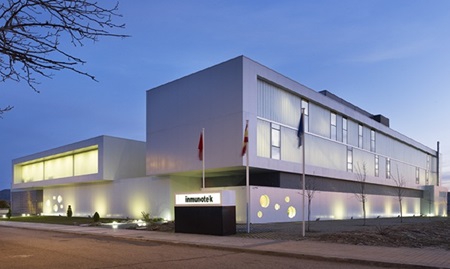
Image: Inmunotek facilities in Alcalá de Henares, Madrid
CDTI Innovación
The Centre for the Development of Industrial Technology and Innovation (CDTI E.P.E.) is the innovation agency of the Spanish Ministry of Science, Innovation and Universities, aimed at promoting technological innovation in the business sector. The CDTI’s mission is to ensure that Spain’s business ecosystem generates and transforms scientific and technical knowledge into globally competitive, sustainable, and inclusive growth. In 2025, under its 2024–2027 Strategic Plan, CDTI provided more than €2 billion in support to Spanish companies and startups.
More info:
Web: www.cdti.es
En Linkedin: https://www.linkedin.com/company/29815
En X: https://twitter.com/CDTI_innovacion
En Youtube: https://www.youtube.com/user/CDTIoficial

cloud technology axon
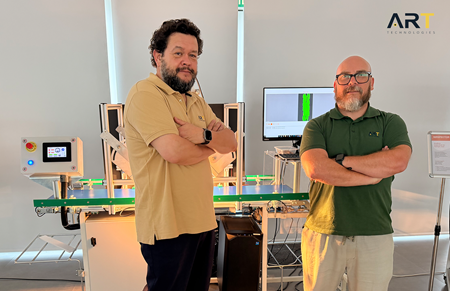
ART Technologies, a Valencia-based startup specializing in hyperspectr...