
As global private markets investors, we’re keenly aware of the differing perceptions of continuation vehicle, or “CV”, transactions.
While some have viewed the evolution of CVs to simply become another path to liquidity, others have flagged concerns with motivations, conflicts, and insufficient notice periods.
We have formed a core set of views regarding CVs over our decade plus of involvement in these transactions. Our enduring perspective is that CVs will continue to provide a much-needed solution for private markets investors.
At the same time, we continue to believe that GP-led transactions often represent the best risk/reward opportunities in secondaries.
There is a broad universe of GP-led transactions, but when properly selected, these deals often have clear visibility on growth-drivers, fewer information asymmetries and very strong alignment – effectively the recipe for attractive return upside with muted downside risk.
While still a nascent market, we are just beginning to see early results from the first wave of CV transactions. Evercore Private Capital Advisory recently published a report in collaboration with HEC to independently evaluate the performance of 140 CVs formed between 2018-2022. While it’s still quite early to draw any significant conclusions from a data set where the majority of the results reflect unrealized performance, the report nonetheless identifies one significant finding. When comparing a basket of single-asset CVs relative to buyout funds over the same period, the CV basket performs largely in line with the buyout funds, but with less return dispersion. Effectively, this result supports the conclusion that CVs provide desirable upside with less risk.
Benchmarking Continuation Funds1:

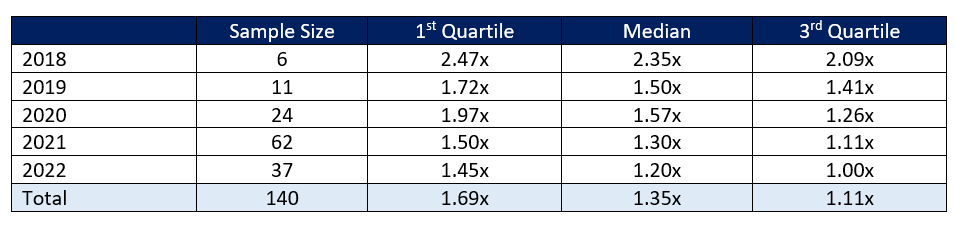
Our careful review of the data also resulted in another interesting conclusion. Median performance of the CVs in the sample provided is rather unremarkable. The risk/reward performance benefits of CVs are primarily observable in only the top quartile of CV transactions. This leads us to conclude that investing in CVs is not simply an allocation exercise — success is primarily driven by asset-selection.
Continuation Fund Performance Quartile by Vintage Year (Total Value to Paid-In or “TVPI”):3
Overall, however, this study and our own returns only fortified our views on GP-led transactions. If you are not active in CV investing, you may effectively be missing a very good part of the market.
What is the role of a GP Led secondaries fund in the portfolio of sophisticated investors
Success in the GP-led market requires deep relationships, a firm understanding of transaction complexities, a direct-investment like analytical approach – it’s much more than a pricing exercise.
But this is the segment of the market where alpha in secondaries is routinely created, and prudent investors in this market have been and will continue to be rewarded.
A well-executed strategy in GP-leds could deliver premium returns – more in line with direct strategies – yet with a substantially lower risk-profile, greater diversification and a shorter duration, and would thus be a nicely additive component to any investor’s portfolio.
1 Source: Evercore Private Capital Advisory – An Early Look at Continuation Fund Performance, March 2024.
2 Normalized Gini Coefficient is a measure of return dispersion, with a lower coefficient indicating a more even dispersion of returns across the sample universe.
3 Source: Evercore Private Capital Advisory – An Early Look at Continuation Fund Performance, March 2024.

cloud technology axon
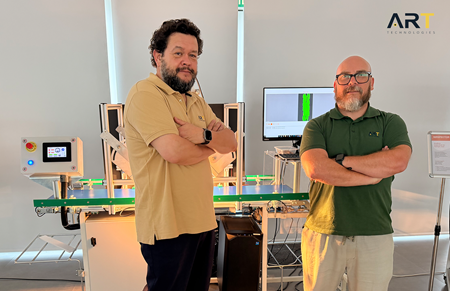
ART Technologies, a Valencia-based startup specializing in hyperspectr...