Seabed mining offers a unique US $20 trillion opportunity to extract critical minerals that are essential for batteries, electric vehicles (EVs), and other green technologies. This Viewpoint explores the economic potential and environmental impact of seabed mining as an alternative to traditional land-based mining, which faces challenges due to declining ore grades, stricter environmental regulations, and rising production costs.
By accessing higher-grade deposits with potentially lower environmental impacts, companies like The Metals Company (TMC), Global Sea Mineral Resources (GSR), and Deep Sea Mining Finance (DSMF) could diversify their resource portfolios and secure a stable supply of critical materials essential for the energy transition. Moreover, developing new subsea exploration and extraction technologies is vital for seabed mining. Remotely operated vehicles (ROVs), autonomous underwater vehicles (AUVs), subsea mining vehicles (SMVs), and pipeline lifting systems are just some of the technologies involved.
While seabed mining could provide significant opportunities, there are concerns about potential environmental impact, which is why many are urging caution. The International Seabed Authority (ISA) will play a central role in ensuring that a sufficiently robust regulatory framework is in place to establish and maintain responsible and sustainable seabed mining practices.
While traditional land-based mining is increasingly constrained by diminishing ore grades, stricter environmental regulations, and rising production costs, seabed deposits are staggeringly abundant and generally higher quality. Comparisons between global land reserves and known seabed reserves show that seabed deposits often exceed terrestrial ones (see Figure 1).


There are three types of deep-sea resources:

Recent innovations are making seabed mining increasingly feasible. Echo-sounding bathymetry, for example, uses sonar to enable detailed mapping and sampling of the seabed, providing high-resolution images for identifying resource-rich areas.
Underwater vehicles, designed to efficiently collect minerals while navigating obstacles on the seabed, are central to the economic development of any deposits. They require complex engineering, as they operate in deep-sea environments at depths around 6,000 meters, where pressures can be up to 60 MPa. There are three main types:
There are two primary methods of resource collection: mechanical collection uses specialized tools to rake up deposits, while hydraulic systems use powerful water jets to break up the deposits. Hydraulic systems are particularly effective where minerals are embedded in softer substrates (e.g., SMS deposits around hydrothermal vents).
Getting material from extreme depths to the surface remains a challenge. Pipeline lifting systems, consisting of riser pipes extending from the seafloor to a surface vessel, through which powerful pumps suck up material, are considered best. However, maintaining efficient flow rates when the pressure at 6,000 meters is over 0.6 tons per square cm is no simple task.
Ensuring the durability of equipment under high-pressure conditions is another critical issue. Innovations like corrosion-resistant alloys, high-strength composites, and real-time monitoring systems enhance the reliability and efficiency of these collection methods. Stronger, lighter materials, more efficient pumps, and improved sediment management techniques are essential for balancing economic gains with environmental protection.
The deployment of mechanical and hydraulic collection technologies includes strategies to mitigate environmental impact, such as sediment containment systems to minimize the dispersion of disturbed sediments, and precise, targeted extraction techniques to avoid unnecessary damage to surrounding habitats.
Inevitably, the scale and technical complexity of working in extreme deep-sea environments means the cost of such technology remains a significant barrier to widespread commercial adoption.
Collection vehicles cost $10-$20 million each. There are also major offshore expenditures; the support vessels needed to house equipment and personnel come in between $400-$600 million. On top of this, the riser and lifting systems needed to carry collected materials from seabed to surface cost an additional $200-$300 million.
Onshore costs are equally significant. Constructing a processing plant (greenfield) with the capacity to handle seabed materials can cost between $3-$4 billion. Investment in other advanced technologies needed for material preparation, high-temperature pretreatment, leaching, and metal separation can add $300-$500 million to the overall CAPEX.
Handling the unique demands of massive-scale bulk material movement of extracted materials to processing facilities is also expensive. Currently, intermediary storage facilities are being considered on Clipperton Island in the CCZ as an interim containment point. This would reduce the need for continuous long-distance transport directly from the seabed to land, making the process more efficient and cost-effective. However, specialized bulk carriers and support vessels equipped with advanced handling technologies would still be needed.
Consequently, the economic viability of seabed mining projects like TMC’s NORI-D and DSMF’s Solwara 1 hinges on balancing CAPEX, OPEX, and potential revenue streams, which are inherently complex due to the volatile nature of gross metal value. Unsurprisingly, business models often require innovative financial strategies involving a combination of equity, debt, and strategic partnerships to accommodate fluctuating metal prices and market demands.
Thanks to technological innovation, strategic partnerships, and sustainable practices, the seabed mining industry is becoming increasingly commercially viable (see Figure 3). Governments around the world are beginning to explore its potential:

By fostering innovation and forming strategic partnerships, the seabed mining industry is positioning itself as a key player in meeting the growing demand for essential minerals, while striving to balance economic gains with environmental protection. The Japan Oil, Gas and Metals National Corporation (JOGMEC), for example, is exploring the hydrothermal vent systems of the Okinawa Trough in partnership with Indonesia, the Philippines, and other Southeast Asian countries. These partnerships include profit-sharing agreements, investment in sustainable development projects, and commitments to environmental-monitoring efforts.
Through its Solwara 1 project, DSMF, in partnership with Papua New Guinea, targets SMS deposits rich in copper, gold, zinc, and silver in the Bismarck Sea. The Papua New Guinea government will receive royalties based on the value of the extracted minerals. DSMF has also agreed to invest in education and training to build local capacity and develop infrastructure.
While many are enthusiastic about the potential of seabed mining, it remains a contentious and complex issue given its potential impact on the environment. SMS deposits found around hydrothermal vents, for instance, are biologically rich ecosystems consisting of marine species unique to vents’ extreme conditions. Mining could have significant consequences in terms of disturbing the seabed and by creating large sediment plumes and releasing toxic substances from deposits. Similarly, cobalt-rich crusts support diverse marine life, including corals, sponges, and fish.
Life in the dark depths of abyssal plains, like the CCZ, may not be as abundant as in rainforests. However, the discovery of 5,000 new species in the CCZ in 2023 alone underscores the ecological significance of such habitats; even at 4,000-6,000 meters down, there are environmental implications from removing nodules from the seabed. Mining these substrates impacts these habitats by creating sediment plumes that smother marine life, though to a lesser extent than with SMS. Therefore, seabed mining comes with a trade-off between accessing an abundant resource that could usher in a new golden age of renewable energy technology and addressing important environmental considerations.
Volvo, Volkswagen, BMW, Google, Patagonia, Philips, Samsung SDI, and Scania are among the companies that say they will not use deep-sea-mined metals until the environmental risks are “comprehensively understood.” In contrast, Tesla shareholders have voted against a moratorium on sourcing minerals from deep-sea mining.
Thus, seabed mining holds the potential to revolutionize resource extraction, but stringent regulation is essential to prevent unregulated exploitation. For seabed mining to become an accepted mainstream industry, there must be strong emphasis on the ethical management of ecosystems, with con

cloud technology axon
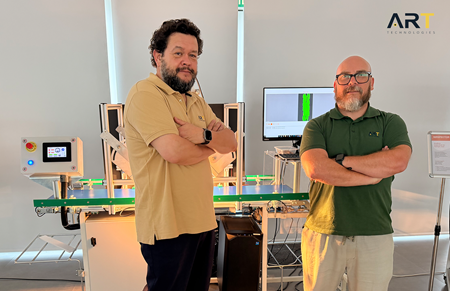
ART Technologies, a Valencia-based startup specializing in hyperspectr...