Interview with Ricardo de la Torre, CEO and Co-founder of 60Nd: “CDTI Innovación Helps Us Drive NeoMag, a Platform to Simulate Diseases and Improve Drug Development”
As biomedical research undergoes a profound transformation, the challenge is no longer just testing new compounds, but doing so in models that more closely replicate the human body. Supported by CDTI Innovación through the NEOTEC programme, Madrid-based spin-off 60Nd is advancing NeoMag, a magneto-mechanical platform designed to simulate pathological processes and enhance drug development.
Biomedical research is increasingly moving toward models capable of reproducing more accurately what happens inside the human body. For decades, much of preclinical testing has been carried out in static environments that differ significantly from the real conditions in which cells live, behave, and develop disease. Human tissues, however, are not static systems: the heart beats, the lungs expand, blood flows under pressure, skin stretches, and muscles contract.
This is the field in which 60Nd, a spin-off from the Universidad Carlos III de Madrid (UC3M) based at the UC3M Science Park in Leganés, operates. The company develops technology capable of inducing mechanical activation in cells through magneto-responsive materials. Its goal is to unlock new possibilities in mechanobiology and mechanomedicine, disciplines that study how physical forces influence cellular behaviour and disease progression.
With support from CDTI Innovation through the NEOTEC programme, the company is developing NeoMag, a magneto-mechanical platform designed to simulate pathological processes in biological systems. The technology enables researchers to apply mechanical forces to cells in a dynamic, reversible, remote, and non-invasive manner, creating in vitro models that better replicate the conditions found in human tissues.
According to Ricardo de la Torre, CEO and co-founder of 60Nd, the company was created “with a very specific mission”: to make available to the pharmaceutical industry a disruptive technology developed at UC3M that allows diseases to be studied while incorporating the mechanical dimension, “something that until now was practically inaccessible outside a handful of highly specialised academic groups.”
Bringing Research Closer to Human Physiology
The development of new drugs remains a lengthy, expensive process with high failure rates, particularly as compounds progress into clinical phases. For 60Nd, part of the problem lies in the limitations of traditional preclinical models, which often fail to reproduce accurately the environment in which cells exist inside the body.
“In vitro biology has traditionally been studied under static conditions, on rigid plastic plates, in environments that bear little resemblance to the real human body,” explains De la Torre. To address this limitation, the company advocates incorporating a variable that has long been difficult to control in laboratory settings: the mechanical dimension.
Cells do not respond solely to chemical signals. They also perceive the stiffness, tension, movement, and deformation of their surroundings. This phenomenon, known as mechanotransduction, plays a role in a wide range of biological and pathological processes, from tumour progression and cardiac or pulmonary fibrosis to wound healing and tissue ageing.
For the CEO of 60Nd, overlooking this component means seeing only part of the picture. “If we study a disease while ignoring its mechanical component, we are only looking at part of the problem,” he says. “One of the reasons why many drugs work in the lab but later fail in clinical trials is that the mechanical environment in which they are tested does not resemble that of real tissue.”
Mechanomedicine aims precisely to bridge this gap by understanding how mechanical forces influence biological processes and leveraging that knowledge to develop new therapies, diagnostic tools, and research models.
NeoMag: A Platform for Simulating Pathological Processes
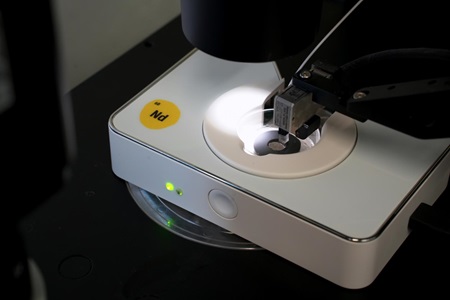
NeoMag was created to address this need. The platform combines three core elements: a device capable of generating controlled magnetic fields with five degrees of freedom; intelligent biocompatible cell-culture substrates embedded with magnetic particles; and software based on computational physical models and artificial intelligence, designed to create experimental protocols and analyse results.
As De la Torre explains: “The simplest way to describe it is that researchers place their cells on one of 60Nd’s substrates, insert it into the device, and the platform applies the mechanical forces defined for the experiment. All of this is done without touching the cells, in a reversible and reproducible manner.”
This enables NeoMag to simulate phenomena such as heartbeats, lung expansion, tumour stiffness, and skin deformation.
One of the technology’s key advantages is its compatibility with standard microscopes and equipment already available in many laboratories. This feature is particularly important for facilitating adoption by research centres, pharmaceutical companies, and biomedical instrumentation manufacturers.
The platform can be applied across multiple therapeutic and research areas. In oncology, 60Nd investigates how deformation patterns within the tumour microenvironment affect cell migration and chemotherapy response. In cardiac, pulmonary, and liver fibrosis, the system transmits forces associated with tissue remodelling. In dermatology and cosmetics, it reproduces deformations linked to wound healing, ageing, and fibroblast activity. In neurology, the company has worked with astrocytes subjected to deformations that mimic conditions associated with stroke and traumatic brain injury.
New Opportunities for Drug Development
NeoMag’s greatest potential impact lies in the development of new drugs and therapies. The platform can improve the predictive quality of preclinical studies by allowing compounds to be tested in in vitro models that more accurately reproduce the mechanical conditions of living tissues.
Furthermore, NeoMag enables the screening of drugs targeting mechanosensitive pathways. As interest grows in force-regulated channels and signalling pathways, researchers need tools capable of testing compounds under mechanically relevant conditions.
“More and more therapeutic programmes are targeting channels and pathways modulated by force,” says De la Torre. “NeoMag allows these compounds to be studied in an environment that standard tools cannot provide.”
The technology also supports the gradual replacement of animal models by offering more physiologically relevant in vitro systems. In addition, through its contribution to biomedical research and technological innovation, the project aligns with the United Nations Sustainable Development Goals (SDGs), particularly SDG 3 (Good Health and Well-being) and SDG 9 (Industry, Innovation and Infrastructure).
Contact-Free Technology Compatible with Existing Laboratory Infrastructure
One of NeoMag’s defining features is its ability to apply mechanical forces without direct physical contact with the sample. Many existing systems deform samples using clamps or mechanical actuators, which can restrict deformation modes, damage biological material, or complicate integration with live-imaging techniques. By contrast, 60Nd uses magnetic fields to act remotely.
The platform’s versatility is another differentiating factor. Its five degrees of freedom enable the generation of complex, dynamic, and reversible deformation patterns, including rotational movements beyond simple stretching. Compatibility with standard upright and inverted microscopy systems, as well as nanoindentation and advanced imaging equipment, further enhances its applicability in existing research environments.
The company also highlights the importance of the software layer, which transforms the device into a comprehensive platform. Computational modelling and artificial intelligence capabilities support both experimental design and data analysis, adding significant value beyond that of a purely instrumental system.
Portability is another key advantage. NeoMag fits in the palm of a hand and can be placed directly inside a cell incubator, allowing physiological culture conditions to be maintained throughout the experiment.
For De la Torre, this combination of contact-free operation, versatility, compatibility, integrated software, and portability clearly differentiates NeoMag from competing solutions: “Today, there is no other commercial product that combines all five of these elements.”
NEOTEC Support at a Critical Stage
60Nd is built on technology developed within the research environment of Universidad Carlos III de Madrid and protected through patent applications in Europe and the United States, exclusively licensed to the company.
The challenge now is to transform this scientific foundation into an industrialisable, scalable, and market-oriented product.
In this process, support from CDTI Innovation through the NEOTEC programme has been instrumental.
“It came at a crucial moment, when we had a technology validated in academia but not yet an industrialisable product,” says De la Torre.
The funding has enabled the company to scale production of consumable substrates, redesign hardware with manufacturing requirements in mind, and strengthen the team. It has also provided valuable credibility with customers, partners, and investors.
“Without NEOTEC, our timeline would be very different and significantly slower,” he adds.
Towards Becoming a European Reference in Mechanomedicine
The reception of NeoMag confirms the growing interest in mechanomedicine across both research and industry. 60Nd has secured letters of support and pilot collaborations with institutions including the University of California San Francisco, Imperial College London, University College London, and the Institute of Nanoscience and Materials of Aragon, while maintaining relationships with leading international research groups and companies in the pharmaceutical and scientific instrumentation sectors.
According to De la Torre, the message from the market is clear: “There is a real gap in the market, and NeoMag is the first tool to address it comprehensively.”
In the short term, the company is focused on delivering its EIC Transition project, advancing the product toward commercial readiness, securing its first industrial customers, and expanding its team.
Over the medium term, 60Nd aims to establish a stable commercial presence in Europe and the United States, broaden its patent portfolio, and help position mechanobiology as a standard preclinical research tool, while maintaining the DNA of “a young European company with strong scientific credentials.”
Through NEOTEC support, CDTI Innovation is helping bring a university-born, science-based technology closer to market, with the potential to drive the next generation of tools for biomedical research.
About CDTI Innovación
The Centre for the Development of Technology and Innovation (CDTI E.P.E.) is the innovation agency of Spain’s Ministry of Science, Innovation and Universities. Its mission is to promote technological innovation within the business sector and help Spanish companies transform scientific and technological knowledge into globally competitive, sustainable, and inclusive growth.
In 2025, within the framework of its 2024–2027 Strategic Plan, CDTI provided €2.423 billion in support to Spanish companies and startups
More info:
Web: www.cdti.es
En Linkedin: https://www.linkedin.com/company/29815
En X: https://twitter.com/CDTI_innovacion
En Youtube: https://www.youtube.com/user/CDTIoficial

cloud technology axon

Addleshaw Goddard (AG), the London-headquartered international law fir...