Interview with Jesús Prada, CEO and co-founder of HORUS ML: “CDTI Innovación helps us develop AI to anticipate cardiovascular risk through medical imaging and remote monitoring”
Early disease detection and improved patient monitoring are two of the major challenges in cardiovascular care. To address them, HORUS ML develops artificial intelligence-based solutions that analyse retinal images to improve early detection of cardiovascular diseases and support the monitoring of chronic patients.
Cardiovascular diseases remain one of the major challenges for healthcare systems. Their impact is measured not only in mortality rates but also in the difficulty of detecting conditions that can progress silently over many years before suddenly manifesting as a heart attack or stroke.
This is the context in which HORUS ML operates, a company founded in Madrid in 2022 that develops customised artificial intelligence and machine learning solutions for the healthcare sector. The company was created with a clear mission: to bring the real potential of AI into clinical practice.
According to Jesús Prada, CEO and co-founder of HORUS ML, the team identified from the outset a gap between advances in machine learning and their effective application in hospitals and healthcare systems. “Hospitals generate enormous amounts of data, but they lack specialised partners capable of turning that information into useful tools for diagnosis, treatment and patient monitoring,” he explains.
For this reason, HORUS ML is not positioned as a single-product company, but as a centralised technology platform integrating three main verticals: medical imaging diagnostics, precision medicine, and remote patient monitoring. This approach combines AI technology specialists with healthcare professionals with clinical experience, including practicing cardiologists. “AI in healthcare only works when technological expertise is combined with clinical insight,” Prada stresses.
From early diagnosis to continuous monitoring
HORUS ML addresses two key stages in the cardiovascular disease pathway. The first is early detection, particularly of conditions such as subclinical atherosclerosis, which can progress for years without symptoms. Prada summarises the issue with a striking figure: approximately half of heart attacks occur in individuals classified as low-risk by traditional scoring systems. “There is a huge group of patients who are already sick and whom the system is not seeing,” he explains.
To address this limitation, the company has developed an AI-based imaging diagnostics line aimed at identifying atherosclerosis risk—the main cause of cardiovascular disease—using simple, accessible tests that can be integrated into primary care workflows.
The second stage is the follow-up of patients already suffering from cardiovascular disease, especially those with chronic heart failure. In these cases, the challenge is not only diagnosis but also anticipating decompensations that can develop rapidly and lead to hospitalisation. Instead of a traditional model based on periodic in-person visits, HORUS ML works on remote monitoring that enables a shift from reactive to continuous and proactive care. “What connects both lines is a single idea: moving from reactive medicine, which acts once the damage is already done, to preventive and proactive medicine,” he says.
The retina as a window into the vascular system
One of the most advanced areas of the project is based on retinal image analysis. Retinal imaging is a photograph of the back of the eye that can be obtained in just a few seconds, without pupil dilation and without discomfort for the patient.
The key insight is that the retina is the only place in the body where blood vessels can be directly observed through a simple image. For this reason, HORUS ML sees it as a highly promising way to detect signals related to vascular health. “The retina is literally a window into the vascular system,” Prada explains.
These images can reveal subtle patterns associated with atherosclerosis, such as changes in vessel calibre or alterations in microvascularisation. These are signals difficult for the human eye to detect but identifiable by AI models trained on thousands of images.
HORUS ML’s approach leverages the widespread availability of non-mydriatic retinal cameras to turn a fast, low-cost and non-invasive test into atherosclerosis screening tool. After the image is taken, it is automatically processed and within less than ten seconds the healthcare professional receives an atherosclerosis risk assessment to support clinical decision-making.
Beyond accuracy, the company emphasises integration with electronic health records and hospital information systems. “A tool that does not integrate into the real clinical workflow, no matter how accurate it is, ends up not being used,” Prada notes.
The system also includes an explainability module that highlights the areas of the image that most influenced the prediction, allowing physicians to validate the results against their clinical judgement. If high risk is detected, the patient may be referred for a vascular ultrasound, which remains the reference test for confirmation.
Remote monitoring for chronic patients
In addition to imaging diagnostics, HORUS ML is developing a remote monitoring solution for patients with heart failure based on generative AI. Through natural language phone calls, the system regularly checks on the patient, collects health information, and analyses potential signs of deterioration.
Based on this data, a predictive model estimates the risk of decompensation and, if warning signs are detected, generates an alert for the medical team. “It is not just about speaking with the patient, but about anticipating the problem and alerting in time so that intervention can be preventive,” Prada explains.
The goal is to improve quality of life and patient autonomy, reduce avoidable hospitalisations, and enable more continuous and proactive care.
Institutional support to reach clinical practice
Support from CDTI Innovación through the NEOTEC programme has been key to the development of the technology and the consolidation of HORUS ML. “This support has been one of the pillars that made this project possible as it exists today,” Prada notes.
According to him, funding has allowed the company to address complex processes such as clinical validation and regulatory requirements without compromising high-impact innovation. In addition, backing from a specialised public institution has strengthened the project’s credibility among hospitals, institutions and investors.
Overall, Prada believes that CDTI has not only funded a specific development but has helped consolidate HORUS ML as a company. “They are a fundamental lever for ensuring that innovation born in small companies can truly reach real-world impact,” he says.
Towards a more preventive, accessible and equitable medicine
Looking ahead, the company defines three strategic horizons. The first is to make its atherosclerosis screening tool, Aitheroscope, a standard solution in Spanish primary care, as common as cholesterol tests or blood pressure measurements.
The second is to establish HORUS ML as a reference in artificial intelligence applied to cardiovascular diseases.
The third is to fully develop an integrated platform that, through a single integration into healthcare systems, provides access to multiple AI healthcare tools, reducing technological fragmentation and easing adoption by healthcare providers.
The project is aligned with the Sustainable Development Goals, particularly SDG 3 (health and well-being), SDG 5 (gender equality), by helping address historical underdiagnosis in women through validated screening tools, and SDG 9 (industry, innovation and infrastructure), due to its focus on high-impact healthcare innovation.
Beyond technology, Prada emphasises the ultimate goal: contributing to a more preventive, accessible and equitable healthcare system. “If in a few years we have helped many people avoid a serious cardiovascular event they would otherwise have suffered, we will have achieved what truly drives us,” he concludes.
About CDTI Innovación
The Centre for the Development of Industrial Technology and Innovation (CDTI E.P.E.) is the Spanish Government’s innovation agency under the Ministry of Science, Innovation and Universities. Its mission is to promote technological innovation in the business sector, helping Spanish companies transform scientific and technical knowledge into globally competitive, sustainable and inclusive growth. In 2025, under its 2024–2027 Strategic Plan, CDTI provided €2.423 billion in support to Spanish companies and startups.
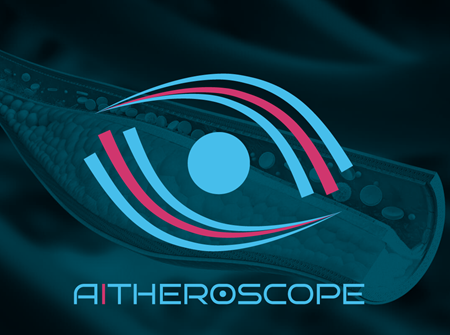
Photo: Aitheroscope: An AI-powered atherosclerosis screening tool

cloud technology axon
Through the MEDYTHER AI project, technology company Natshell is leadin...