Interview with Concepción González, CEO of Natshell and Medical Director of Medyther: "We Use AI to Measure Pain and Transform the Diagnosis of Mild Musculoskeletal Injuries with Support from CDTI Innovación and the European MRR Funds"
Through the MEDYTHER AI project, technology company Natshell is leading the development of a digital platform designed to transform the way physicians and insurers assess injured patients. Backed by CDTI Innovación and the European Recovery and Resilience Facility (MRR), the initiative combines Advanced Medical Thermography (AMT) with specialized neural networks to objectively, rapidly, and accurately assess mild musculoskeletal injuries and quantify the pain they cause.
As digital health continues to reshape healthcare delivery, non-invasive technologies capable of revealing what is happening inside the patient's body are becoming increasingly important. Natshell is driving this transformation by turning conventional thermal imaging cameras into high-precision medical diagnostic tools.
"Our goal is to teach a computer system to interpret thermal radiation images just as an expert physician would, providing objective data where previously we relied solely on the patient's own description of pain," explains Concepción González, CEO of Natshell and Medical Director of Medyther.
The Challenge of Measuring Pain
Natshell was founded to address one of healthcare's most persistent challenges: objectively measuring pain associated with muscle injuries and mild sprains. Following trauma, pain is often the only visible symptom, making it difficult for physicians and insurance assessors to accurately determine the severity of an injury.
Traditional diagnostic tools such as X-rays and MRI scans are designed to identify fractures and major structural damage, but they cannot quantify pain or detect functional changes associated with minor injuries. For this reason, the company chose to develop medical thermography as a complementary technique capable of providing objective information about tissue condition by analyzing variations in body temperature.
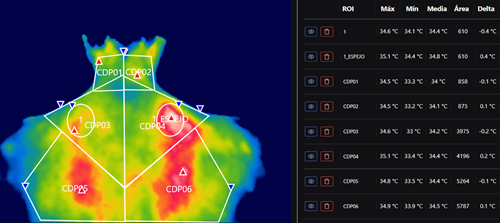
To achieve this, Natshell has developed a standardized imaging protocol with precise patient positioning and detailed anatomical mapping to analyze thermal variations across the skin.
"This advancement transforms infrared imaging into a genuine scientific tool that supports physicians with objective clinical information," says Dr. González.
Artificial Intelligence for More Accurate Diagnosis
Traditionally, interpreting thermal images depended entirely on the physician's expertise and visual assessment. MEDYTHER AI automates this process using advanced deep learning techniques and neural networks specifically trained for medical image analysis.
The system has been trained on thousands of real clinical cases to automatically identify affected areas, compare them with healthy anatomical patterns, and detect subtle temperature variations that would be imperceptible to the human eye. It also automatically compensates for distortions caused by environmental conditions or minor patient movements during image acquisition.
This level of precision is particularly valuable for detecting and classifying specific pathologies where accurately locating and measuring localized inflammatory responses is essential for diagnosis. The platform processes these thermal patterns in real time and delivers precise quantitative data on skin and muscle condition, becoming a powerful clinical decision-support tool for healthcare professionals managing treatment decisions, sick leave, and personal injury assessments.
Practical Benefits for Patients and Healthcare Providers
The technology enables hospitals, occupational health providers, and insurance companies to make decisions based on objective clinical evidence. Its primary applications include sprains, muscle injuries, and spinal pain resulting from road traffic or workplace accidents.
"Although these injuries are generally considered clinically minor, they account for a very large number of medical consultations, temporary disability claims, and associated healthcare costs," explains González.
MEDYTHER AI clearly visualizes the progression of inflamed tissues, helping clinicians design more effective treatment plans, accurately determine recovery timelines, and make evidence-based decisions regarding return to work.
"Its integration into clinical workflows can reduce waiting times, optimize the use of diagnostic testing, and improve clinical prioritization. Ultimately, it supports a more efficient and personalized healthcare model while helping relieve pressure on specialties such as rehabilitation and traumatology. Because it is completely harmless and radiation-free, it is also particularly well suited for use in pediatrics and obstetrics," she adds.
The initiative also aligns with the United Nations 2030 Agenda for Sustainable Development. By enabling safer diagnosis without ionizing radiation, it contributes to SDG 3 (Good Health and Well-being). Its application of artificial intelligence in healthcare advances SDG 9 (Industry, Innovation and Infrastructure), while reducing unnecessary diagnostic procedures and improving the efficiency of hospital resources supports SDG 12 (Responsible Consumption and Production).
Driving Innovation with CDTI Innovation and European MRR Funding
The MEDYTHER AI project has been made possible through funding from the European Recovery and Resilience Facility (MRR) administered by CDTI Innovation.
According to González, this public support has been instrumental.
"Thanks to this funding, we have been able to develop technology specifically designed for medical thermography instead of adapting existing generic artificial intelligence tools."
She adds that the investment "has enabled us to create proprietary technology that responds to the real needs of healthcare providers, helping our company grow while delivering innovative solutions to the healthcare sector."
Towards More Efficient, Pain-Informed Healthcare
Looking ahead, MEDYTHER AI aims to establish itself as a key tool in the diagnosis and management of mild musculoskeletal injuries. By delivering faster and more accurate assessments, the platform provides measurable clinical evidence to support decisions regarding recovery, medical discharge, and long-term outcomes. It is also expected to reduce unnecessary high-cost diagnostic tests, optimize rehabilitation programs, and identify patients at risk of developing chronic pain at an earlier stage.
For González, Natshell's future lies in advancing precision medicine through non-invasive, safe, and functional technologies.
"We believe solutions like ours will become part of the next generation of digital health tools, complementing healthcare professionals' expertise while improving the quality of patient care," she concludes.
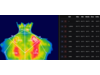
Image caption: Thermal analysis generated by the MEDYTHER AI platform to identify areas of inflammation.
About CDTI Innovation
CDTI Innovation (Centre for the Development of Technology and Innovation) is the innovation agency of Spain's Ministry of Science, Innovation and Universities. Its mission is to promote technological innovation within the business sector by helping Spanish companies transform scientific and technological knowledge into globally competitive, sustainable, and inclusive growth. In 2025, under its 2024–2027 Strategic Plan, CDTI provided €2.423 billion in funding and support to Spanish companies and startups.
More info:
web: www.cdti.es
En Linkedin: https://www.linkedin.com/company/29815
En X: https://twitter.com/CDTI_innovacion
En Youtube: https://www.youtube.com/user/CDTIoficial

cloud technology axon
Through the MEDYTHER AI project, technology company Natshell is leadin...