Interview with Carlos Lucea Villanueva, Technical Director of Viveros Villanueva: “The support of CDTI Innovación has been essential to tackle our R&D&I projects and consolidate innovation in the wine sector”
With more than a hundred years of history and a strong innovative vocation, Viveros Villanueva has successfully combined tradition and science to respond to the challenges of the wine sector. Since 2008, the support of CDTI Innovación has been part of the DNA of a company committed to more sustainable viticulture from the very beginning.
Talking about Viveros Villanueva Vides means tracing over a century of history inseparably linked to European viticulture. The family-owned company, now run by the fourth generation, dates back to one of the most decisive episodes for vineyards worldwide: the crisis caused by phylloxera at the end of the 19th century.
As explained by the company’s technical director, Carlos Lucea Villanueva: “The nursery sector emerged after the appearance of a pest from America, phylloxera, which led to the disappearance of almost the entire European vineyard.” The response to that crisis marked a turning point for viticulture as a whole: the introduction of resistant American vines as rootstocks onto which European Vitis vinifera could be grafted.
Since then, the mission of Viveros Villanueva has remained essentially unchanged, although deeply adapted to the new needs of the sector. “Since the company was founded, our goal has been to provide wineries and winegrowers with the best vine plants so they can develop productive, healthy, and long-lasting vineyards,” states the technical director. A responsibility that, as he points out, is assumed with a long-term vision: “A vineyard must be in perfect condition for 40 years or more.”
The evolution of the nursery sector has been profound over recent decades. In its early days, nurseries supplied rooted cuttings that growers themselves later grafted in the field—a complex task that was not always successful. “Initially, what was produced were rooted cuttings that farmers grafted themselves in their plots,” explains Lucea Villanueva.
Over time, Viveros Villanueva committed to technical specialization and the professionalization of workshop grafting, offering the market plants that were already grafted and consolidated. “Offering plants grafted in the nursery saves the sector a demanding, labor-intensive task that is not always effective,” notes the technical director, highlighting the impact this change has had on the final quality of vineyards.
This transformation has not only improved process efficiency but has also raised standards of phytosanitary control, homogeneity, and varietal adaptation. Today, the company supports its clients from the very early stages of each project. “Our role is not only to produce plants, but also to advise beforehand in order to offer the solution that best suits each climatic area and the winegrower’s objectives,” he explains.
Thanks to this sustained commitment to specialization, Viveros Villanueva produces millions of plants each year and is present in virtually all Spanish denominations of origin, as well as within an internationalization project. According to its technical director, this leadership is explained by a combination of long-standing factors: “The key lies in continuous effort, specialization, and passionate dedication to what you do.” Added to this is a distinctive element that forms part of the company’s DNA: “Closeness and trust with the customer—a family-style relationship that is part of our identity.”
Alongside this specialization process, innovation has taken on an increasingly strategic role within the company. This commitment to R&D&I is not recent. Since 2008, Viveros Villanueva has continuously developed research projects with the support of CDTI Innovación, integrating innovation as a key tool to anticipate sector challenges.
“When we started working on innovation projects, CDTI provided a fundamental boost to keep moving forward,” explains Lucea Villanueva. Beyond financial backing, the technical director highlights the rigor of the technical evaluation of projects and the ongoing support received—factors that have enabled the company to take on technological risks and engage in long-term research.
“This long-standing collaboration has been key to consolidating a solid and coherent innovation strategy in which areas such as genetic variability, phytosanitary improvement of plant material, and vine physiology have progressively gained importance,” he states.
In a context marked by the need to improve the efficiency and sustainability of grafted plant production, FISIOVID emerges as an ambitious research project that places vine physiology at the heart of the production process. “FISIOVID is based on studying vine physiology, on acquiring more knowledge about the plant’s internal behavior,” explains the technical director.
The project focuses on two key processes for the viability of grafted plants: callogenesis, responsible for the proper union between rootstock and variety, and rhizogenesis, linked to the development of the root system. “These are the two most important processes in the production of grafted plants,” he emphasizes.
One of the major challenges in the nursery sector is the high percentage of grafts that fail to consolidate properly, even when synthetic hormones are used. “Even using current products, there is a very high percentage of grafts that do not thrive,” he acknowledges.
FISIOVID therefore addresses this issue from an innovative perspective, focusing on natural alternatives and bioproducts.
Replacing synthetic hormones with natural solutions responds not only to technical criteria but also to strategic and regulatory considerations. “Legislation is clearly pointing towards a reduction in synthetic chemical substances,” notes Lucea Villanueva.
“The greatest advantage of this approach is being able to offer the organic vineyard market a plant that is organic from the very beginning and completes the cycle,” he states. However, the path has not been easy. “There are no specific hormones or bioproducts for vines, which has forced us to carry out numerous tests and trials,” he explains.
This pioneering nature has turned FISIOVID into a project of continuous learning. “Being a pioneer means facing a knowledge gap and constantly overcoming obstacles,” summarizes the technical director.
The development of FISIOVID is supported by close collaboration with the scientific system, specifically with NEIKER (Basque Institute for Agricultural Research and Development) and the research services of the University of the Basque Country.
“This project would not be possible without the support of entities such as NEIKER, which has extensive experience in plant physiology and whose contribution has been key to its development,” explains Lucea Villanueva, underlining the strategic value of public–private collaboration.
Thanks to this synergy, the project is approached from a multidisciplinary perspective that combines basic research and academic knowledge with direct application in the nursery, facilitating the transfer of results to the production process.
In this regard, FISIOVID aims to offer the wine sector a real and viable alternative for producing vine plants of the highest physiological and environmental quality. “Our goal is to provide the sector with a more sustainable and ecological alternative in vine plant production,” summarizes the technical director.
Looking beyond the project itself, innovation is also expected to extend to infrastructure. The company is already working on a project for new, more modern, and sustainable facilities. “We are going to start building facilities equipped with the latest technology, where we will apply the knowledge gained through FISIOVID,” he explains.
Thus, with the incorporation of renewable energy, more advanced laboratories, and greater efficiency in stratification chambers, Viveros Villanueva reinforces its commitment to sustainable viticulture from its very first link in the value chain.
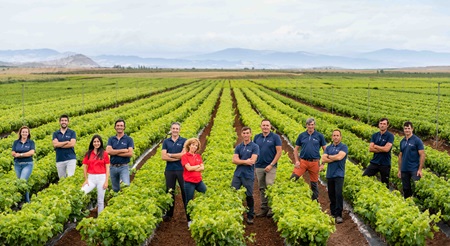
Image: Viveros Villanueva team, where family tradition, technical knowledge, and innovation are placed at the service of the vineyard.
The Centre for the Development of Technology and Innovation (CDTI E.P.E.) is the innovation agency of Spain’s Ministry of Science, Innovation and Universities. Its objective is to promote technological innovation within the business sector. CDTI’s mission is to ensure that the Spanish business fabric generates and transforms scientific and technical knowledge into globally competitive, sustainable, and inclusive growth. In 2024, within the framework of a new strategic plan, CDTI provided more than €2.3 billion in support to Spanish companies and startups
Web: www.cdti.es
Linkedin: https://www.linkedin.com/company/29815
X: https://twitter.com/CDTI_innovacion
Youtube: https://www.youtube.com/user/CDTIoficial

cloud technology axon

Addleshaw Goddard (AG), the London-headquartered international law fir...