Interview with Bruno Domínguez, CEO of COOLX Earth: “CDTI Innovación Helps Us Bring Satellite Observation and AI to the Fight Against Deforestation”
With support from CDTI Innovación through the NEOTEC programme, the Málaga-based startup is developing a platform that enables companies to verify the origin of their raw materials and comply with the EU Deforestation Regulation (EUDR).
Deforestation is one of the major environmental challenges linked to global supply chains. For commodities such as coffee, cocoa, and soy, knowing the true origin of products has become an environmental, business, and regulatory priority.
It is in this context that COOLX Earth was founded in Málaga in 2022 to address a gap its founders identified in the market: the difficulty many companies face in determining where their raw materials actually come from. As Bruno Domínguez, CEO of COOLX Earth, explains, “When we studied how companies were tackling the issue, we found something paradoxical: none of them were truly able to trace the real origin of what they were selling.”
This challenge has been compounded by the introduction of the European Union Deforestation Regulation (EUDR), which has accelerated the need for georeferenced information, traceable documentation, and reliable verification systems. For COOLX Earth, this new regulatory landscape makes sustainability a decisive factor throughout the value chain. “We founded COOLX when we saw three key elements converging: an urgent environmental problem, regulation backed by real sanctions, and the absence of comprehensive solutions on the market,” says Domínguez.
A Project to Turn Complex Data into Verifiable Decisions
To address this challenge, and with the support of CDTI Innovación through the NEOTEC programme, COOLX Earth is developing a technology platform based on satellite observation, artificial intelligence, and blockchain. Its goal is to help companies affected by the EUDR verify the origin of their raw materials and assess potential deforestation risks within their supply chains.
The solution is structured around three areas of work: detecting land-use changes, accurately mapping source farms, and ensuring data traceability throughout the supply chain. In this way, advanced technologies such as Earth observation and data analytics are translated into a practical market application, where sustainability must be demonstrated through reliable information.
At a time marked by the upcoming mandatory implementation of the regulation, NEOTEC’s support has been instrumental in accelerating the platform’s development. As Domínguez explains, “This support allows us to pursue our three technical objectives at a pace that otherwise would have required an additional 18 to 24 months.”
In this regard, CDTI Innovación contributes to driving high-risk, high-potential technological development, aligned with its mission to promote business innovation and facilitate the transformation of scientific and technical knowledge into competitive, sustainable solutions with international growth potential.
Technology to Make Sustainability Verifiable
Beyond its technological component, the project is naturally aligned with several Sustainable Development Goals (SDGs). This alignment takes shape through a technology designed to verify the origin and environmental impact of supply chains using reliable data. The proposal therefore combines business competitiveness, sustainability, and measurable impact.
The challenge, however, is not purely technological. It is also linked to the characteristics of the crops themselves. In the case of coffee and cocoa, many farms are small, located in tropical regions with high cloud cover, and often operate under agroforestry systems that can visually resemble natural forests.
As Domínguez explains, “Coffee and cocoa are the two commodities where the EUDR challenge reaches its highest level of technical and commercial complexity.”
To address this complexity, the company combines multiple sources of space-based information to build a more accurate picture of the land and identify changes that might go unnoticed through conventional methods. According to the CEO, the key difference lies in the ability to detect highly specific changes in complex environments: “There is a huge difference between detecting large-scale logging in the Amazon and detecting the conversion of 1.5 hectares of forest into a coffee plantation on a cloud-covered hillside in Antioquia.”
This analytical capability enables the assessment of large areas and thousands of farms in a fraction of the time required by traditional methods—a particularly significant advantage for supply chains involving thousands of producers. As Domínguez summarizes, “A field team working manually would have needed years.”
Knowing the Exact Origin of Raw Materials
To make such verification possible, one of the project’s most significant developments is the automatic delineation of source farms. The EUDR requires more than identifying an approximate production area; it demands the precise identification of each farm. In fragmented agricultural supply chains involving thousands of smallholders and limited digital cadastral information, this requirement can become a major barrier to accessing the European market.
COOLX Earth aims to reduce that barrier through a technology capable of automatically generating a farm’s boundary from a single point provided by the producer or a field agent. The starting point is particularly challenging because, as Domínguez points out, “Most coffee, cocoa, soy, and palm farms in producing countries do not have digital cadastral records.”
This solution is especially important to ensure that the regulatory transition does not exclude small producers. If verification depends on costly manual processes, only large corporations will be able to comply with regulatory requirements easily. In the CEO’s words, “Without automatic polygon generation, the EUDR becomes a regulation that only large corporations can realistically comply with.”
Alongside deforestation detection and farm delineation, the project incorporates traceability tools designed to guarantee data reliability throughout the supply chain. In a context where sustainability must be demonstrable, access to verifiable information becomes a strategic asset for companies. Domínguez illustrates this with a concrete example: “Thanks to this initiative, a European company goes from knowing nothing about the origin of its coffee to having, within a single software platform, the polygon of every farm, historical satellite analysis dating back to 2020, automated socio-legal assessments, and a Due Diligence Statement ready for submission.”
Climate Innovation with International Ambition
The support received has also strengthened COOLX Earth’s positioning in an environment where trust and technological validation are particularly important. For a startup operating at the intersection of regulation, sustainability, and advanced technologies, such validation has a direct impact on its growth potential. “CDTI Innovación acts as a quality seal: it opens doors to corporate clients, strategic partners, and private investors,” highlights the CEO.
Building on this foundation, the company has already established agreements and collaborations with organizations such as AENOR, the European Space Agency, the European Coffee Federation, and EUSPA, reinforcing the international outlook of a technology developed in Spain to address a global challenge.
Although the initial use case focuses on the EUDR and commodities such as coffee and cocoa, the technology has the potential to expand into other sectors and applications related to food traceability, sustainability due diligence, and precision agriculture.
Looking ahead, COOLX Earth aims to consolidate its presence in Spain and Latin America before expanding into other European markets. Domínguez believes Spain can play a significant role in this field if it leverages its strengths in Earth observation, artificial intelligence, and technology entrepreneurship. In this journey, he considers institutional support to be essential: “The role of institutions such as CDTI is precisely this: to level the playing field so that startups like COOLX can scale across Europe from a Spanish base,” concludes the CEO.
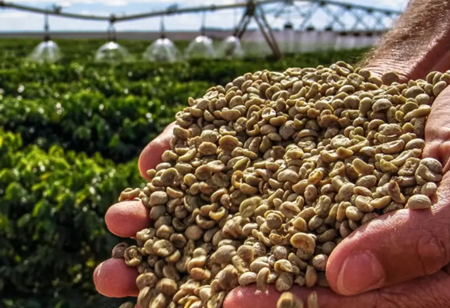
Image: Technology that helps companies verify the origin of raw materials such as coffee and demonstrate that their supply chains are free from deforestation | Photo: COOLX Earth
CDTI Innovación
The Centre for the Development of Technology and Innovation (CDTI E.P.E.) is the innovation agency of Spain’s Ministry of Science, Innovation and Universities. Its mission is to promote technological innovation within the business sector and help Spanish companies transform scientific and technical knowledge into globally competitive, sustainable, and inclusive growth.
In 2025, within the framework of its 2024–2027 Strategic Plan, CDTI provided €2.423 billion in support to Spanish companies and startups.
More information:
Web: www.cdti.es
En Linkedin: https://www.linkedin.com/company/29815
En X: https://twitter.com/CDTI_innovacion
En Youtube: https://www.youtube.com/user/CDTIoficial

cloud technology axon

Addleshaw Goddard (AG), the London-headquartered international law fir...