Rafael Cortés, CTO of RedBeat: “Anticipating the problem, not the symptom. That’s how we approach heart failure with the support of CDTI Innovación.”
Thanks to the support of CDTI Innovación, they are developing a wearable device that combines biomarkers, vital signs, and artificial intelligence to transform the monitoring of cardiovascular patients and move toward a more preventive healthcare model aligned with the 2030 Agenda.
In heart failure, the problem is not always the lack of treatment, but the lack of time. Many patients arrive at the hospital when their condition has already significantly deteriorated, in advanced stages of decompensation that could have been detected earlier.
“We saw time and again how patients who could have been stabilized earlier ended up hospitalized because there was no tool capable of truly anticipating these episodes,” explains Rafael Cortés, CTO of RedBeat, who leads the development of the device’s hardware.
This situation highlights a structural limitation of the healthcare model: the difficulty of continuously monitoring patient evolution and acting before symptoms appear. In response, technology opens the door to a shift in approach, where monitoring becomes a preventive tool.
Measuring is not enough: the importance of timing and context
Monitoring of patients at cardiovascular risk is still largely based on occasional measurements taken in clinical settings. Among them, the biomarker NT-proBNP is one of the most relevant indicators for assessing heart condition, yet its use remains limited to hospital environments. “This means many clinical decisions are made with low-frequency data or when the patient already shows clear symptoms,” notes Cortés.
Given this reality, the challenge is not only to measure, but to do so continuously and with information that truly adds clinical value. “We realized the problem wasn’t just measuring, but doing it at the right time and with relevant information. That’s when we decided to change the approach: move from a reactive model to a preventive one.”
This paradigm shift—from reaction to anticipation—is at the core of RedBeat’s project.
From clinical practice to a technological solution
RedBeat was founded in 2023 based on a need identified in daily medical practice by Dr. Iris Rodríguez, cardiologist and co-founder of the company. From this clinical experience, a multidisciplinary team was formed combining research, technological development, and healthcare expertise.
In its early stages, with the support of CDTI Innovación, RedBeat began developing an intelligent device with biosensors and artificial intelligence to monitor cardiovascular vital signs and biomarkers in real time. “The project arose from something quite straightforward: seeing that many heart failure patients arrive at the hospital in already advanced stages of decompensation,” explains Cortés.
The solution’s development has been made possible by combining different expertise areas—from designing the physical device to creating the digital platform that interprets the data. “On the technology side, we have focused on developing the monitoring hardware, while in parallel building a platform capable of processing, interpreting, and presenting data to healthcare professionals.”
This integrated approach has enabled the creation of a solution designed not just to measure, but to provide useful information for clinical decision-making.
A device that expands anticipation capabilities
The result is a wearable cardiac monitoring device that integrates measurement of the NT-proBNP biomarker with other vital signs such as heart rate, blood pressure, oxygen saturation, and weight. “The solution aims to address a critical need: early detection of decompensation in patients at risk of heart failure,” explains Cortés. “NT-proBNP is one of the most relevant biomarkers in cardiology, but its measurement is currently limited to hospital environments.”
By bringing this capability closer to the point of care, the system enables more frequent and accessible measurements, facilitating more continuous patient monitoring. “This makes it possible to intervene earlier, reducing hospitalizations and improving patient outcomes.”
One of the project’s distinguishing features is its integrated approach. “The main value lies in having a complete view of the patient, not based on a single data point,” he emphasizes. “A biomarker like NT-proBNP is very powerful, but its interpretation improves significantly when combined with other variables.”
This combination allows identification of patterns and trends that would not be evident if analyzed in isolation, thereby improving anticipation capabilities.
Artificial intelligence to understand patient evolution
The device is supported by a digital platform that analyzes collected information and transforms it into useful clinical knowledge through artificial intelligence. “The key is not so much AI itself, but what it enables us to do with the data,” explains Cortés.
The system analyzes temporal evolution of parameters and detects deviations from each patient’s baseline. “The platform analyzes parameter trends over time, detects deviations from the patient’s baseline state, and helps identify risk situations before they become critical.”
This approach adds a predictive dimension to clinical monitoring, based on trends rather than isolated measurements. It also enables personalized monitoring. “Each patient evolves differently. This helps healthcare professionals prioritize better, optimize their time, and make risk-based decisions.”
From hospital to home: a new way of monitoring
The device’s portable and accessible nature allows it to be used both in hospitals and at home, opening new possibilities in healthcare. “It enables a shift from episode-based medicine—when patients come to the hospital—to continuous monitoring,” says Cortés.
This model not only improves early detection of complications but also contributes to more efficient use of healthcare resources.
Clinical validation and international collaboration
The device is being developed in collaboration with hospitals and research centers, enabling validation in real clinical environments.
“Collaborations have been essential to validate the technology in real clinical settings,” explains Cortés. Ongoing trials include comparative testing with reference laboratory methods.
“We are progressing through phases where we compare our results with laboratory methods and expect to expand the number of patients to obtain more robust data.”
This validation process is key to ensuring system reliability and its integration into clinical practice.
The role of CDTI Innovación: enabling technological development
The project has been supported by the CDTI Innovación NEOTEC program, a key factor in tackling the development of complex technology at an early stage. “CDTI’s support has been crucial to undertaking a technological development of this level,” says Cortés.
Thanks to this backing, the company has been able to progress simultaneously in multiple areas, from hardware development to clinical validation. “It has allowed us to move forward in parallel with hardware, digital platform, and clinical validation—something especially complex in early stages.”
Advances include electromagnetic compatibility testing, essential in the medical device field. “These tests have yielded very positive results, reinforcing the device’s technical robustness at this stage.”
Institutional support has also facilitated collaboration with other ecosystem stakeholders. “Having CDTI Innovación’s backing adds credibility to the project and facilitates collaboration with hospitals and research centers.”
Innovation aligned with the Sustainable Development Goals
Technologies like RedBeat’s are part of a broader transformation of the healthcare system aligned with the Sustainable Development Goals (SDGs).
The project contributes to SDG 3 (Good Health and Well-being) by improving early detection and monitoring of cardiovascular diseases. It also supports SDG 9 (Industry, Innovation and Infrastructure) through the development of advanced medical technologies, and SDG 10 (Reduced Inequalities) by bringing diagnostic and monitoring tools beyond hospital settings.
In this way, technological innovation becomes a driver toward a more accessible, efficient, and sustainable healthcare system.
Scaling prevention: next steps
Looking ahead, RedBeat will continue advancing clinical validation, expanding the number of patients in studies, and strengthening system reliability.
At the same time, the company is working on optimizing the device and evolving its technological components. “We are working on improving lateral flow strips and protecting the technology through intellectual property, with a patent underway and new applications in preparation.”
The project also opens new development lines beyond NT-proBNP. “The technology is opening the door to working with other biomarkers and variables, expanding its application in preventive healthcare.”
The ultimate goal is to help transform the healthcare model. “We want to reduce avoidable hospitalizations, improve patients’ quality of life, and move toward a more preventive, data-driven, continuously monitored healthcare model,” concludes Cortés.
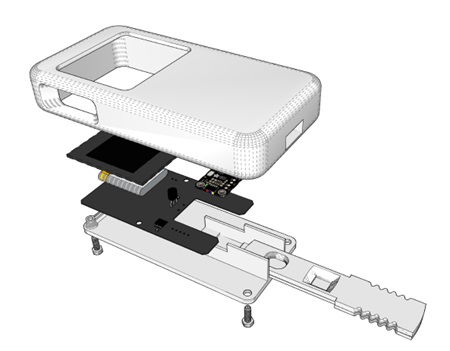
Image: Close-up of the wearable device developed by RedBeat, integrating biosensors for the measurement of NT-proBNP and other vital signs
CDTI Innovación
The Centre for the Development of Technology and Innovation (CDTI E.P.E.) is the innovation agency of Spain’s Ministry of Science, Innovation and Universities, whose objective is to promote technological innovation in the business sector. Its mission is to ensure that Spanish companies generate and transform scientific and technical knowledge into globally competitive, sustainable, and inclusive growth. In 2025, within the framework of its 2024–2027 Strategic Plan, CDTI provided more than €2 billion in support to Spanish companies and startups.

cloud technology axon

Addleshaw Goddard (AG), the London-headquartered international law fir...