Interview with Roberto de la Rica, CEO of Nanodecal: “Support from CDTI Innovación allows us to move toward rapid, decentralized diagnosis of respiratory infections”
Nanodecal, with the support of CDTI Innovación through the Neotec program, is working on the PRONTO platform, a solution that will enable the detection of pathogens and biomarkers in a matter of minutes directly at the point of care.
Respiratory medicine faces a growing challenge: rapidly detecting the pathogens that cause infections in patients with chronic lung diseases in order to apply the most appropriate treatment from the outset. In this context, Nanodecal is developing new diagnostic tools capable of analyzing respiratory samples directly at the point of care.
The company, a spin-off from the Health Research Institute of the Balearic Islands (IdISBa), is developing a technological platform capable of analyzing lower respiratory tract samples quickly and in a decentralized manner. This advance could significantly improve clinical decision-making and contribute to a more precise use of antibiotics.
Nanodecal emerged from the research activity of its founder and CEO, Roberto de la Rica, at IdISBa. For years, his work focused on developing new diagnostic technologies applied to respiratory medicine, in close collaboration with clinical professionals. This interdisciplinary environment made it possible to identify a clear need in medical practice: tools capable of analyzing complex respiratory samples quickly and directly in the clinical setting.
As a result of this research, the team developed two patented inventions with the potential to transform the diagnosis of respiratory diseases, ultimately leading to the creation of Nanodecal.
“The company arises from our scientific activity and collaboration with healthcare professionals,” explains De la Rica. “At Nanodecal, we develop technologies capable of analyzing lower respiratory tract samples directly at the bedside, with the aim of enabling faster and more accurate diagnoses.”
The company’s mission is to bring these technological advances into clinical practice to improve medical decision-making. Ultimately, its goal is to contribute to more personalized respiratory medicine, where treatments can be tailored more precisely to each patient’s condition.
With support from CDTI Innovación, Nanodecal is developing the PRONTO platform, a technology designed to rapidly and decentrally analyze sputum samples, i.e., mucus from the lower respiratory tract.
In clinical practice, these samples can be difficult to analyze due to their dense and heterogeneous consistency, which complicates their processing in rapid diagnostic tests. According to De la Rica:
“Our technology incorporates an innovative method that transforms sputum—a dense, solid-consistency sample—into a liquid in just one or two minutes,” he explains, adding: “This greatly facilitates its analysis and allows the process to be integrated into a rapid diagnostic kit.”
Once processed, the system uses antigen detection tests capable of identifying biomarkers even at very low concentrations. The combination of both elements enables near-immediate results directly at the point of care.
As the CEO notes, this capability opens new possibilities for clinical practice: “The platform provides actionable information in real time and allows progress toward more precise and personalized respiratory medicine.”
The first product based on the PRONTO platform is aimed at detecting Pseudomonas aeruginosa, a bacterium that can cause serious infections in patients with chronic lung diseases.
This microorganism represents a major medical challenge due to its ability to resist conventional treatments and form biofilms in the lungs, promoting persistent infection. In many cases, these infections can evolve into chronic forms that progressively impair lung function and require prolonged treatment.
“The pathogen can resist conventional treatments and promote persistence of infection. In some patients, this can lead to chronic infections that are difficult to eradicate,” explains De la Rica.
One of the main current problems is that identifying the bacterium using conventional microbiological methods can take several days. This delay can hinder the selection of the most appropriate treatment in the early stages of infection. The diagnostic kit being developed by Nanodecal aims to drastically reduce this time, enabling detection of the pathogen directly from sputum samples.
Early detection of Pseudomonas aeruginosa is especially relevant in patients with chronic lung diseases such as chronic obstructive pulmonary disease (COPD) or bronchiectasis. In these cases, the presence of the bacterium can significantly impact clinical outcomes and antibiotic treatment decisions.
Currently, the lack of rapid diagnostic methods often forces therapeutic decisions to be based on risk estimates. Clinical guidelines recommend adjusting empirical treatment according to infection probability, which can lead to overtreatment or undertreatment.
“Guidelines recommend that physicians estimate infection risk to adjust antibiotic treatment, but this approach can lead both to overprescription of last-generation antibiotics and underprescription in patients who are actually infected,” says the CEO.
In this context, having a rapid diagnostic tool would allow these decisions to be based on objective microbiological data at earlier stages, reducing uncertainty in clinical management.
“This approach could contribute to a more rational use of antibiotics and help prevent infections from progressing to chronic forms that are harder to treat,” De la Rica adds.
One of the key differentiating features of the PRONTO platform is its ability to perform diagnostic analysis directly where the patient is treated, without the need to send samples to a centralized laboratory.
This decentralized diagnostic model could have a significant impact on daily clinical practice for both healthcare professionals and patients.
“The system makes it possible to have the necessary information to adjust treatment within the time frame of the consultation itself,” explains De la Rica. “This avoids dependence on centralized analyses that may require days of waiting.”
Obtaining results during the same clinical visit facilitates therapeutic decision-making and reduces the need for follow-up visits to adjust treatment based on microbiological results. In addition, this approach could help optimize healthcare resource management and improve the patient experience.
Chronic respiratory diseases represent one of the major public health challenges worldwide. It is estimated that more than 480 million people globally live with COPD or bronchiectasis. In this context, recurrent bacterial infections can play a key role in the progressive deterioration of lung function and patients’ quality of life.
Nanodecal aims to improve the management of these infections through diagnostic tools that enable earlier and more accurate pathogen detection.
“We aim to promote a more precise and rational use of antibiotics in patients with chronic respiratory diseases,” explains the CEO.
De la Rica also notes that “early detection of Pseudomonas aeruginosa could facilitate the initiation of appropriate treatment at early stages, reducing the risk of infection progressing to chronic forms that require more complex and prolonged therapies.”
Ultimately, the development of such diagnostic tools could help improve patients’ quality of life and promote more personalized and sustainable therapeutic strategies.
Nanodecal is supported by CDTI Innovación through the Neotec program, an initiative aimed at promoting the creation and consolidation of technology-based companies in Spain.
“Collaboration with CDTI Innovación has been key to reducing the technological risk associated with a project as ambitious as PRONTO,” says De la Rica.
Support from Neotec has enabled the company to advance in the scientific and technical validation of its platform, as well as strengthen its technological foundation at an early stage.
“The program has allowed us to reinforce the project’s technological base and bring it closer to a more solid stage from an industrial and investment perspective,” adds the CEO.
According to De la Rica, the funding has also helped drive the R&D activities needed to scale manufacturing of the technology and advance the development of new products based on the PRONTO platform.
In the medium term, Nanodecal aims to expand the capabilities of its platform by incorporating new biomarkers and diagnostic tools that provide a more comprehensive view of the patient’s clinical status.
Among the company’s development lines is the detection of inflammation biomarkers and proteins related to antibiotic resistance, which could provide additional information to guide treatment.
“Our goal is to contribute to a paradigm shift in antibiotic prescribing in the respiratory field,” says De la Rica. “We want to move toward an approach guided by rapid diagnostic tools that enable better-informed clinical decisions.”
With the support of CDTI Innovación and the momentum of its technological platform, Nanodecal is working to turn this vision into reality and improve the diagnosis and treatment of respiratory infections worldwide.
The Centre for the Development of Technology and Innovation (CDTI E.P.E.) is the innovation agency of Spain’s Ministry of Science, Innovation and Universities. Its objective is to promote technological innovation in the business sector.
CDTI’s mission is to ensure that the Spanish business ecosystem generates and transforms scientific and technical knowledge into globally competitive, sustainable, and inclusive growth. In 2024, within the framework of a new strategic plan, CDTI provided more than €2.3 billion in support to Spanish companies and startups
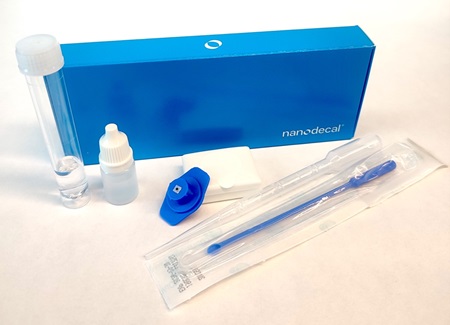
Image: Close-up of the PaST Kit, a rapid diagnostic tool that enables the analysis of respiratory samples and delivers results without the need to send them to a centralized laboratory
Web: www.cdti.es
Linkedin: https://www.linkedin.com/company/29815
X: https://twitter.com/CDTI_innovacion
Youtube: https://www.youtube.com/user/CDTIoficial

cloud technology axon

Addleshaw Goddard (AG), the London-headquartered international law fir...