Interview with Ana Bouchet, CEO of Lifesome Therapeutics: “The support of CDTI Innovación and European MRR funds has been key to validating our nanoparticle technology and moving toward clinical trials”
Lifesome Therapeutics is developing an innovative technology based on lipid nanoparticles with intrinsic therapeutic activity for the treatment of cancer. Support from CDTI Innovación and MRR funds has made it possible to strengthen the team, validate the technology, and prepare its progression toward clinical trials in patients.
Biomedical innovation is one of the fundamental pillars for addressing one of the greatest health challenges of our time: cancer. Beyond improving survival rates, current research aims to deliver therapies that are more effective, less toxic, and better adapted to each patient’s needs. In this context, Lifesome Therapeutics is a clear example of how scientific excellence can be transformed into real impact through technological entrepreneurship and the backing of public policies that support R&D&I, such as those promoted by CDTI Innovación.
Based in Madrid, this startup develops lipid nanoparticles with antitumor and antimetastatic functions that aim to redefine how oncology treatments are administered. Its project, supported by the Neotec program and co-funded through the Recovery and Resilience Mechanism (MRR), has been instrumental in accelerating its development and consolidating a technology with high clinical potential.
Lifesome Therapeutics was born from a motivation shared by many researchers: translating scientific knowledge into direct benefits for society. As its CEO, Ana Bouchet, puts it, “All scientists share a common mission: to improve people’s lives.” In her case, that mission took shape around a very concrete concern: the physical and emotional impact of a cancer diagnosis and the harshness of available treatments.
During her time as a researcher at the University of Tours and the Université Libre de Bruxelles, Bouchet and the other founders developed a compound with antitumor activity that showed very promising results in preclinical models. “These patients not only face a diagnosis that has a tremendous physical and psychological impact, but they also see their quality of life reduced due to the severe side effects associated with the therapies they receive,” she explains.
The turning point came when the team realized that, for this scientific advance not to remain merely an academic publication, they needed to take the next step. “We developed a new antitumor drug that, moreover, shows no associated side effects in preclinical models of the disease. Then we asked ourselves how to ensure that this compound could reach patients,” Bouchet recalls. The answer was clear: “We had to take off our lab coats and found a company.” Thus, Lifesome Therapeutics was born.
Since its creation in 2022, Lifesome has experienced very significant growth in a short period of time—growth that would not have been possible without public funding support. The CEO emphasizes this explicitly: “We must highlight and thank the trust that public institutions have placed in the company.”
In just two years, Lifesome has received more than €1.5 million in public funding, including €325,000 from the CDTI Innovación Neotec program. This support has enabled the company to grow exponentially, expanding from just the three founding partners to a consolidated team of eight people.
“We now have a multidisciplinary team, more than fifty percent of whom are women and more than fifty percent of whom also hold a PhD,” Bouchet notes, emphasizing that this growth has occurred without losing sight of the company’s founding values. “This shows that we have not given up on the principles of equal opportunity and respect for research excellence with which we founded Lifesome Therapeutics.”
Growth has also translated into proprietary infrastructure. The company has offices and laboratories at the Madrid Science Park, from where it conducts research in oncology, immunology, and microbiology. This is complemented by a network of collaborations with leading national and international researchers, reinforcing the project’s open and cooperative character.
At the core of the Neotec-supported project is the development of lipid nanoparticles based on the drug Ohmline. To explain their innovation, Bouchet uses a simple comparison: “Ohmline forms nanoparticles—that is, microscopic balls that can contain other drugs inside.”
The fundamental difference compared with other existing nanoparticles is that Ohmline does not act merely as a carrier. “It is very important to understand that Ohmline nanoparticles, even when empty, are capable of slowing tumor growth in preclinical models of a wide range of different cancers,” explains the CEO. This intrinsic antitumor activity makes Lifesome’s approach unique in the current landscape.
When these nanoparticles encapsulate other antitumor drugs, a synergistic effect occurs. “Ohmline nanoparticles not only deliver the drug to the tumor, but also enhance its effect thanks to Ohmline’s own antitumor activity,” Bouchet explains. The result is a significant reduction in the required dose and, consequently, in adverse effects. “This allows us to reduce side effects and improve patients’ quality of life during treatment.”
Lifesome’s technology does not focus solely on eliminating the primary tumor; it also addresses one of oncology’s main challenges: metastasis. Ohmline acts on molecular pathways essential for tumor cell survival and migration that are largely unexplored by current therapies.
“By encapsulating other drugs in Ohmline, we attack the tumor through two different pathways, which increases treatment efficacy and minimizes the risk of resistance development,” Bouchet explains. She adds that these same pathways are involved in tumor cell migration: “Ohmline inhibits the metastatic process in vivo, which is especially relevant considering that metastasis is responsible for ninety percent of cancer-related deaths.”
Developing this technology has not been without challenges. Among the main ones are the standardization of encapsulation processes and quality control of formulations. “These are processes that require a high degree of professional specialization and the use of very specific technology,” the CEO notes.
This is compounded by the complexity of working with multiple tumor types and the high investment required in equipment and materials. Bouchet highlights a common reality for biotech startups: “We often face challenges that go beyond science, such as seeking investment, attending innovation fairs, or balancing budgets to be able to run an experiment. In this context, public support is essential to sustain the project’s progress.”
For Lifesome Therapeutics, support from CDTI Innovación has been structural. “CDTI Innovación’s support through Neotec has enabled us to build a strong team, thanks to which we have been able to extend the scope of our technology beyond oncology, also exploring its application in multidrug-resistant bacterial infections,” the CEO states. She adds: “This support has also allowed us to demonstrate that our technology is effective and safe, opening the door to further funding applications and preparing us to move toward clinical trials in humans.”
The company’s next major milestone is the validation of toxicology studies in laboratories certified under Good Laboratory Practice (GLP) standards—an essential prerequisite for requesting authorization from the European Medicines Agency. “Once we complete these studies, we will be able to apply to the EMA for authorization to conduct clinical trials in patients,” Bouchet explains, noting that the EMA has already expressed its support for validating the Ohmline-Docetaxel therapy in metastatic prostate cancer.
Looking ahead, Lifesome Therapeutics aims to become a key player in the global oncology ecosystem. “We believe that Lifesome has all the scientific potential to become the leading supplier of nanoparticles for pharmaceutical companies developing antitumor strategies,” says its CEO. This vision is summed up in a clear ultimate goal: “Hopefully, behind a cancer diagnosis there will no longer be fear of treatment, but hope for a rapid and comfortable recovery.”
The Centre for the Development of Technology and Innovation (CDTI E.P.E.) is the innovation agency of Spain’s Ministry of Science, Innovation and Universities. Its objective is to promote technological innovation in the business sector. CDTI’s mission is to ensure that the Spanish business fabric generates and transforms scientific and technical knowledge into globally competitive, sustainable, and inclusive growth. In 2024, as part of a new strategic plan, CDTI provided more than €2.3 billion in support to Spanish companies and startups.
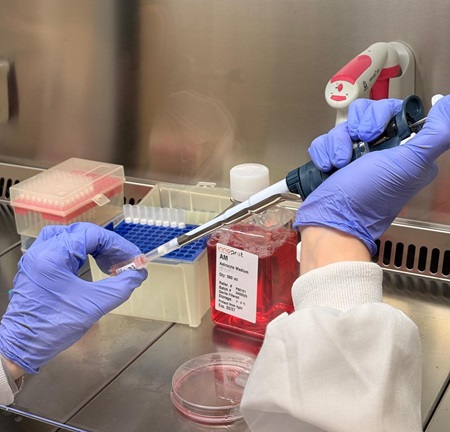
Image: Laboratory testing as part of the development of Lifesome Therapeutics’ formulations
Web: www.cdti.es
Linkedin: https://www.linkedin.com/company/29815
X: https://twitter.com/CDTI_innovacion
Youtube: https://www.youtube.com/user/CDTIoficial

cloud technology axon

Addleshaw Goddard (AG), the London-headquartered international law fir...