
Innovation gains strength when different capabilities are combined. The agility of startups, the entrepreneurial DNA of family businesses, and the scale of large organizations operate under different logics, but they pursue the same goal: to grow and remain competitive over time.
The question is clear: how can these worlds, which operate at different rhythms and with different priorities, collaborate effectively without losing what makes them valuable?
The issue is not minor. Startups, family businesses, and large corporate groups share spaces, projects, and opportunities, but they start from different baseline conditions. They all talk about innovation, although using different languages, timelines, and expectations. When these mismatches are not acknowledged, collaboration becomes slow or inefficient. When they are properly aligned, the benefits multiply.
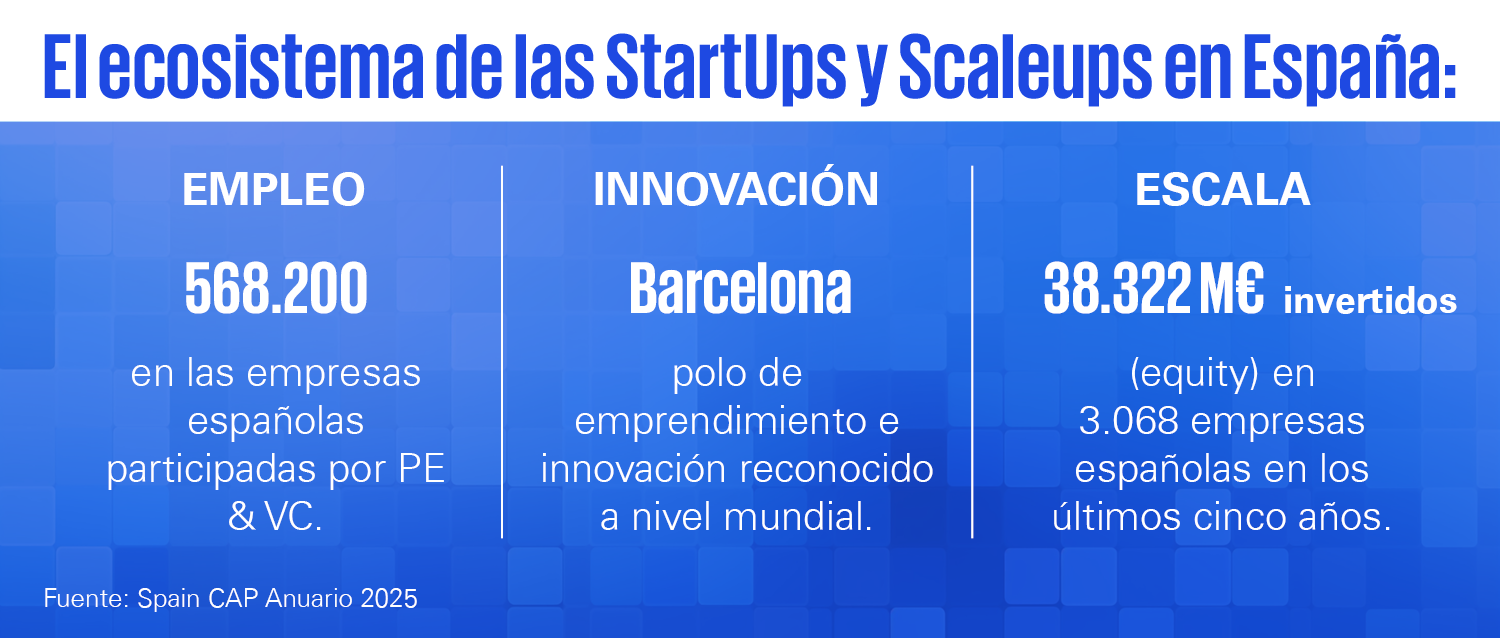
This debate takes place within an ecosystem with a consolidated economic and strategic weight. Startups and scaleups have become a key pillar of the Spanish productive fabric due to their ability to attract investment and generate employment. Barcelona, in particular, has positioned itself as one of the main international hubs for entrepreneurship and innovation, concentrating talent, capital, and globally ambitious projects.
In this context, the focus is no longer on justifying collaborative innovation, but on making it operational and scalable.
Two different logics, one shared goal
The startup ecosystem moves through speed, experimentation, and continuous adaptation. Decisions are made quickly, processes evolve with growth, and time acts as a critical resource that directly impacts a project’s viability.
Large organizations — family businesses, international groups, or listed companies — operate with more complex structures. They prioritize stability, risk control, proven processes, and decision-making frameworks that ensure rigor and accountability.
These logics coexist within the same environment. The challenge arises when collaboration is attempted without aligning expectations or defining clear working frameworks. From there, a significant opportunity emerges: to create points of convergence that enable meaningful collaboration and generate results.
Success depends not only on sharing a common goal, but on deeply understanding the logic and structure of each party. When this understanding is addressed from the outset, the agile innovation of corporations and the scaling ambition of startups converge effectively, transforming collaboration into tangible outcomes.
When everything fits: 7 keys to collaboration that multiplies its potential
In this sense, we present seven key factors that explain why collaboration between startups, family businesses, and large organizations works when expectations, timelines, and decision-making styles are aligned.
1. Empathy as an accelerator
The most common frictions have cultural and temporal roots. For a large organization, spending weeks or months evaluating a collaboration is part of its normal operating model. For a startup, that same timeframe can mean losing a concrete opportunity.
Recognizing this asymmetry is essential. When there are defined timelines, clear decision criteria, and a genuine understanding of each side’s risks, collaboration becomes more effective and moves beyond mere intent.
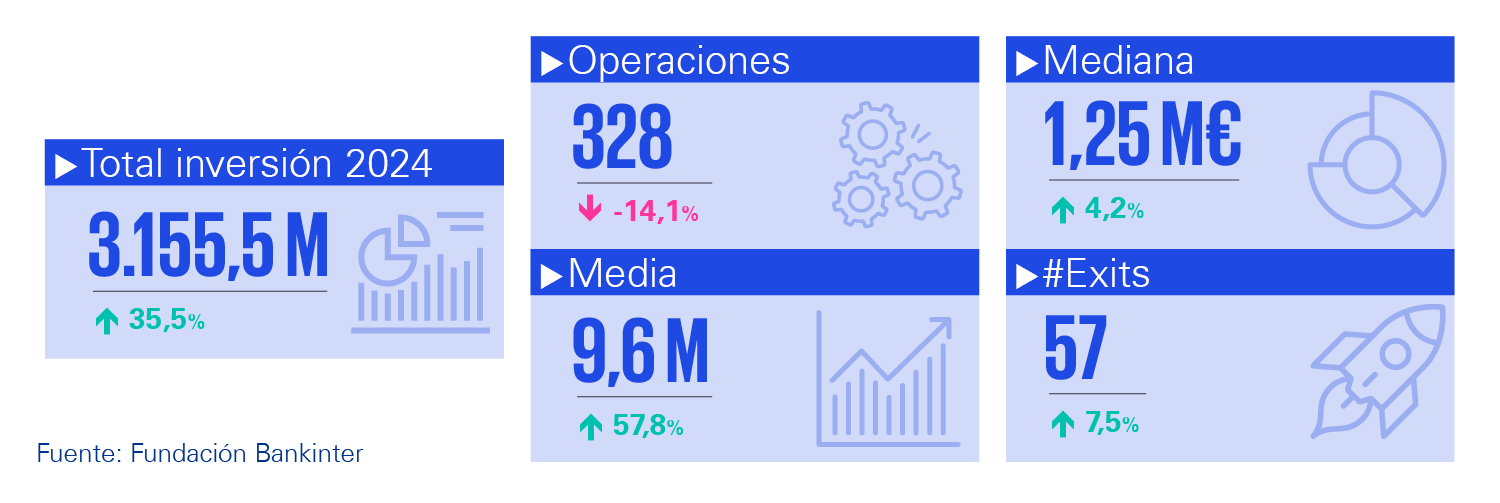
This tension is also reflected in the data. In 2024, startup investment in Spain grew in volume, but the number of deals decreased and capital became more concentrated in more mature projects. The room for prolonged decision-making narrowed. In this context, time directly conditions the viability of many projects.
2. From founder to company building
In entrepreneurship, progress depends on the ability to build a company. The execution phase requires more effort than the initial one.
Thus, the early incorporation of basic processes, controls, and management guidelines provides stability at key moments: rapid growth, financial pressure, investor negotiations, or international expansion.
This approach strengthens the project and protects the founding team. Ambition is maintained, along with a greater capacity to sustain growth.
3. Experienced founders as bridge figures
In recent years, a specific profile has gained relevance: founders with experience in funding rounds, scaling, and managing failure. They retain agility, incorporate a long-term vision, and prioritize project sustainability.
Their way of building is closer to that of second- or third-generation entrepreneurs in a family business. The focus shifts toward continuity and robustness. This profile helps connect actors with very different dynamics.
4. A common origin, different contexts
From a historical perspective, the entrepreneurs who founded many family businesses share traits with today’s founders. The main difference lies in context.
Today, there are structured ecosystems, access to knowledge, platforms, hubs, accelerators, and professional communities that organize collaboration. Recognizing this shared starting point reduces friction and fosters smoother relationships between startups, family businesses, and large organizations.
5. Governance and financing: growing with discipline
The evolution of a startup depends largely on two elements: governance and stage-appropriate financing.
Governance provides clarity in roles and decision-making bodies aligned with the company’s size, as well as the ability to anticipate conflicts in more complex stages.
In terms of financing, it is essential to assess the real needs of each stage. Dilutive funding rounds coexist with other instruments: public grants, structured finance, hybrid instruments, or non-dilutive solutions. The right combination improves the project’s resilience.
In this context, family offices can act as strategic partners. They provide capital, business experience, and a long-term vision that fits well with companies in consolidation phases.
6. Demystifying the funding round
Capital raising does not define a company’s success. It serves as a resource to build a solid, scalable business capable of generating recurring cash flow.
When attention is focused solely on the funding round, the project tends to make short-term decisions and lose strategic focus. Capital creates value when it supports business building.
7. Building bridges to generate impact
Startups, family businesses, family offices, and large organizations start from different positions. They share the need to develop viable, sustainable projects with economic impact.
Aligning expectations, timelines, and working methods allows each actor to contribute its strengths: innovation, experience, scale, and execution capability. Collaboration advances, and innovation becomes tangible.

cloud technology axon

The vehicle, which exceeded its initial €100 million target, was fun...