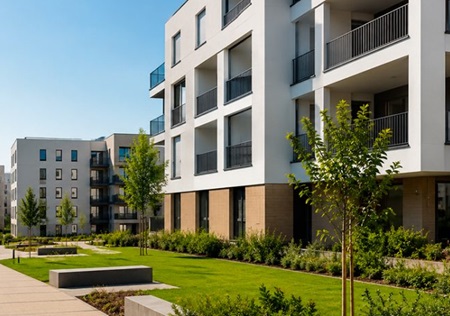
Some assets generate financial returns. Others generate social impact. Rarely do both align as clearly as they do in Spain's affordable housing sector today.
Traditionally, impact investors have focused on themes such as microfinance, renewable energy and healthcare in emerging markets. Increasingly, however, the housing crisis across developed economies is creating a new investment vertical: affordable rental housing.
A recent example illustrates this trend. Several philanthropic organisations backed by large private fortunes have committed significant capital to affordable housing in the United States, further establishing the sector as a core impact investing theme.¹
The Situation in Spain
Spain presents a particularly acute affordable housing shortage. Three years after the Housing Law came into force, rental prices have risen by 30.7%, the supply of available homes has fallen by 30%, and competition for each rental property has more than doubled, according to Idealista.² Meanwhile, the structural housing deficit has now exceeded 750,000 homes, according to the Bank of Spain.³
The public sector is beginning to respond. Within the framework of Spain's Recovery, Transformation and Resilience Plan, financed by the European Union's NextGenerationEU programme, A&G Global Investors manages a mandate focused on channeling investment into affordable housing across Spain. This initiative illustrates how public capital is increasingly relying on private investment managers with strong sourcing and execution capabilities to deploy these resources efficiently.
However, this programme—as well as several others currently under development—has a broader objective: mobilising private capital alongside public funding. Historically, such capital has come primarily from institutional real estate investors. The natural evolution of the model is to broaden the investor base by bringing in non-traditional capital providers—including family offices, foundations and private banking clients—to an asset class that offers both compelling financial returns and measurable social impact.
An Opportunity to Replicate a Proven Model
The combination of a structural housing shortage, active public funding mechanisms and growing private investor demand for sustainable long-term returns has created a rare window of opportunity in Spain. Affordable housing has the potential to occupy the same position it already holds in other markets: an asset class where private capital delivers attractive returns, generates measurable impact and contributes to addressing one of society's most pressing challenges.
Seizing this opportunity now requires investor commitment. The infrastructure needed to do so is already in place.
Authors: Alejandro Núñez, Managing Partner, Alternative Investments, A&G Global Investors; Jaime Trigo, Managing Director, Real Estate, Alternative Investments, A&G Global Investors; and Julio Martín-Simó, Head of Investor Relations, Alternative Investments, A&G Global Investors.
Notes
¹ Notable examples include Ballmer Group—the philanthropic organisation founded by former Microsoft CEO Steve Ballmer—which committed US$150 million to two affordable housing investment managers in October 2025, followed by the launch of the Washington Family Housing Fund, aimed at developing at least 10,000 affordable homes across Washington State. In September 2025, Yield Giving, the philanthropic organisation founded by MacKenzie Scott, committed US$65 million to Enterprise Community Partners to support affordable rental housing across the United States.
² Idealista (May 2026). Three years after the Housing Law: rents rise, supply falls and competition intensifies.
³ Bank of Spain. Annual Report 2025.

cloud technology axon
Axon Partners Group, Tresmares Capital, Sabadell Venture Capital, Inve...