Interview with Miriam Corredor, CEO of noctuRNA: “Thanks to the support of CDTI Innovación we are driving a new generation of circRNA-based therapies”
With the support of Neotec, an initiative of CDTI Innovación, noctuRNA, a biotechnology company focused on cutting-edge research in innovative therapies, is developing a new therapeutic strategy based on synthetic circular RNAs to treat neurodegenerative diseases that currently lack effective therapies.
In recent years, RNA has established itself as one of the most promising platforms in modern biomedicine. After the turning point represented by RNA vaccines, the field has entered a new stage: the rational design of molecules capable of directly intervening in the molecular mechanisms that cause complex diseases. In this context, noctuRNA, a spin-off of Pompeu Fabra University, was created to develop innovative therapies based on synthetic circular RNA.
Miriam Corredor, CEO of the company and a professional with more than a decade of experience in the biotechnology entrepreneurial ecosystem, explains: “noctuRNA is the materialisation of years of academic research into a therapeutic proposal with a clear clinical and social purpose.”
She adds: “Our goal is to address diseases for which real solutions do not yet exist, acting directly on their molecular root.”
With the backing of CDTI Innovación, the company is advancing a strategic project focused on neuromuscular and neurodegenerative diseases such as Myotonic Dystrophy Type 1 (DM1) and Amyotrophic Lateral Sclerosis (ALS), using a technology that aims to open the door to a new generation of circRNA-based therapies.
From the laboratory to the company: transforming knowledge into clinical development
The origins of noctuRNA lie in more than seven years of academic research into RNA structure and biology. Transforming that knowledge into a biotechnology company required a profound shift.
“The transition was not easy; it involved a very significant cultural and operational change,” Corredor acknowledges. “We moved from an environment focused on understanding the why behind biological mechanisms to one oriented toward achieving measurable milestones, robust data and results aligned with regulatory and investor expectations.”
The previous experience of part of the founding team in creating and managing biotech companies helped facilitate that transition. As a university spin-off, it was also necessary to establish a strong strategic relationship with the originating institution.
“It was essential to professionalise the technology and structure it as a business project with international projection,” says the CEO.
Today, the company combines scientific excellence, female leadership and a strong focus on social impact, with a multidisciplinary team that integrates experts in molecular biology, computational design and business development.
A new therapeutic strategy based on circRNA
The project supported by CDTI Innovación—focused on new therapeutic strategies based on synthetic circular RNAs for neurodegenerative diseases—is the core of the company’s current development. The approach involves designing circRNAs capable of specifically binding to pathological secondary structures in certain cellular RNAs and destabilising them.
As Corredor explains: “Our circRNAs are designed to act on RNA secondary structures that play a key role in the development of these diseases.”
She also notes: “There are currently no therapies that act specifically on the causal mechanism in conditions such as DM1 or ALS; treatments are mainly limited to symptom management.”
Corredor stresses that the scientific moment is particularly favourable: “In recent years the molecular mechanisms behind these diseases have been characterised with greater precision, and RNA technologies have reached a level of maturity that facilitates their clinical translation.”
This progress is supported by computational design tools and synthetic biology techniques, which enable the development of highly specific molecules.
Experimental validation: from proof of concept to clinical translation
Validating the mechanism of action has been a central pillar of the project. Initially, the platform was tested in viral infectious diseases.
“We demonstrated in vitro that our circRNAs could bind to viral RNA structures and inhibit replication in models such as COVID-19, dengue and West Nile virus,” Corredor explains. “We even validated efficacy in vivo with our best candidate against SARS-CoV-2.”
Following this proof of concept, the company extended the technology to genetic and neurodegenerative diseases.
“In myotonic dystrophy type 1 we have demonstrated the reduction of nuclear aggregates and the correction of splicing defects associated with aberrant RNA structures,” she says.
Similar results have been observed in cellular models of ALS and Huntington’s disease.
The next step is to move toward more advanced preclinical studies.
“To move into clinical trials we need to consolidate this evidence in more advanced in vivo models,” says Corredor.
First-in-class molecules with distinctive advantages
The circRNAs developed by noctuRNA are considered first-in-class molecules due to both their mechanism and structural properties.
“Because they are circular RNAs—molecules that already exist naturally in cells—they have a very robust safety profile,” says Corredor. “In our in vivo studies we have not observed immune activation.”
The absence of free ends gives these molecules high resistance to degradation, resulting in long-lasting stability.
“We have demonstrated stability of at least one month in vivo without the chemical modifications commonly required in other RNA formats,” the CEO explains.
From a pharmaceutical perspective, they also offer logistical advantages: “Their stability in aqueous solution facilitates storage and distribution, which is key when thinking about industrial scalability.”
Artificial intelligence to accelerate development
A distinctive element of the platform is the integration of artificial intelligence and computational design.
noctuRNA has developed proprietary software capable of identifying relevant RNA secondary structures and designing optimised circRNAs.
“Our algorithms significantly reduce experimental trial-and-error and increase the probability of success,” Corredor explains.
Around 70% of the circRNAs designed using their systems show therapeutic activity in in vitro assays.
The integration between in silico design and experimental validation creates a cycle of continuous improvement.
“Each iteration feeds the system and improves the predictive capacity of the platform,” she adds.
Impact on patients and families
Beyond technological progress, the ultimate objective is to improve patients’ lives. Diseases such as DM1, ALS and Huntington’s are progressive, disabling and emotionally demanding for patients and families.
“These are severe, multisystem diseases that currently lack therapies capable of significantly modifying their progression,” says Corredor.
noctuRNA’s approach seeks to act on the underlying molecular cause, potentially altering disease progression.
The stability of circRNAs could also lead to fewer therapeutic administrations.
“If we achieve that, the benefit will not only be clinical but also social and economic, reducing the burden on patients, families and healthcare systems.”
The role of CDTI Innovación
CDTI Innovación has supported the project through Neotec, a grant programme designed to finance the creation of technology-based startups.
Corredor highlights the importance of this support:
“Collaboration with CDTI has been a decisive boost for noctuRNA. It has allowed us to undertake key preclinical studies that represent a turning point in the development of any advanced therapy.”
These murine model studies are costly but essential to attract private investment.
“Neotec funding significantly reduces technological risk and positions the company much more solidly for future financing rounds and strategic partnerships,” she adds.
Looking ahead: consolidating leadership in circRNA
Over the next five years, the company aims to have several programmes in clinical development.
“Our goal is to license the myotonic dystrophy candidate during Phase I/IIa and complete the same clinical phase with our ALS candidate,” explains Corredor.
The company also plans to launch clinical trials in viral diseases and advance programmes for Huntington’s and other genetic disorders.
Looking ten years ahead, the ambition is clear: “We aspire to become an international reference in circRNA-based therapies and, above all, to have a real impact on patients who currently have no therapeutic alternatives.”
With frontier science, artificial intelligence and the support of CDTI Innovación, noctuRNA is positioning itself at the forefront of a new generation of therapies that aim not only to treat symptoms but to intervene in the molecular origin of diseases that until now have been considered untreatable.
About CDTI Innovación
CDTI Innovación is the innovation agency of the Spanish Ministry of Science, Innovation and Universities, dedicated to promoting technological innovation within the business sector.
Its mission is to ensure that the Spanish business ecosystem generates and transforms scientific and technological knowledge into globally competitive, sustainable and inclusive growth.
In 2024, as part of a new strategic plan, CDTI provided more than €2.3 billion in support to Spanish companies and startups
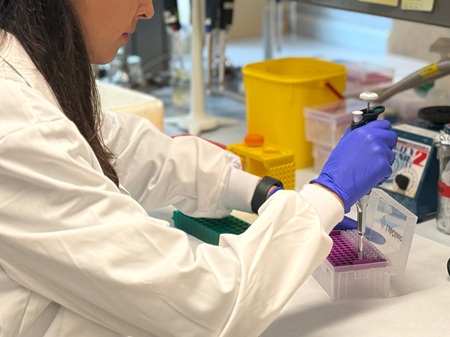
Image: Research activities at noctuRNA Therapeutics’ facilities, where the scientific team works on developing new circRNA-based therapeutic strategies.

cloud technology axon
Over little more than a decade, Regenera has built a strong track reco...