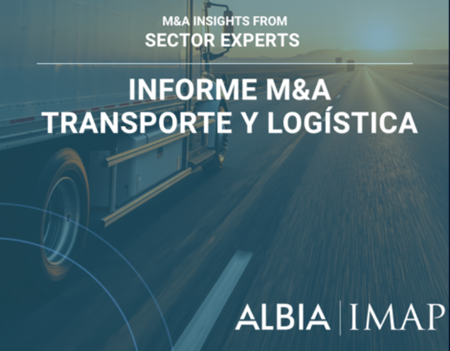
Transport & Logistics in 2026: Resilience, Consolidation, and Emerging Investment Trends
The first quarter of 2026 has reinforced a clear reality in the transport and logistics sector: its ability to remain resilient and dynamic even in periods of heightened uncertainty. In a context shaped by geopolitical tensions and economic volatility, mergers and acquisitions (M&A) activity has not only held steady but reached notable levels.
A critical sector in an uncertain environment
The strategic importance of transport and logistics has once again come into focus. Recent geopolitical developments have highlighted the sector’s role as a critical backbone of the global economy.
Despite this complex environment, Q1 2026 recorded the highest number of transactions since 2023, demonstrating the sector’s structural strength and sustained investor interest.
M&A activity: stability with increasing selectivity
During the first quarter, a total of 14 transactions were completed, marking a slight increase compared to previous years and confirming the positive trend observed across recent periods.
At the same time, the market is evolving towards greater sophistication. M&A processes are becoming:
This reflects a market with abundant opportunities, where investors prioritize high-quality assets and strong strategic fit over opportunistic acquisitions.
Strategic buyers driving consolidation
One of the most relevant takeaways from the quarter is the dominance of industrial players. Around 86% of transactions were strategic, underlining a clear trend towards consolidation within the sector.
Companies are primarily pursuing M&A to:
In this context, M&A continues to be a key lever for inorganic growth across the industry.
Cross-border momentum and global integration
Transport and logistics remain inherently global industries. In Q1 2026, approximately 29% of transactions were cross-border, reflecting the increasing integration of international markets.
Among the standout deals, the acquisition of InPost by a consortium led by FedEx and Advent International for approximately €7.8 billion highlights the strategic importance of scale and positioning in Europe.
At the same time, strategic alliances are gaining traction as a complementary growth strategy, particularly in specialized segments such as temperature-controlled logistics.
Spain: strong activity and continued consolidation
The Spanish market has also shown strong momentum, with significant transactions across key subsectors, including:
Deals such as Ontime’s integration of Marcotran or acquisitions in the food logistics space illustrate ongoing consolidation and specialization trends.
Moreover, Spain continues to strengthen its position as a strategic logistics hub in Southern Europe, attracting both domestic and international investment.
Key sector trends: scale, partnerships, and specialization
Beyond transaction volumes, several structural trends have emerged during the quarter:
1. Market consolidation
Companies continue to pursue acquisitions to increase scale and improve efficiency in a highly competitive landscape.
2. Rise of strategic partnerships
Joint ventures and alliances are becoming increasingly relevant as flexible alternatives to full acquisitions.
3. Specialization as a competitive edge
Niche segments—such as temperature-controlled logistics—are attracting heightened investor interest.
4. Higher execution standards
Investors are more demanding, with a strong focus on asset quality, operational robustness, and strategic alignment.
Outlook: cautious but constructive
Looking ahead, the outlook for the coming quarters is cautiously optimistic. Geopolitical uncertainty will remain a key factor, potentially affecting transaction timelines and decision-making processes.
However, the sector’s structural fundamentals remain strong. Its essential role in global trade, the demand for efficiency, and increasing supply chain complexity will continue to drive corporate activity.
Investor appetite is expected to remain particularly robust for companies that can:
Conclusion
The first quarter of 2026 confirms that the transport and logistics sector is entering a more mature and demanding phase—characterized by greater selectivity, increasing globalization, and ongoing consolidation.
In a challenging environment, the sector is not only proving resilient but also evolving towards more integrated, efficient, and strategically driven business models—where M&A will continue to play a central role in shaping its future.
By ALBIA I IMAP

cloud technology axon
Since its foundation in 2011, YIELCO has evolved into an international...