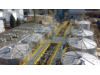
Data centers are currently responsible for over 1% of global energy consumption, with projections by the International Energy Agency (IEA) indicating this share could reach 3% by 2030, largely driven by AI. In the US, Arthur D. Little (ADL) forecasts data center energy use will rise from 3.5%-4.5% in 2024 to 6.7%-12% by 2028. As the demand for computing capacity grows, green data centers are emerging as a critical investment opportunity, especially in regions supporting sustainable power and those focused on aligning with climate-neutrality goals, such as the EU’s 2050 target.
NAVIGATING THE CHALLENGES OF RENEWABLE ENERGY GENERATION
Global growth in wind and solar pushed the share of renewables in the global electricity mix above 30% for the first time in 2023. However, operating a renewable energy plant brings challenges that affect efficiency, costs, and the energy market. From balancing supply and demand to infrastructure limits, data centers must address these hurdles to ensure a greener, more reliable system. The challenges renewable energy plants face include:
System balancing— curtailment during low-demand periods. Wind and solar generation depend on weather and time of day, which are often misaligned with demand. When generation exceeds consumption, transmission system operators may curtail renewable output to avoid grid overload. This curtailment results in unused clean energy, causing revenue loss for plant operators and limiting clean energy utilization.
Inflexible base load plants— constraints of traditional power sources. Traditional power plants (coal, nuclear, natural gas) are not designed to ramp output up or down as quickly as renewables may require. To maintain grid stability, renewables are often curtailed, as their output is easier to adjust than that of base load plants. This lack of flexibility leads to sidelining renewable energy, even when abundant. Large-scale integration of renewables may require adapting traditional plant operations or phasing out those unable to adjust to the renewable energy landscape.
Negative pricing — too much energy, lowering prices. During times of excess generation, particularly from renewable sources, electricity prices can drop, sometimes even turning negative. When there’s more power on the grid than needed, suppliers may have to pay others to absorb the excess energy. While negative pricing may seem like a benefit for consumers, it can actually harm energy producers — especially renewable energy plants — since they can lose revenue by essentially paying to help balance the grid.
Transmission bottlenecks — getting energy where it is needed. Renewable energy plants often face limitations due to insufficient transmission infrastructure. If the grid is unable to efficiently carry electricity from renewable sources to urban centers or high-demand areas, power generation may need to be reduced. As a result, even if renewable plants could produce more power, much of it can’t reach the consumers who need it.
Grid flexibility — adapting to the ups and downs of renewables. Grid flexibility is essential to allow for the highs and lows of renewable energy production. Since renewables do not produce a constant output, the grid must be adaptable enough to absorb and balance these fluctuations. Tools like flexible alternating current transmission systems can give grid operators the control they need to respond to these changes, keeping the system stable even when renewable production surges. However, increasing grid flexibility requires significant investment in technology and infrastructure.
Node capacity— limits on market supply. Renewable energy plants can face constraints at the node level, where they connect to the grid. Even if a plant generates significant power, the node connecting it to the grid may have a maximum export capacity, restricting the amount of energy that can be sent to the market. This cap reduces the revenue potential for renewable plants and prevents them from maximizing their contribution to the energy grid.
DEMAND SIDE MANAGEMENT: DATA CENTER FOR THE WIN
To address these challenges and ensure both operational and economic viability, renewable energy generation facilities rely on a combination of legal, operational, and infrastructure strategies. Key approaches include: (1) the adoption of battery energy storage systems (BESS) to store excess power; and (2) the establishment of power purchase agreements (PPAs) with consumers, such as data centers, to secure long-term contracts for their energy output.
BESS
BESS involves the installation of energy storage systems that capture and store electrical energy for later use. Their primary function is to manage the variability of renewable energy generation, such as solar and wind power, which are subject to intermittent and uncontrollable factors (e.g., weather conditions).
In addition to supporting grid stability, BESS helps manage fluctuations in supply and demand. During periods of excess generation, it stores energy for later use when demand is higher or generation drops. Additionally, BESS supports grid stability by participating in ancillary services, including frequency regulation, voltage control, spinning reserves, and black start capabilities. In summary, BESS not only optimizes revenue opportunities from generation assets but also minimizes curtailment and supports contractual obligations, ensuring reliable energy delivery.
PPAs
The ability to store and release energy efficiently makes BESS an ideal solution for renewable energy plants to secure long-term, stable contracts with high-demand consumers, like data centers, which is where PPAs come into play.
In addition to managing energy generation, PPAs offer renewable energy generators stable, predictable revenue streams, even amid market volatility. For consumers, PPAs offer a fixed or lower price for clean energy, helping them meet sustainability goals while shielding them from market price fluctuations. PPAs help renewable energy generators maintain financial stability by providing secure funding and shielding them from price volatility in the energy market. However, one key challenge is aligning renewable energy output with the specific demands of consumers. This is particularly important for data centers, where hybrid power plants may be necessary to ensure reliability.
Why data centers are ideal PPA consumers
Among the industries that benefit from PPAs, data centers stand out due to several reasons:
Consistent, high demand. Data centers have long-term visibility due to solid growth drivers like cloud computing, AI, and emerging technologies (e.g., virtual reality/augmented reality, blockchain, high-performance computing [HPC], holograms, the Metaverse/digital twins, and quantum computing).
Predictability. Unlike other industries, the energy consumption of data centers is more predictable, as it is directly tied to the workload mix, which can be forecasted with greater accuracy.
Energy efficiency. A data center infrastructure company’s business model is intrinsically linked to energy efficiency. They continuously invest in updating and maintaining equipment to sustain performance levels and minimize inefficiencies.
BESS integration capability. Data centers require high reliability — typically greater than 99.9%. Integrating BESS allows them to optimize energy usage, improve contract stability, and enhance reliability, making them an excellent complement to BESS installations.
Scalability for large-scale projects. As the demand for AI and HPC grows, so does the need for ultra-large data centers. Rack power is scaling rapidly, from less than 10 kW to 30-50 kW, and soon to hundreds of kW, prompting tech leaders to invest in gigawatt-scale facilities (e.g., Stargate, Start Campus) and long-term power supply. This shift — driven by AI training, data gravity, and new technologies — requires large-scale renewable energy projects to meet demand.
Key considerations for PPAs with data centers
When drafting PPAs for data centers, it’s important to account for the diversity in client needs and their specific energy reliability requirements. Hyperscaler clients, whose business models rely on computing power, require long-term energy supply security. For off-grid data centers powered by renewables, operators are highly selective about their energy sources to ensure zero downtime. Notable examples include Microsoft’s partnership with Constellation to restart the Three Mile Island nuclear plant and Google’s investment in mini nuclear reactors, reflecting the industry’s emphasis on securing reliable, uninterrupted power.
DRIVING THE DATA CENTER ECOSYSTEM
In today’s digitized world, data centers are central to nearly every industry, supporting critical processes in sectors like financial services and healthcare. With the rapid expansion of AI and its significant computational demands — especially for model training and inference — data centers are pushed toward high-density power architectures. These AI-centric data centers will require unprecedented energy capacity, further intensifying the power needs already driven by cloud and digital workloads. As data operations expand, data centers face growing challenges such as energy shortages, rising power costs, and increasing pressure to meet sustainability goals. These challenges demand innovative solutions.
Traditional power grids are overburdened and often lack affordable high-capacity infrastructure, especially in remote areas, causing reliability issues and increased downtime. Additionally, data centers face growing opposition from local communities and industries over land use, power consumption, water usage, and labor demands. Concerns about property values, environmental impact, and grid limitations fuel the opposition. Securing long-term, clean energy solutions is becoming increasingly critical as competition and regulatory pressures mount.
Partnering with renewables to address key needs
Partnering directly with renewable energy sources can help data centers address these challenges for several key reasons:
Limited grid access. Traditional power grids often face capacity constraints and infrastructure issues. Partnering with renewables offers data centers greater autonomy, reducing their reliance on the grid and high-capacity energy sources.
Policy incentives. Governments offer various tax incentives, grants, and subsidies for renewable energy projects. Collaborating with renewables allows data centers to leverage these benefits, reduce operational costs, meet regulatory environmental mandates, and enhance their sustainability profile.
Cost predictability. Long-term renewable energy contracts offer stable pricing, reducing the impact of volatile energy markets and improving financial planning.
Price hedging. Data centers can lock in future energy prices, protecting themselves from market fluctuations.
Sustainability advantage. Data centers powered by renewable energy appeal to customers and partners who prioritize environmental sustainability, enhancing corporate image and opening up opportunities.
Reliable energy supply. Renewable partnerships offer a reliable and independent energy source, ensuring continuous operations and maintaining client confidence.
Social acceptance. Data centers can foster local social acceptance by prioritizing sustainability, investing in green energy, and contributing to local communities.
Sustainable water management
In addition to relying on clean energy, data centers must also minimize their impact on water resources. Sustainable cooling solutions and responsible water management practices are essential to reducing their environmental footprint. By adopting these strategies, data centers can boost operational efficiency, improve financial stability, and gain a competitive edge.
EXPLORING OPTIONS FOR RELIABILITY & EFFICIENCY
As demand for sustainable energy solutions grows, integrating renewable energy sources into data center operations has become an attractive option for businesses seeking to reduce their carbon footprint. A key component is ensuring a reliable secondary power supply while optimizing the profitability of renewable energy plants. Several options are available to achieve this balance, with biofuel-powered generators and alternative energy storage standing out as particularly promising solutions. These options offer opportunities to enhance the synergy between renewable energy plants and sustainable data centers. Figure 1 illustrates some of these options, while Figure 2 provides an analysis of the pros and cons of biofuel generators and alternative battery systems.
Figure 1. Renewable energy plant and data center power supply diagramFigure 2. Pros and cons of biofuel generators vs. alternative battery systems
To further examine the impacts of these storage and backup options, Figure 3 compares the outputs and returns of four scenarios. Each scenario features a partnership between a renewable energy source (RES) generation plant and different energy storage and backup solutions, including:
Scenario 1 — RES generation plant only
Scenario 2 — RES generation plant in partnership with a BESS
Scenario 3 — RES generation plant, BESS, and a data center with an auxiliary biofuel generator
Scenario 4 — RES generation plant, BESS, and a data center with an auxiliary battery system
As Figure 3 illustrates, backup and storage systems enable higher revenues while maintaining or even slightly increasing the internal rate of return (IRR) for the RES generation plant.
Figure 3. Scenarios’ outputs and returns
UNLOCKING THE POTENTIAL OF RENEWABLE ENERGY PROFITS
To maximize profitability and returns in these partnerships, renewable energy operators can focus on four critical levers:
Increase BESS minimum duration. Extending the minimum duration of the BESS enhances operational efficiency by reducing reliance on costly, less sustainable biofuel generators. This results in fewer shortage hours and a more consistent energy supply. While initial CAPEX for larger or more advanced batteries may be higher, long-term benefits such as lower operational costs and enhanced energy reliability make it worthwhile. Although IRR may slightly decrease, overall profits are expected to rise.
Adjust data center PPA margin. Modifying the PPA margin allows renewable energy providers to boost profitability and IRR. With well-structured pricing, renewable providers can increase revenue without significant changes. Margins must stay competitive to retain clients. A pay-as-consumed PPA shifts risk to the generator, enabling premium pricing, while coinvesting in new power units further de-risks the project and strengthens long-term PPAs.
Secure capacity payments and subsidies. Government subsidies and capacity payments for BESS can improve project financials by offsetting initial costs and enhancing IRR. These incentives make projects more attractive to investors, and staying proactive in applying for available programs is crucial to securing these benefits.
Participate in ancillary services. Engaging in ancillary services, such as replacement reserves and participation in secondary or tertiary markers, provides additional revenue streams. By utilizing BESS for these services, renewable energy plants can capitalize on market opportunities beyond standard energy sales, boosting profitability while enhancing grid stability. Though regulatory compliance and technical requirements must be met, the additional returns justify the effort.
By focusing on these four levers, renewable plants can significantly increase profitability in their partnerships with data centers. Extending BESS duration improves efficiency, adjusting PPA margins increases revenue, securing subsidies strengthens financials, and engaging in ancillary services diversifies income. Together, these strategies drive sustainable growth and support a greener energy future.
Conclusion
RENEWABLE PARTNERSHIPS FOR DATA CENTERS
Integrating renewable energy with data centers offers a strategic solution to address energy challenges and sustainability goals. By partnering renewable energy plants with data centers, both sectors can benefit from reliable, cost-effective power and drive long-term growth. Key benefits include:
Enhanced grid reliability through reduced reliance on traditional power grids
Cost predictability with long-term agreements for stable energy prices
Sustainability advantages that improve corporate image and attract eco-conscious partners
Financial resilience by protecting against volatile energy markets
Diversified revenue streams for renewable plants via ancillary services
Social benefits through job creation and community engagement
These partnerships enhance efficiency, support sustainable energy integration, and promote public acceptance, enabling scalable, AI-ready infrastructure aligned with community and environmental goals.