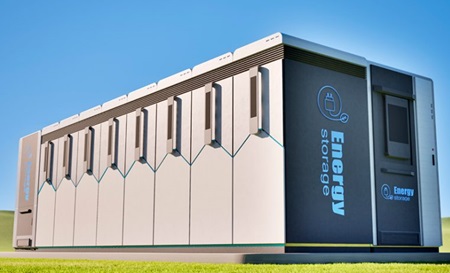
When we hear about the batteries being installed in Spain—technically known as BESS (Battery Energy Storage Systems)—the discussion about their economic rationale is often reduced to a simple logic: charging when electricity prices are low and discharging that energy during high-price hours. This is known as energy arbitrage or trading.
However, reducing batteries to this analysis overlooks a significant portion of the value these assets provide. Below, we explain how the deployment of storage in Spain will support the electricity system in ways that are barely perceived by the average consumer, but which are critical for optimal grid management.
It is true that today there is a very attractive opportunity for trading. Spain is an “energy island” with a significant penetration of renewables and still limited interconnection with the rest of Europe. This creates periods of intense price competition, mainly during midday hours, while once solar generation declines, the need to rely on combined-cycle gas plants to meet national demand drives prices sharply higher.
Batteries exploit this gap to build a highly attractive economic case in the short and medium term: buying electricity at low prices and selling it later at significantly higher prices. That said, it is reasonable to assume that as more batteries are installed, the price differential described above will become less pronounced, and therefore the profitability of batteries will decrease. This brings us to the additional characteristics and hidden value that batteries bring to the electricity grid.
The electricity grid must operate within very narrow voltage ranges, something historically ensured by dispatchable generation (fossil and nuclear). The gradual replacement of this generation with renewable sources opens the door for batteries to act as system stabilisers through two main functions:
In this regard, the recent Royal Decree-Law 7/2026 has marked a turning point by recognising that storage is not an “add-on” but a matter of national urgency and strategic independence. This regulation transforms batteries from an attractive option into a structurally essential and legally protected asset.
A simple but often underestimated concept is that batteries are, in themselves, a major new electricity consumer. This “new demand” is beneficial: it creates an actor willing to buy energy whenever prices are low, effectively establishing a higher market floor. Compared to other electrification trends (electric vehicles, data centres, or industrial demand), storage has a much clearer visibility in terms of deployment timelines.
In the coming years, we will see sustained growth in electricity storage projects in Spain, both through hybridised assets connected to existing renewable projects (mainly solar PV and wind) and standalone storage facilities. Trading will be the financial driver attracting initial investment, but technical stability and operational flexibility are the additional benefits that make these high-quality assets.
At A&G Global Investors, we are convinced of the potential offered by batteries, especially in hybridisation with existing photovoltaic assets. Accordingly, through our sustainable infrastructure capabilities, we are in an advanced stage of analysing such a transaction: a large-scale platform capable of delivering all the benefits described above to the electricity system, while achieving optimal financial returns
By Miguel Lizaso, Managing Director of Infrastructure at A&G Global Investors, and Julio Martín-Simo Sánchez, Investor Relations Manager at A&G Global Investors

cloud technology axon

This transaction reinforces Alantra’s continued momentum in Aerospac...