Interview with Andrea Acebes, CEO and co-founder of PlaBiTe: “The support from CDTI Innovación is proving vital to transform the regenerative potential of platelets into advanced bioproducts”
The Asturian spin-off is advancing, with the support of CDTI Innovación, in a proprietary technology aimed at delivering more standardized, reproducible, and scalable solutions for biomedical research and future therapeutic applications.
Regenerative medicine faces the challenge of transforming complex biological processes into reproducible, safe, and scalable therapeutic solutions. In this field operates PlaBiTe, a biotechnology spin-off founded in Asturias and emerging from the scientific environment of the University of Oviedo and the Foundation for Biosanitary Research and Innovation of the Principality of Asturias (FINBA). With the support of CDTI Innovation through the NEOTEC initiative, the company develops platelet-based human bioproducts for use in cell cultures and regenerative medicine.
According to Andrea Acebes, CEO and co-founder of PlaBiTe, the project stems from the ambition to bring to market the knowledge generated over years of research on platelet derivatives at the Platelet Research Laboratory of the Health Research Institute of the Principality of Asturias (ISPA), led by Laura Gutiérrez, now CSO of the company.
During this journey, the team identified a clear need in the biomedical field: the need for more defined and universally applicable platelet-based solutions.
In addition, PlaBiTe identified another relevant limitation in biomedical research: the high dependence on animal-derived components, such as fetal bovine serum, widely used in cell culture despite its issues of variability, traceability, safety, and the growing ethical concerns associated with its use. “Based on this, we decided to transfer the knowledge generated in the academic environment into applied solutions, developing human platelet-based bioproducts that improve cell cultures and open new therapeutic avenues in regenerative medicine,” Acebes explains.
With this combination of scientific expertise and applied vision, the company began developing proprietary technology focused on the biomedical use of platelets.
Harnessing the regenerative potential of platelets
Platelets play a fundamental role in the body’s natural repair mechanisms. When injury occurs, they release growth factors, cytokines, and other bioactive molecules that coordinate tissue healing and regeneration processes.
PlaBiTe’s approach builds on this natural mechanism but aims to bring it into a more controlled format. “What makes this strategy unique is that it allows a physiological mechanism to be translated into an advanced therapeutic format, overcoming some of the limitations of traditional platelet-based approaches,” Acebes notes.
Currently, many platelet-based regenerative therapies rely on autologous products, meaning they are derived from the patient’s own blood. This approach has limitations, as platelet quality and functionality vary between individuals and may be compromised in patients with chronic conditions such as diabetes or vascular diseases.
In this context, PlaBiTe is developing products that do not depend on each patient’s specific condition. “Our approach overcomes this limitation by enabling the development of standardized products, independent of the patient’s condition and with a controlled composition,” the CEO highlights.
The company’s focus is especially on areas with significant unmet clinical needs, such as chronic wounds, which affect millions of people and represent a major challenge for healthcare systems. Its application could also extend to many other indications across different clinical specialties.
Platelet secretomes: a proprietary technology
One of the pillars of the project is the company’s proprietary technology for obtaining platelet secretomes. PlaBiTe replicates in the laboratory the natural process of platelet activation to induce the release of tissue-repair-related molecules. As Acebes explains: “our technology enables the production of an optimized cocktail of key molecules, such as growth factors and healing mediators, with a defined and reproducible composition.”
The added value lies in process control. PlaBiTe adjusts platelet activation conditions, allowing the secretome to be combined from a defined number of donors, reducing batch-to-batch variability and ensuring biological stability and functionality—an especially critical aspect in advanced biomedical applications. “We are moving toward more predictable and comparable solutions between patients,” the CEO summarizes.
A project oriented toward research and clinical application
The project supported by CDTI Innovation focuses on developing and validating a new generation of platelet-derived bioproducts for advanced cell culture and regenerative medicine. To achieve this, PlaBiTe is improving the processes for obtaining and formulating these derivatives through a proprietary methodology based on controlled platelet activation and functional characterization of the secretome.
In parallel, it includes the validation of these bioproducts in different cellular models and the development of robust quality controls to move toward future commercialization. “One of the key goals is to generate products that can be integrated both into research pipelines and into therapeutic developments targeting unmet clinical needs, such as chronic wounds,” Acebes explains.
The initial strategy focuses on research-oriented products, particularly serum-free cell culture applications, in a context of growing demand for more defined alternatives that are less dependent on animal-derived supplements in biomedical research and bioproduction.
In this sense, the project is also aligned with more sustainable innovation models and the 2030 Agenda, especially in areas linked to health, biomedical innovation, and more responsible research processes.
Next steps: toward preclinical studies
The results achieved open new development pathways for PlaBiTe. Among the next milestones is the launch of its first cell culture bioproduct, which will enable validation of the technology in the market, collection of user and researcher feedback, and further progress toward platelet-based supplements tailored to specific applications.
With this roadmap, PlaBiTe aims to move from early research applications toward more demanding technological and regulatory scenarios. “In the medium and long term, the goal is to evolve toward solutions that meet regulatory requirements for clinical use, positioning our technologies within advanced therapies,” the CEO states.
In parallel, the company is adapting its processes to the quality and safety standards required for future clinical production and plans to initiate regulated preclinical studies focused on a biological drug for the treatment of chronic wounds. “This progress will be possible thanks to the work carried out during the NEOTEC project together with a biotechnological production partner, which has allowed us to produce initial batches under conditions close to those required for clinical use and to lay the foundations for future regulated manufacturing,” Acebes explains.
The challenge of industrial scaling
In biotechnology, it is not enough to demonstrate that a technology works in the laboratory: it must also be scalable into safe, reproducible processes under strict regulatory standards. Therefore, scaling is one of PlaBiTe’s strategic pillars. The company is optimizing its processes to enable progressive transfer to GMP environments (Good Manufacturing Practices).
To achieve this, PlaBiTe collaborates with specialized industrial partners, including CDMOs such as Histocell, and is working with leading national and European blood transfusion centers to ensure platelet supply under quality and traceability standards. “We are working on developing future in-house facilities equipped with clean rooms, which will allow us to continue advancing production under GMP conditions,” Acebes explains.
All of this helps reduce the technological risk associated with transitioning from research to future industrial production.
The role of CDTI Innovación in PlaBiTe’s growth
Throughout this journey, collaboration with CDTI Innovation has enabled PlaBiTe to strengthen its technological development, advance in the validation of its bioproducts, and consolidate strategic partnerships at a key stage for the company. “Support from CDTI Innovation has been key to boosting our development in early stages,” says the CEO. This backing has also helped strengthen PlaBiTe’s position within the innovation ecosystem and opened new growth opportunities. “This institutional support has also been decisive in improving our positioning and facilitating access to new funding sources, both public and private,” Acebes adds.
PlaBiTe’s evolution thus reflects the potential of transferring scientific knowledge into innovative biomedical solutions and the role of NEOTEC in the growth of technology-based companies in strategic areas such as regenerative medicine and advanced therapies, where public-private collaboration and support for science-based companies are essential to bring new regenerative solutions into healthcare.
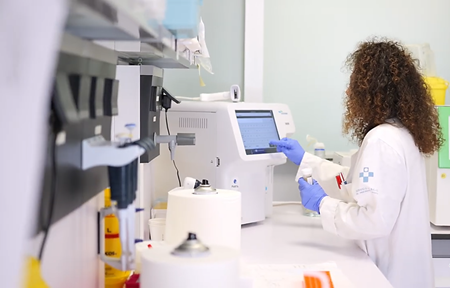
Image: Laboratory work at PlaBiTe, a Spanish biotechnology company specialized in the development of bioproducts and advanced therapies based on platelets for regenerative medicine.
CDTI Innovación
The Centre for the Development of Technology and Innovation (CDTI E.P.E.) is a public entity under the Spanish Ministry of Science, Innovation and Universities, aimed at promoting technological innovation in the business sector. Its mission is to ensure that Spain’s business fabric generates and transforms scientific and technical knowledge into globally competitive, sustainable, and inclusive growth. In 2025, within the framework of its 2024–2027 Strategic Plan, CDTI provided €2.423 billion in support to Spanish companies and startups.

cloud technology axon

Axon Partners Group, Tresmares Capital, Sabadell Venture Capital, Inve...