Interview with Daniel González de Vega, co-founder of Smartick: “Collaboration with CDTI Innovación is allowing us to bring generative artificial intelligence to children’s learning”
Smartick is advancing in the development of a new generation of educational solutions based on adaptive generative artificial intelligence, with the aim of making children’s learning more precisely and effectively personalized. Together with CDTI Innovación, the company is working on an R&D project that combines psychometrics, pedagogy, and technology to adapt teaching to each child’s cognitive profile and respond in real time to their needs.
In a context of increasing digital transformation, education faces the challenge of adapting to the individual needs of each student. Personalization of learning—traditionally limited by classroom resources—has become one of the major challenges of today’s education system. In this scenario, technology—and more recently artificial intelligence—opens new possibilities for moving toward more adaptive and effective models.
This is the origin of Smartick, a Spanish company founded by Daniel González de Vega and Javier Arroyo, which for more than a decade has worked to improve the teaching of key skills such as mathematics and reading comprehension through technology. Its origins date back to 2009, when certain shortcomings of the Spanish education system were becoming evident. As González de Vega, now CEO of the company, recalls: “We didn’t want to accept that there were children who couldn’t do better in mathematics.”
With a background in technology consulting, the founders identified a clear opportunity: applying technology to design a system capable of adapting to each child’s level. “We thought we could create personalized exercise sessions with the highest rigor both in mathematics education and in how learning takes place and is consolidated,” he explains.
Since then, the company’s mission has remained unchanged: “Our goal is to ensure that no child gives up on the wonder of understanding the language of mathematics and, with it, on any professional aspiration they may have later in life,” he states.
Continuous evolution: from mathematics to an integrated learning platform
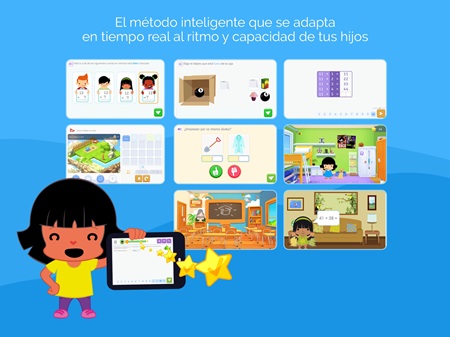
One of Smartick’s defining features has been its commitment to continuous improvement. From the beginning, the company has developed a methodology based on short, personalized, adaptive sessions that are constantly updated. “Every five weeks we release a new version of our programs with content developed by our team,” explains González de Vega. He adds: “These improvements range from new content to usability enhancements or updates to the algorithms that guide student learning.”
Over time, Smartick has expanded beyond mathematics. Its original program has been complemented with new areas such as reading, programming, and critical thinking, developed in collaboration with experts and various initiatives. The latter especially reflects the company’s evolution toward more transversal skills: “We are especially excited to see how technology can help children reflect on how they think, to question themselves, and to develop their own judgment.”
All of this is supported by a methodology that seeks to keep students in an optimal balance between challenge and confidence: “We do this through 15-minute sessions, whose difficulty adapts based on each child’s answers, so that they maintain an 85% success rate—the level scientific evidence shows is ideal for keeping them challenged while still confident in their abilities.”
Generative AI for learning
With the support of CDTI Innovation, Smartick has taken a step further by developing its R&D project based on adaptive generative artificial intelligence. The goal is to overcome current limitations of these models in education, especially their ability to understand children’s context and adapt in real time to student responses.
The project addresses a complex technological challenge combining psychometrics, pedagogy, and advanced software development. Its work includes creating models capable of adapting to each child’s cognitive profile, generating personalized content from a proprietary database, and responding appropriately even in unexpected situations during the learning process. It also seeks to advance in adapting education for students with special educational needs, exploring the potential of generative AI to provide more inclusive and effective learning experiences.
At the same time, the company has already begun integrating this technology into some of its programs, especially in Reading and Thinking, with the aim of enriching the learning experience through more natural and personalized interaction. “Generative AI, when properly designed and used for specific tasks, can simulate a human tutor very effectively,” explains the co-founder.
This capability opens new possibilities for developing more complex and personalized exercises. For example, the system can analyze written student responses and provide detailed corrections, suggest titles, or help extract conclusions from a text.
In short, as González de Vega argues: “With generative AI we are able to develop exercises that significantly improve the child’s learning experience in certain skills covered in Smartick’s programs.”
Overcoming the limits of AI in early education
However, the use of artificial intelligence in education—especially at early ages—raises important technical and pedagogical challenges. “The fundamental challenge is ensuring that AI always provides consistent feedback, adapted to the difficulty of the exercise and the child’s level,” he explains.
Other key issues include avoiding task deviations, optimizing response times, and balancing performance and cost of the models used.
Beyond the technical aspects, the real challenge lies in replicating—or at least approximating—the complexity of human interaction. “We need to simulate human interaction in the best possible way,” he says.
This is not always easy. Smartick works with tens of thousands of children, whose creativity and spontaneity can lead to unexpected responses. “We want to ensure that we always give an appropriate response, and that is not always easy.”
Toward true personalization of learning
The promise of AI in education is closely linked to its ability to personalize learning. In this sense, Smartick aims to approach a model historically reserved for a few: one-to-one tutoring. “The most effective learning happens in individualized tutoring,” the co-founder recalls, referencing how in past centuries elites relied on private tutors for high-quality education.
Today, technology makes it possible to democratize that model. “The technologies we use at Smartick allow us to deepen learning personalization, making it much more effective and efficient.”
This personalization considers not only academic level but also pace, cognitive profile, and each student’s specific needs.
A major impact on special educational needs
One of the areas where this technology can have the greatest impact is in supporting students with special educational needs. “Generative AI adapts to their needs, their pace, and everything they require,” González de Vega explains.
This personalization allows tailored learning experiences for each case. In addition, Smartick has a specialized team with deep knowledge of learning difficulties. “We have a team that knows in detail the challenges of children with dyslexia, dyscalculia, high abilities, and more.”
The combination of technology and pedagogical expertise enables a more complete and effective solution, capable of responding to student diversity.
Technology as a complement
Despite the potential of AI, Smartick emphasizes the importance of avoiding overly disruptive or simplistic visions. According to the co-founder, teachers remain irreplaceable: “An excellent teacher will always make a difference.”
In this sense, Smartick positions itself as a complement to the traditional education system, aimed at improving the student learning experience.
At the same time, González de Vega highlights the importance of effort, curiosity, and discipline. “We must ensure that children understand the potential they have in their hands to learn better—not to achieve results through shortcuts.”
The role of CDTI: boosting technological innovation
The development of this adaptive generative AI project would not be possible without significant R&D effort. In this context, the support of CDTI Innovation has been key for Smartick. “Having the support of an institution like CDTI is always positive,” says González de Vega. He adds: “Not only because of the funding, but also because of the credibility that comes from having the endorsement of such a prestigious institution.”
In this way, CDTI consolidates its role as a key driver of innovation in Spain, enabling companies like Smartick to pursue ambitious technological developments with real societal impact.
Looking ahead: a digital “academy” of excellence
Looking to the future, Smartick aims to become a global reference in personalized education, supported by advanced technology but grounded in a clear and consistent methodology. “I see Smartick as that online ‘academy’ that tens of thousands of parents can trust,” he explains.
The company’s goal is to continue offering programs that allow each child to reach their full potential, avoiding both frustration and boredom. “With these solutions, children will neither feel discouraged nor bored, because they will know they are capable of doing more.”
In a context where screen use is increasingly concerning, Smartick also advocates for a responsible, education-focused approach. “We are the best chefs for children’s cognitive diet,” González de Vega concludes.
With short, intensive, and highly personalized sessions, the company aims to continue demonstrating that technology, when used well, can become a powerful ally for learning.
About CDTI Innovation
The Centre for the Development of Technology and Innovation (CDTI E.P.E.) is a public entity under the Spanish Ministry of Science, Innovation and Universities. Its mission is to promote technological innovation in the business sector, ensuring that Spanish companies transform scientific and technical knowledge into globally competitive, sustainable, and inclusive growth.
In 2025, under a new strategic plan, CDTI provided more than €2 billion in support to Spanish companies and startups
More info:
Web: www.cdti.es
Linkedin: https://www.linkedin.com/company/29815
X: https://twitter.com/CDTI_innovacion
Youtube: https://www.youtube.com/user/CDTIoficial

cloud technology axon

The launch follows the success of Dunas Aviation I, which completed fu...