Interview with Celeste Guzmán, Head of R&D at Bioline Iberia: “Funding from CDTI Innovación and FEDER funds allows us to advance in the biological control of agricultural pests with greater technical strength”
The promotion of R&D in biological solutions for agriculture is opening up new ways to combat pests more sustainably. With the support of CDTI Innovación and co-financing from European FEDER funds, Bioline Iberia is developing the Revolumites project, aimed at optimizing the production of predatory mites and strengthening the role of biological control as an effective alternative to chemical treatments.
Since its creation in 2018, Bioline Iberia has focused its activity on promoting innovative solutions for integrated pest management in agriculture. The company was born from a joint venture between the Almería-based company Biocolor S.L. and the multinational Bioline Agrosciences, specialized in the development of biological solutions for plant health. The combination of Bioline Agrosciences’ international research expertise—backed by more than ten patents and five research centers in different countries—and Biocolor’s technical and logistical knowledge of the Spanish agricultural sector gave rise to a company focused on bringing technological innovation to the field.
“Bioline Agrosciences has been a pioneer for almost 30 years in the development and implementation of beneficial insects in greenhouses,” explains Celeste Guzmán, Head of the R&D Department at Bioline Iberia, who emphasizes that the objective of the Spanish subsidiary from the outset was to establish itself as a technological partner for farmers, capable of offering effective solutions against pests through biological control strategies.
Today, the company has 68 employees, six of whom are specifically dedicated to R&D activities, and has positioned itself as a key player in the supply of natural tools for the protection of fruit, vegetable, and ornamental crops. Its catalog includes a wide range of predatory and parasitoid mites and insects, such as Amblyseius swirskii, Neoseiulus californicus, Orius laevigatus, and Aphidius spp., among many other beneficial organisms that contribute to the natural control of pests. These solutions are complemented by nematodes, pheromones, sticky traps, microbiological products, pollinating insects, and biostimulants, forming a comprehensive portfolio geared toward sustainable agriculture.
Beyond its products, Guzmán also highlights the value of the company’s technical support. “We have a team of specialists who visit farms to assess farmers’ real problems and propose solutions tailored to each situation,” she explains. This approach is complemented by specialized logistics that ensure the delivery of living organisms under optimal conditions, through refrigerated shipments and direct distribution to farms or cooperatives.
Currently, Bioline Iberia holds around a 12% market share in its main segment within Spain. In terms of exports, the company is already present in several European countries—such as France, Italy, Greece, Hungary, Croatia, and Portugal—as well as in international markets including the United Kingdom, Mexico, Morocco, Egypt, and Senegal. “International expansion is part of our strategic objectives, and we are actively working on it,” says Guzmán.
In this context of growth and consolidation, innovation plays a central role in the company’s strategy. Bioline Iberia allocates approximately 8% of its revenue to R&D activities, with the aim of improving the effectiveness and accessibility of biological solutions available to farmers.
In recent years, the company has driven the development of new formats and technologies that facilitate the application of biological control, ranging from controlled-release systems to patented devices such as T-protect®, Bugline®, and Stickline®, as well as more recent innovations like Duo® systems. It has also made progress in the industrialization of beneficial organism release processes, through encapsulation technologies and new field application tools, including drone-based release and spraying solutions.
“Over the years, we have transformed innovation into practical tools that make biological control easier, faster, and more reliable for farmers,” says Guzmán. This includes recently introduced formats designed to save time on farms and ensure product effectiveness, such as Chrysoline Eggline.
One of the most significant projects currently underway at Bioline Iberia is Revolumites, an R&D initiative focused on developing new strategies for the production of predatory mites, especially the species Amblyseius swirskii, a key organism in the biological control of agricultural pests.
The context for this research is shaped by a profound shift in the agricultural sector. “Intensive agriculture faces a growing challenge: reducing the use of chemical pesticides, driven both by stricter regulations and consumer demand for safer and more sustainable food,” explains Guzmán.
In this scenario, Amblyseius swirskii has become a fundamental tool for combating major pests such as whiteflies and various species of thrips, including Thrips parvispinus, currently considered one of the main threats to protected crops like peppers and cucumbers. However, current production methods for these organisms have limitations that hinder scalability.
“Existing rearing systems present challenges in terms of costs and efficiency,” notes the Head of R&D. The project’s objective is precisely to overcome these challenges by developing an innovative diet and optimizing production processes, in order to significantly increase the density of mites obtained per production unit.
The ultimate goal is to increase the concentration of individuals available for commercialization and improve the performance of the production system. “We aim to offer a more effective and sustainable solution for pest control in agriculture,” Guzmán summarizes.
Developing this innovation involves tackling a complex biological system in which multiple factors interact. Rearing predatory mites requires managing an entire trophic chain, where not only the predator but also its prey is reproduced, along with other elements involved in the production process.
“We are working with a system that involves interactions between predator, prey, substrates, diet formulations, and controlled environmental conditions,” explains Guzmán. Each of these factors can influence both productivity and the quality of the final product.
Moreover, all stages of the process—from the start of rearing to final packaging—impact system performance. “This entails a huge need for control, analysis, and coordination between different departments,” she adds. For this reason, Revolumites is conceived as a highly multidisciplinary project involving various areas of the company.
Once the initial development phases in the laboratory are completed, the project includes validation under real crop conditions. To this end, Bioline Iberia works closely with agricultural cooperatives and producers.
“In the validation phase, we will carry out field trials in pepper and cucumber crops to analyze the establishment of mite populations and their real capacity for pest control,” explains Guzmán. These trials will take place across different climatic seasons, especially during the summer months, coinciding with peak agricultural campaigns.
Collaboration with farmers is essential to ensure the viability of the innovation. “Many of these trials are conducted on commercial plots, which reflect the real conditions in which the product must perform,” she says.
Beyond improving production processes, the Revolumites project aims to strengthen the role of biological control as a sustainable alternative to chemical treatments in agriculture.
“The use of chemical pesticides presents significant drawbacks, both in terms of application safety, food safety, and the emergence of resistance,” explains Guzmán. In contrast, the use of high-quality predatory organisms helps improve crop health and reduce dependence on these substances.
In this sense, developing new strategies for producing predatory mites can have a significant impact across the entire agri-food chain. “Promoting biological control benefits farmers, consumers, and society as a whole,” she argues.
Advancing a project of this nature requires significant investment in R&D. In this context, institutional support has played an important role in accelerating its development.
“Co-financing from CDTI Innovación and European FEDER funds has been decisive for Bioline Iberia because it reduces R&D risk and allows us to move forward with the Revolumites project with greater technical strength,” explains Guzmán. Thanks to this support, the company has been able to intensify trials, strengthen specialized resources, and accelerate the development of new feeding strategies for the mass rearing of predatory mites.
This boost benefits not only the company but also the broader innovation ecosystem. “This type of European funding acts as a lever to mobilize investment, generate skilled employment, and increase the competitiveness of innovative companies in Spain,” she states.
Moreover, according to Guzmán, the impact goes beyond the business sphere. “It helps drive a more sustainable agricultural model, promoting biological control over chemical solutions, improving crop resilience, and strengthening the safety and sustainability of the food system.”
The knowledge gained from Revolumites will enable Bioline Iberia to expand its understanding of beneficial organism production systems and guide new areas of research. “Optimizing production processes and implementing new lines should always be an objective for any production company,” says Guzmán.
In this regard, the project will serve as a foundation for future initiatives focused on other mite species, as well as predatory and parasitoid insects used in biological control.
In the medium term, the company expects the results obtained to help strengthen its market position. “Our goal is for this project to allow us to continue expanding our market share both nationally and internationally,” she states.
But the expected impact goes beyond business growth. “We trust that initiatives like this will continue to promote the use of biological control organisms, which—even in a context of climate change—remains the most sustainable solution for agricultural pest control,” concludes Celeste Guzmán.
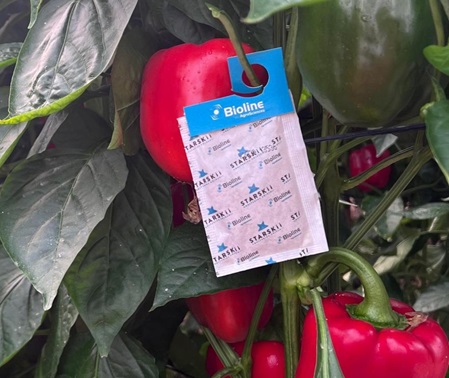
Image: Release sachet of A. swirskii in pepper crops
The Centre for the Development of Technology and Innovation (CDTI E.P.E.) is the innovation agency of the Spanish Ministry of Science, Innovation and Universities, whose objective is to promote technological innovation in the business sector. Its mission is to ensure that the Spanish business fabric generates and transforms scientific and technical knowledge into globally competitive, sustainable, and inclusive growth. In 2025, within the framework of its 2024–2027 Strategic Plan, CDTI provided more than €2 billion in support to Spanish companies and startups.
More information
Web: www.cdti.es
Linkedin: https://www.linkedin.com/company/29815
X: https://twitter.com/CDTI_innovacion
Youtube: https://www.youtube.com/user/CDTIoficial

cloud technology axon

Cuatrecasas has advised on the €15.1 million financing granted by pr...