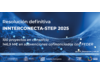
CDTI Innovación, the innovation agency of Spain's Ministry of Science, Innovation and Universities (MICIU), has announced the results of the 2025 INNTERCONECTA STEP call, initially endowed with €150 million. The programme has approved 100 collaborative regional R&D projects focused on the strategic technology areas defined by the Strategic Technologies for Europe Platform (STEP).
The grants awarded amount to €146.9 million, representing 98% of the programme's available budget, and will leverage a total eligible R&D investment of €231.5 million through projects with a strong regional cooperation component.
A total of 100 consortium projects have been approved, involving 388 participating organisations. Of these, 251 are SMEs, accounting for 64.7% of all beneficiaries, while 9.8% of participating SMEs act as consortium leaders.
Driving strategic technologies and regional innovation
INNTERCONECTA STEP combines three key public policy objectives. First, it contributes to the European STEP framework, which concentrates investment on critical technologies that strengthen the European Union's strategic autonomy and competitiveness. Second, through ERDF co-financing under the European Regional Development Fund, it supports cohesion policy by prioritising less-developed and transition regions. Third, within Spain's national innovation ecosystem, the programme promotes business collaboration, links companies with research organisations, and accelerates market-oriented innovation.
This multi-dimensional approach positions INNTERCONECTA STEP as one of Spain's main public instruments for fostering business consortia working on strategic technologies for Europe at a time of increasing global technological competition and growing demand for industrial resilience.
Digital technologies account for nearly two-thirds of approved projects
The approved projects are concentrated across the three strategic technology areas established under the STEP framework.
Digital technologies, including those aligned with the Strategic Programme for the Digital Decade, account for 62.1% of all approved projects and receive 65.3% of the total funding awarded.
Biotechnology, recognised as a cross-cutting enabler for healthcare, industry, and resilience, represents 21.6% of projects.
The remaining 16.2% corresponds to clean and resource-efficient technologies, supporting the transition towards a net-zero industry.
Together, these three technological domains are considered strategic under the STEP framework and are regarded as essential for strengthening Europe's industrial competitiveness and technological sovereignty.
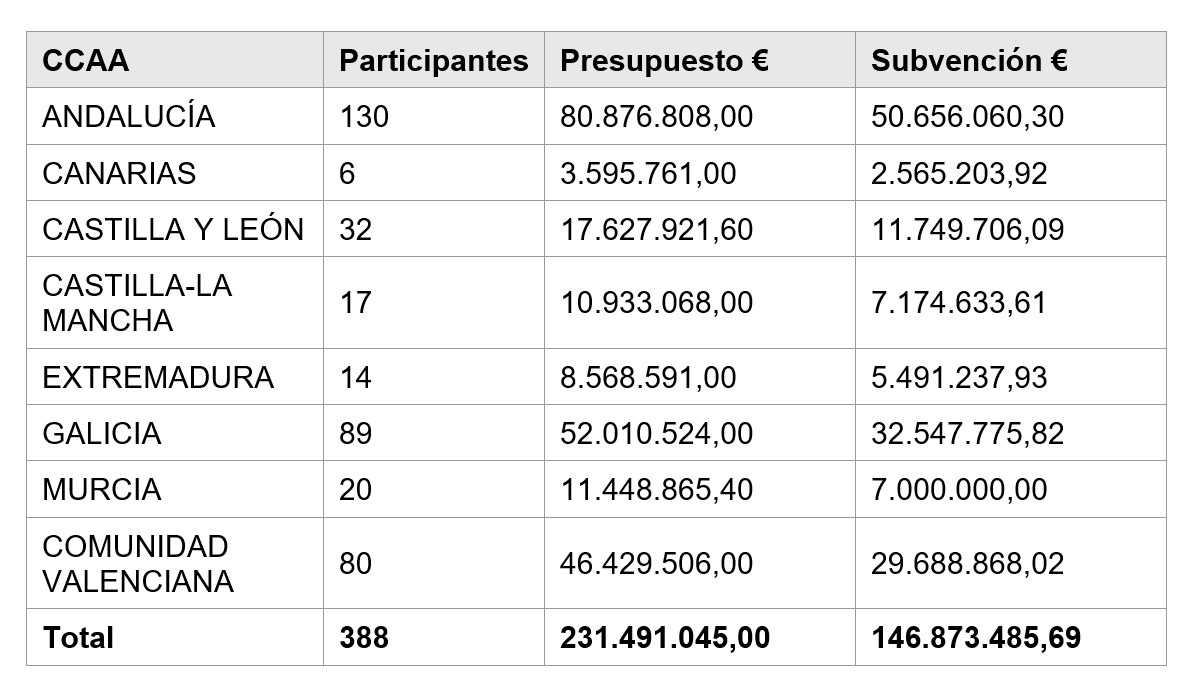
Projects have been approved across all eligible regions except Ceuta and Melilla, where no applications were submitted.
Andalucía receives the largest share of funding, accounting for 34% of the total allocation, followed by Galicia (22%) and the Valencian Community (20%).
This regional distribution has been supported by the recent reprogramming of Spain's 2021–2027 ERDF Multi-Regional Operational Programme, which increased funding availability for several eligible regions while reallocating at least 10% of programme resources to Specific Objective 1.6, under which INNTERCONECTA STEP operates.
Strong interregional collaboration
One of the programme's core requirements is that each consortium must include organisations from at least two eligible autonomous communities.
Andalucía leads interregional collaboration, with organisations partnering across all eight participating regions. Galicia and the Valencian Community follow, collaborating with organisations from seven regions each, while the Region of Murcia ranks fourth, with partnerships spanning six regions. The remaining participating regions show lower, though still significant, levels of collaboration.
Collaboration with research organisations exceeds programme requirements
The call also requires beneficiaries to subcontract at least 10% of their eligible project budget to knowledge-generating organisations, such as research centres and universities.
Across all approved projects, this threshold has been exceeded, with an average subcontracting rate of 14.8%.
Murcia records the highest percentage (17.0%), followed by Galicia (15.6%) and the Valencian Community (15.5%). Castilla-La Mancha (15.1%) and Andalucía (14.0%) also exceed the programme average, while Extremadura (12.9%) and Castilla y León (11.3%) register the lowest percentages, although all participating regions comfortably meet the minimum requirement.
About the INNTERCONECTA STEP 2025 programme
INNTERCONECTA STEP 2025 is the first edition of this grant programme, launched in 2025 and co-financed through the European Regional Development Fund (ERDF) under Spain's 2021–2027 Multi-Regional Operational Programme.
The initiative has been designed to strengthen collaboration between companies and research organisations within eligible cohesion regions. Projects must be carried out in at least two of the ten eligible autonomous communities or autonomous cities: Andalucía, the Canary Islands, Castilla-La Mancha, Castilla y León, Ceuta, the Valencian Community, Extremadura, Galicia, Melilla, and the Region of Murcia.
The programme is fully aligned with the European Strategic Technologies for Europe Platform (STEP).
For this edition, CDTI Innovación has also introduced a fast-track mechanism allowing positively evaluated proposals that could not be funded due to budget limitations to gain direct access to CDTI's Partially Repayable Aid (APR) instrument without submitting a new application.
Funding is awarded through a competitive grant scheme, with aid intensities of up to 65% of eligible costs for large companies, 75% for medium-sized enterprises, and 80% for small companies, depending on whether activities qualify as industrial research or experimental development.
Eligible projects were required to have budgets ranging from €1 million to €4 million, with a minimum eligible expenditure of €175,000 per participating company. Consortia had to comprise between two and six companies, without creating a separate legal entity, with one participant acting as coordinator before CDTI. In addition, applicants were required to subcontract at least 10% of the eligible budget to research organisations and to sign an internal consortium agreement before submitting their proposal.
Further information
The full resolution is available at:
About CDTI Innovación
The Centre for the Development of Technology and Innovation (CDTI E.P.E.) is the innovation agency of Spain's Ministry of Science, Innovation and Universities. Its mission is to promote technological innovation within the business sector and help Spanish companies transform scientific and technological knowledge into globally competitive, sustainable, and inclusive growth.
As part of its 2024–2027 Strategic Plan, CDTI provided €2.423 billion in financial support to Spanish companies and startups in 2025.
More info:
Web: www.cdti.es
Linkedin: https://www.linkedin.com/company/29815
X: https://x.com/CDTI_innovacion
Youtube: https://www.youtube.com/user/CDTIoficial

cloud technology axon

Glovo was originally launched under the slogan "the 2.0 couriers," but...