Interview with Fernando Martín de Lara, CEO of 300K Solutions: “The funding from CDTI Innovación and the FEDER funds arrived at exactly the right moment to accelerate our room-temperature biological preservation solution”
300K Solutions has developed a technology capable of preserving biological samples at room temperature, eliminating dependence on ultra-low freezers and cold-chain logistics. The project, backed by CDTI Innovación and European FEDER funds, aims to transform a model that the global scientific industry has considered untouchable for decades.
Some problems coexist with society for decades without anyone stopping to fundamentally question them. The preservation of biological samples is one of them. Ever since clinical research, diagnostics, and drug development began relying on tissues, plasma, or DNA, the answer has always been the same: cold — extreme cold. Ultra-low freezers permanently connected to the grid, transport chains that cannot fail for even a moment, high costs, and a carbon footprint nobody celebrates. Fernando Martín de Lara decided to ask what seemed like an unasked question: what if there were another way?
That question gave rise to 300K Solutions. Headquartered in Salamanca — a city Martín de Lara points to as proof that world-class technological innovation can also emerge from what is often called “empty Spain” — the company has built a solution that aspires to completely change how biological samples are stored and preserved worldwide. Today, the company employs 15 people, all university graduates, several with PhDs, and eight fully dedicated to R&D.
Betting everything on R&D
The company’s shareholder structure reflects its DNA: the founding partners, who also hold executive roles, retain majority ownership, alongside Meins Consulting, a renewable energy company with a strong R&D focus, and a third financial investor. According to its CEO, the company “is operating at a loss, exactly as planned in the business plan,” because everything it generates is reinvested into developing a technology that, he insists, “did not exist anywhere in the world” when they started.
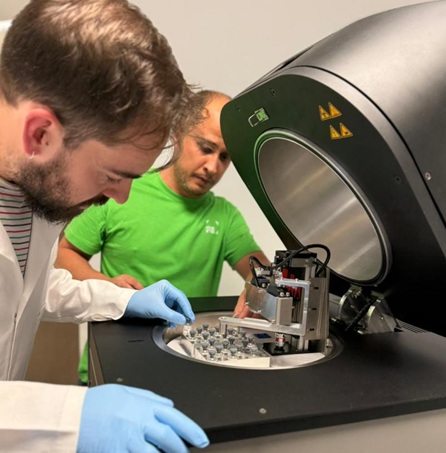
Its portfolio revolves around two complementary components: the S3 Sample Stabilization Equipment and reagent kits designed to stabilize different types of biological samples. The result is a complete, ready-to-use solution. Its clients include public and private biobanks, hospitals, research centers, contract research organizations, and pharmaceutical companies. So far this year, the company has generated around €300,000 in sales, with 40% coming from the Spanish market and the remainder from Europe, particularly Portugal, Netherlands, Italy, and Austria. The company is considering expansion into the United States and Canada, although Martín de Lara prefers to first consolidate its European base due to the costs associated with transatlantic expansion.
The pandemic exposed the problem
To understand what 300K Solutions does, it is first necessary to understand the problem it solves. “The current way of stopping the degradation of biomarkers in biological samples is through freezing,” explains Martín de Lara. And freezing means massive ultra-low freezers running continuously, “with a very significant carbon footprint.” Added to this are cold transportation costs, which he bluntly describes as “absolutely absurd,” as well as the constant risk that a technical failure could destroy years of stored work.
The COVID-19 pandemic brought this problem into sharp focus. The difficulty of maintaining cold chains during a global emergency exposed the fragility of a system that everyone had taken for granted. It was then that 300K Solutions’ founding question became even more urgent: why had nobody applied lyophilization — a technique widely used in the pharmaceutical and food industries — to biological sample stabilization? The obstacle was not a lack of technology, but the complexity of adapting it. “Lyophilization has to be developed ad hoc for each sample type,” he explains. “That’s what we’ve done: standardize and homogenize the way of doing something that individually makes little sense, but when used in a standardized, ready-to-use way, creates added value that eliminates all the problems associated with freezing.”
Turning complexity into simplicity
The process is based on sublimation: removing water molecules from the sample and replacing them with a mixture of excipients specifically developed and validated for each biomolecule. Without available water, biological degradation reactions and microorganism activity can no longer occur. The samples, vacuum-sealed in vials inside the equipment itself, can remain stable at room temperature — up to 25°C and 65% relative humidity — for the same period as samples continuously stored at -80°C, without alteration.
One of the company’s most significant technical achievements, developed together with Meins Consulting, has been a temperature-transmitting plate that distributes heat evenly, eliminating the so-called “edge effect” — the tendency for vials located at the edges of the equipment to receive more energy than those in the center, compromising process uniformity. The innovation has already been patented.
But perhaps the greatest challenge was ensuring that the hardware and excipients worked in perfect synchronization. The goal was to transform something extraordinarily complex into something any laboratory could use without specialized training. “The biggest technical challenge was developing the process that allows the industrialized technology to be operated autonomously and validated by third parties by pressing a single button,” summarizes Martín de Lara. Turning complexity into simplicity is, ultimately, the company’s core ambition.
Not one advantage, but many
One of the most interesting aspects of 300K Solutions’ proposal is that its value proposition changes depending on the user. For pharmaceutical companies, the benefit lies in reducing the cost of transporting samples from collection centers to central laboratories. For clinical diagnostics labs, it means the ability to preserve biological remnants for later analysis, similar to how pathologists preserve paraffin blocks today. For research laboratories, it means being able to analyze all samples simultaneously, avoiding the distortions introduced by staggered analysis as samples arrive over time.
For biobanks — perhaps the customers benefiting most directly — the advantages are even broader. “Beyond sleeping peacefully without worrying about when an ultra-low freezer might fail,” says Martín de Lara, the technology also reduces energy consumption, not only from the freezers themselves but also from the climate control systems needed to cool storage rooms. The savings accumulate over time.
The multiplier effect of innovation
The development of the BIORT project received support from CDTI Innovación and co-financing from European FEDER funds. For a startup-stage company reinvesting all of its revenue into R&D, this support represented far more than additional funding. “The support was essential,” says Martín de Lara. “Without it, 300K Solutions would have faced serious financing problems that could have resulted in significant dilution of the founding team, with the associated risk of demotivation.” The funding also arrived at precisely the right moment: “exactly when we needed to finalize and further develop the evolution of the initial prototypes, both in hardware and reagents.”
Beyond the project itself, Martín de Lara argues that “the only way for a country to grow in the long term is to generate a change in its productive model and move toward one based on disruptive technology.” 300K Solutions employs 15 people in Salamanca, and the impact extends further: local suppliers have opened new production lines, Meins Consulting has launched Thawi, and has also created a new on-site hydrogen company. “One project gives rise to others,” he summarizes.
From the perspective of the UN 2030 Agenda, the project contributes to SDG 7 (Affordable and Clean Energy), SDG 13 (Climate Action), SDG 3 (Good Health and Well-being), and SDG 9 (Industry, Innovation and Infrastructure), delivering a globally relevant technological solution from Salamanca.
A change that already feels inevitable
Martín de Lara has no doubts about where the sector is heading, although he acknowledges that timelines are difficult to predict. “This is the company’s vision: to change the way biological samples are stabilized and stored. And it will happen, sooner or later.”
What slows mass adoption is not a lack of scientific evidence, but resistance to change. “We are in the 21st century. All current needs are already being met in one way or another, and people struggle to change,” he says. But he also points out that humanity is living through “the most exciting and innovative period in history,” with more and more people capable of identifying applications for disruptive technologies that today still seem unimaginable. Once that happens at scale, he concludes, the adoption of this technology “will become unstoppable.”
CDTI Innovación
The Centre for Technological Development and Innovation (CDTI E.P.E.) is the innovation agency of the Spanish Ministry of Science, Innovation and Universities. Its mission is to promote technological innovation within the business sector and ensure that Spanish companies transform scientific and technological knowledge into globally competitive, sustainable, and inclusive growth. In 2025, within the framework of the 2024–2027 Strategic Plan, CDTI provided more than €2 billion in support to Spanish companies and startups.
More info
Web: www.cdti.es
Linkedin: https://www.linkedin.com/company/29815
X: https://twitter.com/CDTI_innovacion
Youtube: https://www.youtube.com/user/CDTIoficial

cloud technology axon
Axon Partners Group, Tresmares Capital, Sabadell Venture Capital, Inve...