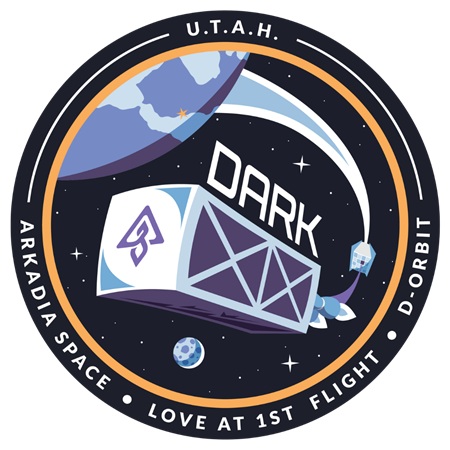
The Castellón-based company Arkadia Space has successfully begun operating its green propulsion system in space, marking a historic milestone for the Spanish and European space sector. The propulsion system, called DARK, was launched on March 15 aboard a satellite from the company D-Orbit, during SpaceX’s Transporter-13 mission. Since then, the system has demonstrated optimal performance under real operating conditions, validating the technology Arkadia has been developing over the past few years.
“We are proud to have hosted Arkadia Space’s DARK module on our ION satellite. From the beginning, working with the Arkadia team has been a true pleasure, and every step of our collaboration has been smooth and enriching. Seeing DARK operating in orbit is a major milestone, and we’re glad to have contributed to making it possible,” said Matteo Andreas Lorenzoni, VP of Commercial Strategy at D-Orbit.
One of the most important components of a satellite is its propulsion system, which performs key maneuvers throughout its operational life. These engines allow a satellite to reach its final orbit after launch, correct its trajectory, maintain orientation, avoid collisions with space debris, or even deorbit at the end of the mission to avoid leaving debris in space. In short, without propulsion, many satellites could neither fulfill their purpose nor operate safely.
This is why the success of the DARK system in orbit is especially significant: it confirms that Arkadia’s technology is not only viable, but also safe, reliable, and efficient. Moreover, the entire system—ranging from engine control to data collection and satellite communications—has been managed with software and electronics fully developed in-house by Arkadia.
The system, which uses high-concentration hydrogen peroxide as fuel, has been designed to offer a sustainable alternative to traditional engines based on toxic propellants. In the words of Francho García, CEO and co-founder of Arkadia Space:
“Developing the system in record time and seeing it work exactly as expected in space is the best demonstration of what the Arkadia team is capable of. This success sends a clear message to our customers: we are entering our commercial phase, and we are ready to sell propulsion systems that have been successfully tested in space.”
The mission has also served to successfully validate all components of the propulsion system developed by Arkadia Space—from the engines, responsible for generating the thrust required for orbital maneuvers, to the fuel tanks. In addition, Arkadia has successfully tested in orbit the electronic systems and control software—also self-developed—which manage engine operation, data collection, temperature regulation, and communications with the host satellite. Even the pre-launch fueling procedures, carried out by Arkadia’s team at the Vandenberg Space Force Base in California, were executed successfully, completing a full system validation.
“We gave it everything in this first mission. The plan was ambitious and high-risk, and we needed absolute certainty to get to space. For us, D-Orbit has been that trusted partner. It’s been an incredible journey, and our team has truly enjoyed working with theirs to turn this challenge into reality,” added Ismael Gutiérrez, CTO and co-founder of Arkadia Space.
This mission positions Arkadia Space as the first European company to demonstrate an in-orbit propulsion system based on hydrogen peroxide. The company is already in talks with new clients and expects to close more deals following the contract signed with MaiaSpace earlier this year. At a critical geopolitical moment for Europe’s space autonomy, Arkadia is consolidating its role as a new strategic propulsion provider for the continent.
Based in Castellón, Arkadia Space specializes in the development and commercialization of green propulsion systems for satellites and upper platforms over 50 kg, focusing on the use of high-concentration hydrogen peroxide and a proprietary high-performance fuel. This sustainable choice represents a major advancement in the aerospace industry, where green propulsion is emerging as a key enabling technology.
The company was founded at the end of 2020 by Francho García, Francisco Espinosa, Ismael Gutiérrez, and Sergio Soler, who previously worked together at PLD Space for four years, primarily leading the development of propulsion systems and rocket engines.
Arkadia’s goal is to become the sustainable, reliable, and affordable alternative to the toxic and expensive propulsion systems that use hydrazine and its derivatives, driving the growth of the space logistics sector, where propulsion and mobility are essential in the emerging space economy.

cloud technology axon

Addleshaw Goddard (AG), the London-headquartered international law fir...