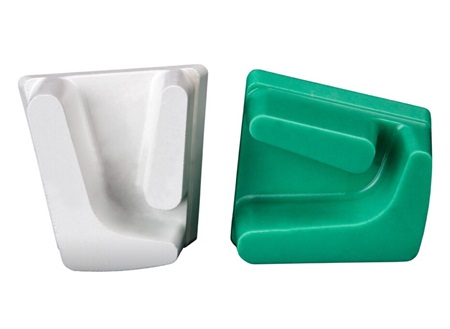
Interview with Alexis Pina, Commercial Director at Abrastone Diamant:“This is how, with the support of CDTI Innovación, we are developing a new generation of abrasives that integrate polishing and protection into a single process.”
Thanks to the support of CDTI Innovación, the Catalan company Abrastone Diamant, specialized in the development of abrasives for surface treatment, is working on a technology that incorporates nanowaxes directly into the abrasive material. The aim is to simplify industrial processes, improve the finish of ceramic surfaces, and advance toward more sustainable solutions.
Ceramics are valued not only for their design, but also for their resistance, durability, and ability to maintain their finish over time. In this final outcome, polishing plays a key role, especially in a market that demands increasingly glossy, uniform, and protected surfaces.
This is precisely the field in which Abrastone Diamant operates. The company is a third-generation family business specializing in the development and manufacturing of abrasives for surface treatment. With more than 50 years of experience, facilities in Barcelona, and an international presence through its subsidiary in Brazil, the company has accompanied the evolution of materials such as natural stone, ceramics, slate, and engineered surfaces.
Its Commercial Director, Alexis Pina, explains that this evolution has required continuous product adaptation. “In the beginning, only natural stone surfaces were polished, and over the years new materials requiring polishing have emerged, such as slate, ceramics, or engineered stone,” he notes.
Abrasives themselves have also evolved: from early products based on magnesium oxide binders and silicon carbide, the sector has moved toward solutions using technical resins and synthetic diamond, offering greater durability and performance.
Polishing and protecting in a single step
Within this context, and with the support of CDTI Innovación, Abrastone Diamant is developing a project aimed at integrating two functions that are traditionally performed separately: polishing ceramic surfaces and protecting them using nanowaxes.
The initiative addresses a specific industry need: achieving surfaces that are more resistant to stains caused by substances such as oil, coffee, wine, or vinegar. Currently, nanowax treatments help seal the micropores of the glaze after polishing, but they usually require an additional processing stage and specific machinery.
Abrastone Diamant proposes incorporating nanowaxes directly into the abrasive so that the protective effect is achieved during the polishing process itself. As Pina summarizes, “we believe this is a process that can be incorporated into abrasives themselves, avoiding this additional cost in the process.”
This approach not only aims to improve the final surface finish, but also to simplify industrial workflows by eliminating post-treatment stages and reducing the need for additional equipment.
The goal is for the surface to benefit, during polishing, from both the mechanical finishing of the abrasive and the protective effect of the nanowaxes. Although polishing already reduces part of the porosity, there are very small pores that mechanical treatment cannot reach. “Nanowaxes allow us to close those nanopores that mechanical polishing cannot reach,” explains Pina.
With this development, Abrastone Diamant aims to achieve better-protected surfaces against stains and external agents, while also improving gloss, final finish, and material durability. In addition, integrating protection and polishing into a single step could help optimize resources and reduce the environmental impact of finishing processes.
The challenge of integrating nanowaxes into abrasives
The innovation in the project lies not only in adding a new component, but in ensuring that nanowaxes are compatible with existing materials without altering the properties that make abrasives effective.
Abrastone Diamant’s experience with synthetic resins has been key to pursuing this line of work. “We believed that these nanowaxes could be compatible with the synthetic resins used to produce abrasives, allowing us to add them during the production mixing phase,” says Pina.
The technical challenge lies in achieving the right concentration of nanowaxes to ensure the desired protective effect without compromising durability, cutting ability, or mechanical resistance. “The main challenge is to apply the necessary concentrations of nanowaxes to achieve the desired effect, as well as to assess the impact that these concentrations may have on the mechanical properties of the abrasive,” he explains.
The project also incorporates new formulations using more sustainable resins, in line with an industry increasingly focused on reducing waste, optimizing processes, and lowering environmental impact. The combination of abrasives and nanowaxes in a single solution could also contribute to reducing consumption associated with additional treatment stages and improving overall process efficiency.
In this context, Pina highlights that sustainability has become a shared priority across the industry: “There is a widespread concern about minimizing the environmental impact of waste generated by industrial activity.”
This approach aligns with the Sustainable Development Goals, particularly SDG 9, due to its contribution to industrial innovation, and SDG 12, by advancing more efficient processes with reduced waste generation and more responsible resource use.
Innovating to respond to new materials
Innovation is part of Abrastone Diamant’s daily activity. Materials change, surfaces evolve, and each application requires adapting abrasives to different levels of hardness, texture, and finish.
In the ceramics sector, glazes are constantly evolving. In natural stone, the emergence of extremely hard materials, such as certain quartzites, also demands new solutions. “Abrastone Diamant is continuously developing new abrasives because we operate in a very dynamic sector that forces us to constantly adapt our products to the needs of new surfaces,” says Pina.
In this context, CDTI Innovación’s support has enabled the company to undertake a high-risk technological development requiring research, formulation, and validation. The Commercial Director also points to a common challenge for many SMEs: access to financing for innovation projects.
“Having the support of CDTI has been a major boost for the company, allowing us to continue providing solutions to the sector,” he states.
Beyond polishing
Abrastone Diamant aims to further expand its R&D capabilities and develop new lines focused on surface treatment and protection. The company sees potential in solutions that go beyond polishing and address specific problems across different materials.
One of these lines is related to treatments designed to protect materials from oxidation processes and other phenomena that particularly affect certain natural stones. “We intend to continue expanding the R&D department in order to increasingly focus on surface treatment,” says Pina.
However, the company remains cautious. The current economic context requires careful investment planning and prioritization of innovation resources. Nevertheless, Abrastone Diamant continues to invest in developing solutions that respond to real industry needs.
With this project, the company takes another step in a long-standing trajectory of technological adaptation: from its early abrasives for natural stone to the development of nanowax-integrated solutions designed to deliver more efficient, durable, and sustainable finishes.
CDTI Innovación
The Centre for the Development of Technology and Innovation (CDTI E.P.E.) is the Spanish Ministry of Science, Innovation and Universities’ innovation agency, responsible for promoting technological innovation in the business sector. Its mission is to ensure that Spain’s business ecosystem generates and transforms scientific and technical knowledge into globally competitive, sustainable, and inclusive growth. In 2025, under the 2024–2027 Strategic Plan, CDTI provided €2.423 billion in support to Spanish companies and startups.
Web: www.cdti.es
Linkedin: https://www.linkedin.com/company/29815
X: https://twitter.com/CDTI_innovacion
Youtube: https://www.youtube.com/user/CDTIoficial

cloud technology axon
Axon Partners Group, Tresmares Capital, Sabadell Venture Capital, Inve...