
The entire sector is already aware of the scope of the EU’s Omnibus package and what it has implied: a reduction in regulatory ambition on sustainability and a profound rethinking of the CSRD and CSDDD, whose final scope is now limited to large companies and multinationals.
This regulatory shift has created uncertainty for organizations that had scaled teams and processes to comply with the original requirements.
However, the trend in the financial sector is quite different. Regulation, channeled through the SFDR (Sustainable Finance Disclosure Regulation), is moving toward simplification—but also toward greater clarity, rigor, and real differentiation between financial products.
The new draft, published on November 20, opens the door to significant changes and a stronger valorization of sustainability within the European financial sector. Key proposed changes include:
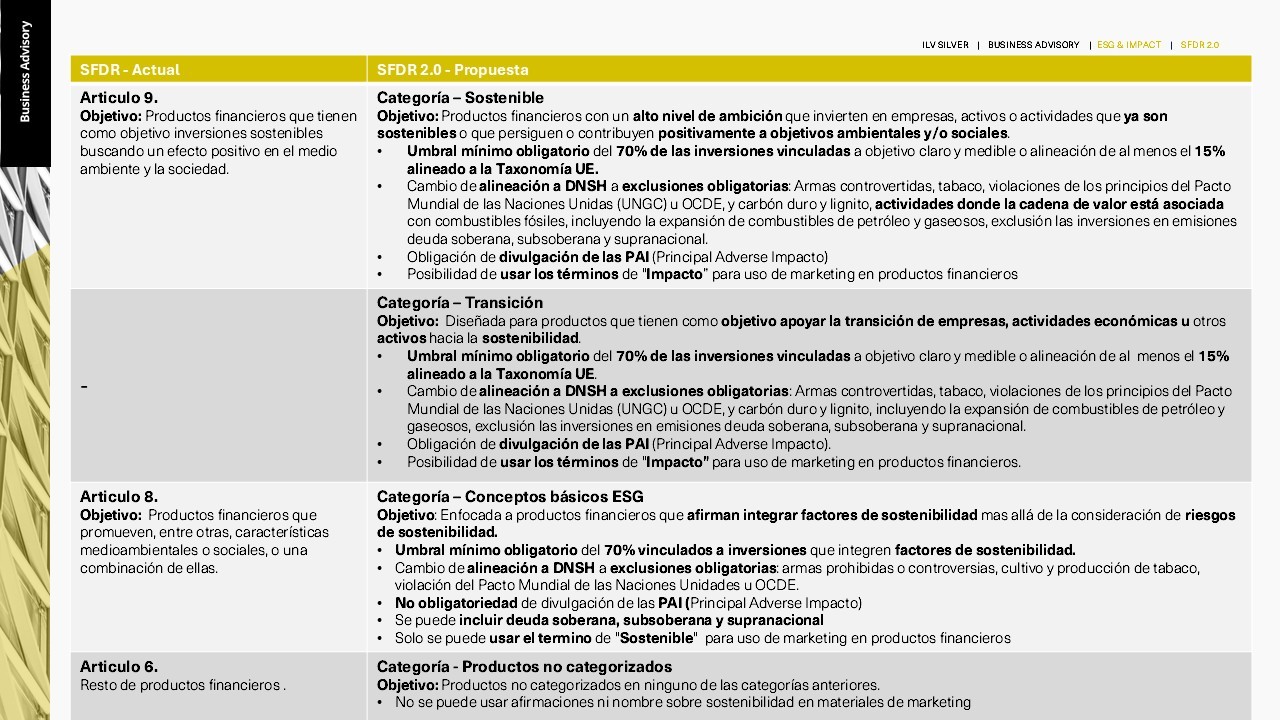
Changes in product labeling:
Other relevant regulatory changes:
Simplification? Yes—but also greater clarity and real differentiation
While these proposals reduce the amount of mandatory information, particularly regarding PAI, remuneration, and documentation complexity, they also introduce a clearer framework for distinguishing truly sustainable or impact-oriented products from those with a more limited approach.
In practice, requirements for sustainable or impact funds are strengthened, aiming to prevent greenwashing and ensure that products labeled as sustainable provide sufficient and credible evidence.
And you—how do you see this proposed set of changes?
Do you think it will affect your fund’s strategy or your investment selection?
By Victor Manz
Director de ESG e Impacto - SFDR, CSRD, Aseguramiento

cloud technology axon

Santander Corporate & Investment Banking has acted as Financial Adviso...