
How a sustainable approach turns retired sites into strategic opportunities
Around US $3.6 trillion of energy assets are due to be decommissioned in the coming years. This surge in shutdowns is being driven by a combination of national net zero commitments, stricter regulations/rising carbon taxes creating pressure to phase out fossil fuel assets, and the natural end-of-life cycle of aging facilities. The assets in question span the nuclear, mining, oil & gas, and coal sectors, and while decommissioning in most of these industries is usually viewed solely as an unavoidable cost, rethinking the process in strategic, circular economy terms may not only reduce the financial burden but also uncover new opportunities.
This would mark a significant mindset shift. Decommissioning planning in many markets has historically been reactive and ad hoc (except in the case of nuclear assets), with companies usually starting to think about the process only at the very end of an asset’s life, leaving little time to act strategically. This Viewpoint focuses on decommissioning energy assets broadly, excluding nuclear assets.
Turning asset retirement from a burden into an opportunity requires companies to carry out the right analysis and planning for end-of-life assets. Doing so can generate environmental and financial benefits. This requires a two-stage framework that harnesses circular economy principles to drive value.
Site-utilization analyses are built on the principle of “circulating products and materials longer” to maximize value generation. The starting point is building a comprehensive list of options for future use of the site, with both energy and non-energy options considered (see figure below).


The options offer different levels of value preservation/generation, and should be evaluated through a three-gate framework, followed by a cross-gate comparison of outcomes:
After deciding on the most suitable site-utilization plan, the next step is selecting the right decommissioning option. Different decommissioning options involve varying degrees of site preservation and infrastructure retention, allowing for tailored solutions based on strategic needs:
The choice of decommissioning approach depends heavily on the site-utilization plan. Sites that will be repurposed for energy-related uses may be best suited to limited decommissioning, as this preserves critical infrastructure, such as grid injection points and pipelines. In contrast, redevelopment projects may require total decommissioning to clear the site for new uses.

Case study: Shell Brent Delta platform decommissioning
Shell’s Brent Delta platform in the North Sea ceased production in December 2011 and the rig underwent phased decommissioning. In April 2017, the 24,200-ton topside was shipped to the UK mainland. By February 2019, 97% of its mass (23,500 tons of steel, concrete, and modules) had been recycled or repurposed into local infrastructure (e.g., bridges and construction steel). This reduced the amount of waste entering a landfill by 98% and saved about 60,000 tons of CO2e emissions in raw material production. This translates to ~$6 million of income recovered from scrap — almost double the general recovery rate from scrap materials in similar conventional decommissioning programs.
Successfully transitioning from viewing decommissioning as a liability to seeing it as an opportunity for value creation requires a structured, data-driven approach. Companies can embed this by developing a systematic framework that aligns with circular economy principles. This methodical approach should also help them avoid the risks of misallocating capital, running afoul of regulatory barriers, and failing to preserve value.
These frameworks should be tailormade, but should all consider the five drivers shown below.

Every asset is different, which is why companies need to design their own tools to help with their decommissioning decision-making. To effectively do so, companies must ensure that they have a strong understanding of the nuances of their asset portfolio and look for value beyond the evident, exploring use cases that may seem uneconomical at first, but that could also allow them to achieve the best-case scenario for decommissioning — balancing financial returns with strategic, technical, and social and environmental gains.
By Carlo Stella, Adnan Merhaba, Lukas Vylupek, Aleya Farhoud, Tomas Sedlacky, Tommaso Ferro, Harsha Agarwal, Mathieu Quettelart

cloud technology axon
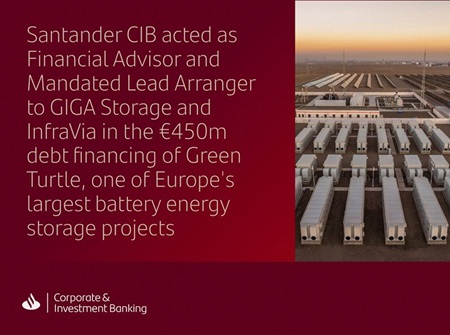
Santander Corporate & Investment Banking has acted as Financial Adviso...