BeAble Capital, a leading science equity fund specializing in disruptive science-based technologies, has invested €186,000 to support the so-called green chemistry technology of the spin-off Molecular Sustainable Solutions. The company has designed a new and powerful sterilization agent for hospitals, capable of combating the most resistant and lethal microorganisms, such as the fungus Candida auris, also known as the “killer fungus.”
This disruptive technology, developed in 2023 by Universitat Jaume I (UJI) in Castellón and the spin-off team, already holds two patents. Molecular has created active solutions that enable fast and highly efficient microbiological disinfection without the need for complex equipment, water, or corrosive ingredients—features in high demand in the hospital and food sectors.
Currently, it is critical for hospitals. For instance, Candida auris has a high mortality rate ranging between 40% and 70% and is resistant to drugs, triggering alarms worldwide and affecting immunocompromised patients and those over 65 in hospitals across the globe.
According to the U.S. Centers for Disease Control and Prevention (CDC), more than 1 in 3 patients die within a month of being diagnosed with an invasive infection from this fungus, which—unlike other fungi—spreads easily from person to person and is difficult to diagnose.
The so-called “killer fungus” can spread in hospitals, operating rooms, and healthcare centers, causing illness in as little as 90 days. Since its appearance at Mount Sinai Hospital in New York—while the first outbreaks in Spain occurred in Madrid, Barcelona, and Mallorca—it has spread to more than 40 countries across five continents.
In the last five years, infections from this lethal fungus have increased by more than 500%, with climate change being one of the contributing factors. The World Health Organization (WHO) has classified Candida auris as one of the 19 most dangerous infectious fungi for public health. With this Spanish technology applied to hospital disinfection and sterilization, the sector now has the technological key needed to eradicate the fungus.
In the medium term, the spin-off Molecular plans to expand into the food industry. The technology could help prevent outbreaks of pathogenic microorganisms such as Listeria and Salmonella, which alone trigger 180 public health alerts per year in Spain. These outbreaks are estimated to cause sustained losses of up to 30% in sales of affected food products. In just two weeks—a moderate outbreak—costs can exceed €1,000,000 in lost sales.
Public and private investment in Deep Science technologies—science-based technologies—is increasingly urgent. Since 2018, science equity fund BeAble Capital has created or invested in more than 40 Spanish companies with highly disruptive and sustainable technologies in key sectors for the economy, such as green chemistry.
Almudena Trigo, founder and chair of BeAble Capital, a European pioneer in Deep Science technologies, notes:
"Investing in sectors that solve challenges critical for our survival—such as contaminant removal, greener energy and better storage, water, waste valorization, or new materials—with a high component of profitability and sustainability will allow us, as a country, to position ourselves at the core of European reindustrialization, which is so necessary today."
Molecular’s new disruptive technology involves a peroxycarbonic acid obtained from simple, commercially available, low-cost, and non-toxic reagents.
The spin-off has demonstrated that the sterilization effectiveness against pathogens such as the “killer fungus”—with outbreaks mostly in hospitals—is 60 times higher than the most microbicidal sterilization agent currently available on the market. The technology was developed by a research team led by Eduardo García-Verdugo, co-founder, together with the current spin-off team.
According to Carlos Estévez, co-founder and CEO of Molecular:
"This investor support represents a strategic milestone that will facilitate the scalability of our disruptive technology, contributing to saving millions of lives and reducing environmental impact, essential for cleaning, disinfection, and sterilization processes."
For the first time in 150 years, a sterilization agent has been designed with all the properties desired by both the market and health and environmental authorities, representing a major breakthrough.
Spain has recorded the highest growth in European patent applications in Europe. However, despite a 44% increase in the last decade, according to the European Patent Office, the country still lags behind other European nations in investment in green chemistry, green energy, biotechnology, and new materials that drive the tech industry in sectors critical for economic challenges.
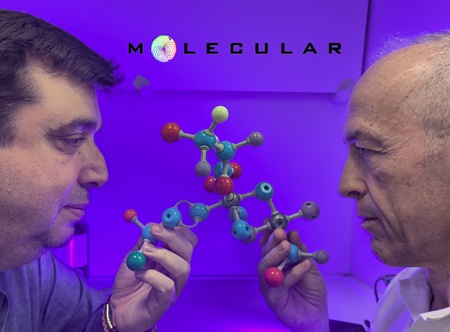
Photo: Molecular founders from left to right, Eduardo García-Verdugo and Carlos Estévez

cloud technology axon
This transaction reinforces Alantra’s continued momentum in Aerospac...