In recent years, a shared diagnosis has become established in the European economic and regulatory sphere: the European Union excels at generating knowledge but faces structural difficulties in capturing the economic value derived from that same knowledge. Reports led by figures such as Mario Draghi or Enrico Letta have pointed to a progressive loss of control over strategic assets, insofar as certain companies and technologies ultimately end up being developed or exploited outside the EU framework.
In this context, it can be observed in certain cases that European technology companies, particularly in phases of rapid growth, adopt international corporate structures or relocate their holding company to other jurisdictions. This phenomenon is usually driven, among other factors, by considerations of legal certainty, operational flexibility, and alignment with international venture capital standards, rather than exclusively by tax-related elements.
A structural mismatch: European innovation and corporate frameworks
From a practical perspective, many institutional investors — particularly in the venture capital and private equity space — tend to operate in environments that offer a high degree of predictability in terms of governance, investment protection, and exit mechanisms. Jurisdictions such as Delaware have developed corporate structures that facilitate this type of transaction, naturally integrating instruments such as drag-along rights, liquidation preferences, or anti-dilution mechanisms.
By contrast, the European framework, characterised by the coexistence of multiple national legal systems, can generate certain operational frictions in cross-border contexts or in scaling processes. Without prejudice to the progress achieved through instruments such as the European Company (SE), part of the doctrine has pointed out that certain formal rigidities — particularly in relation to share capital requirements, capital maintenance rules, or board structure configuration — may not be fully aligned with current global investment market dynamics.
EU Inc.: a proposal under development
In this scenario, the European Commission’s Proposal for a Regulation of 18 March 2026 (COM(2026) 321 final), known as “EU Inc.” or the “28th regime”, is relevant, although its final content and practical scope will need to be confirmed during its legislative process and eventual implementation.
The initiative appears to aim at establishing an optional, harmonised and directly applicable framework to facilitate the incorporation and operation of companies with a transnational profile within the internal market. Unlike previous attempts — such as the European Private Company (SPE) or the Single-Member Company (SUP) — this proposal is based on a legal framework linked to the functioning of the internal market, which could facilitate its adoption through mechanisms other than unanimity.
This approach, combined with advances in corporate digitalisation and cross-border mobility, suggests a gradual shift towards more agile models aligned with contemporary business practice.
Corporate flexibility and regulatory trends
From a technical standpoint, the proposal appears to point towards greater flexibility in corporate structuring. Among other aspects, it could encourage a shift in focus away from traditional share capital requirements towards effective solvency-based criteria, through mechanisms such as balance sheet and liquidity tests.
It may also foresee an expansion of shareholder autonomy in structuring economic and governance rights, moving closer to more contractual models commonly used in other legal systems. This approach could be particularly relevant in financing rounds, where clarity and enforceability of shareholder agreements are key elements for investors.
In any case, the practical implementation of these trends will depend on their final regulatory development and their interpretation by legal and economic actors.
Governance and exit mechanisms
In the field of corporate governance, the proposal appears to aim at allowing greater adaptability in management structures, as well as in the allocation of investor control rights. This could include clearer recognition of common investment agreement clauses, such as veto rights on strategic decisions or board appointment mechanisms.
Similarly, the potential standardisation of instruments such as drag-along and tag-along rights could help reduce legal uncertainty in divestment processes, facilitating mergers, acquisitions, or capital market exits.
These trends seem aligned with a broader evolution towards models in which corporate law incorporates a stronger contractual dimension, without prejudice to the necessary protections for third parties and the fundamental principles of the legal system.
A strategic initiative, dependent on implementation
Beyond its technical dimension, EU Inc. can be understood as an attempt to adapt the European legal framework to the demands of a global economic environment, where corporate structure increasingly influences the location of economic value and corporate control.
The creation of a harmonised instrument could help reduce certain perceived barriers for international investors and support the retention of business structures within Europe. However, its effectiveness will largely depend on market adoption, the legal certainty it provides, and its coordination with other ecosystem elements such as capital markets and the broader regulatory environment.
Conclusion
In this context of transformation of the European corporate framework, the proper legal structuring of companies — particularly in growth stages, investment entry rounds, or restructuring processes — is becoming increasingly strategic. The choice of corporate vehicle, the configuration of shareholder rights, and the anticipation of exit scenarios are no longer purely technical matters, but key decisions in value creation and retention.
At ILIA ETL GLOBAL we support companies and management teams in these processes, integrating legal analysis with a practical, business-oriented approach. From incorporation and corporate structuring, through capital increases, due diligence processes or M&A transactions, to more complex situations such as restructurings or insolvency proceedings, our approach aims to align legal architecture with each project’s strategic objectives.
In an environment where the regulatory framework evolves rapidly, having a solid and flexible legal structure can make the difference between scaling or falling behind.
By Mercedes Cano with the collaboration of Mario García

cloud technology axon
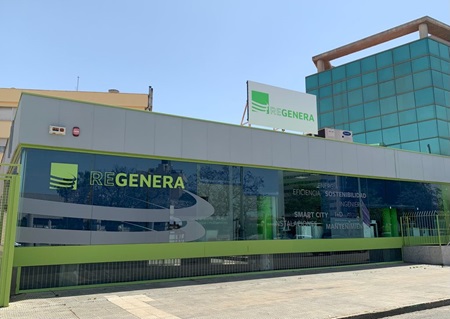
Over little more than a decade, Regenera has built a strong track reco...