Many entrepreneurs do not see the true value of their company. Discover what hidden assets investors identify when analysing an SME.
A company’s value is not always in the numbers
But when an investor analyses a company, they do not start by looking at sales.
They start by looking at what allows that business to keep generating profits in the future.
And often, that is where elements appear that the entrepreneur themselves had not considered as value.
Commercial relationships built over decades, a dominant position in a very specific niche, technical know-how that is difficult to replicate, or a highly recognised brand within its sector.
These are factors that rarely appear on the balance sheet, but that can make a difference in a negotiation.
In many SME acquisition deals, the final price is not explained solely by EBITDA. It is explained by the hidden assets that the buyer identifies within the business.
What investors see when analysing a company
When a buyer analyses a company, they are not only looking at current profits.
They are looking for signals of sustainable competitive advantage.
In other words, reasons why that company should continue performing well in the future.
And many of those reasons are not found in the income statement.
Dominant position in a very specific niche
A company may seem small in absolute terms, but highly relevant within a specific segment.
For example:
The entrepreneur sees a “mid-sized business”.
The investor may see a position that is difficult to replicate in the market.
And that position can justify higher valuations.
Commercial relationships built over decades
In many SMEs, client relationships have been built over 20 or 30 years.
This means:
The entrepreneur sees “long-standing clients”.
The investor sees recurring revenue with very low churn.
And that reduces business risk.
Intangible assets that do not appear on the balance sheet
A very significant part of many companies’ value lies in assets that are not reflected in accounting.
Among them:
These assets are not easily acquired.
They are built over time.
That is why, when an investor identifies these intangibles, they understand they are looking at a business with real barriers to entry.
Operational know-how that is difficult to replicate
Many companies have developed over the years a specific way of doing things.
It may be:
Sometimes it is not even documented.
But that accumulated knowledge can become a clear competitive advantage over new entrants.
Growth potential that has not yet been unlocked
This is one of the factors buyers are most interested in.
Many SMEs perform well, but have never tried to scale aggressively.
For example:
The entrepreneur may see this as a prudent decision.
The investor may see it as a clear growth opportunity.
A team that knows the business better than anyone
In many family-owned companies, business knowledge is not limited to the founder.
It sits within a team that has been in the company for years.
Middle managers who understand:
For a buyer, this means continuity.
A strong team means a company that can continue operating even when the founder steps away.
Hidden assets on the balance sheet: when value is not in the business alone
Not all company value lies in its operational activity. In many SMEs, there is additional value in assets that the entrepreneur does not perceive as strategic.
One of the most common cases is real estate assets.
Many family businesses operate for decades from industrial warehouses or land that was purchased when prices were significantly lower. With urban expansion, these assets can increase substantially in value compared to what is reflected in the accounts.
For example:
For the entrepreneur, that property is simply “the warehouse where we work”.
For an investor, it may represent:
In some transactions, these assets can explain a significant portion of the total deal value.
How an investor analyses it
When this type of asset appears, the buyer typically evaluates three scenarios:
1. Separating the property from the deal
The entrepreneur sells the company but retains ownership of the property and leases it back to the business.
2. Including the asset in the transaction
The real estate value is integrated into the total price.
3. Parallel real estate transactions
Property sale or subsequent development.
Each case changes the structure and valuation of the deal.
Why many companies fail to identify this value
In many SMEs, real estate assets are recorded at historical cost.
This means they may appear in the balance sheet at a value significantly below market value.
When an investor analyses the company, one of the first things they check is whether there are underutilised or undervalued assets.
And that is where surprises sometimes appear.
The mistake many entrepreneurs make when valuing their company
Many entrepreneurs believe their company is worth:
But the market does not value the past. It values the future.
That is why, in many M&A transactions, buyers are willing to pay more for companies with clear competitive advantages, even if they are not large in size.
Value is not always visible.
Often, it is structural.
The real value of a company is sometimes hidden
A company may look ordinary from the inside.
But from the outside, it may contain elements that make it highly attractive to a buyer.
Consolidated commercial relationships, accumulated know-how, niche positioning, or intangible assets that do not appear in financial statements.
In many transactions, correctly identifying and articulating these factors is what allows the market to understand the true value of the business.
When a company enters an acquisition process, one of the first challenges is presenting the business in a way that allows investors to understand not only its current figures, but also its potential.
In structured SME M&A environments such as Deale, information is organised precisely so that buyers can identify these value drivers and assess opportunities more clearly.

cloud technology axon
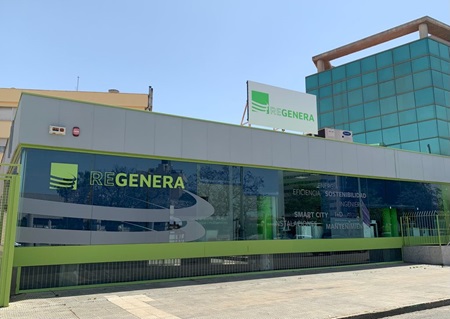
Over little more than a decade, Regenera has built a strong track reco...