Interview with José Gandía, Chairman and Founder of Rústicas del Guadalquivir: Developing new fruit varieties that combine outstanding flavour, high nutritional value and resilience to climate change is one of the greatest challenges facing the agri-food sector.
To address this challenge, Rústicas del Guadalquivir is leading the REDFRUIT project, an initiative supported by CDTI Innovación and co-financed by the European Regional Development Fund (ERDF). The project integrates advanced biotechnological tools to accelerate the development of new peach, raspberry and blueberry varieties specifically adapted to the climatic conditions of southern Spain.
More than fifty years ago, developing stone fruit varieties capable of competing in international markets was a major challenge in southern Spain. The varieties available at the time were poorly suited to the climatic conditions of Seville, limiting both production and export opportunities. It was in this context that Rústicas del Guadalquivir was founded. The company initially evaluated breeding material from international breeders before taking a decisive step: launching its own plant breeding programme.
Over the years, the company has evolved into a fully integrated business controlling the entire value chain, from plant breeding and nursery production to cultivation, packing and international marketing.
"Our unique growing conditions and market requirements encouraged us to invest in such a long-term project," recalls José Gandía, Chairman and Founder of Rústicas del Guadalquivir.
This strategy has enabled the company to develop proprietary, high-value varieties and establish a strong presence in Europe's leading markets. One example is its Royal Blu Aroma blueberry range, which has received the prestigious Flavour of the Year award for three consecutive years.
"We have achieved international recognition among leading supermarket chains, while also earning the Flavour of the Year distinction for three consecutive years," he says.
REDFRUIT: Accelerating Plant Breeding Through Biotechnology
After decades of developing proprietary varieties, the company has taken another step forward in its innovation strategy with the REDFRUIT project. The initiative responds to growing consumer demand for healthier and more sustainable foods by developing new fruit varieties that combine superior flavour, enhanced nutritional value and improved adaptation to changing climatic conditions.
To achieve this, the company has incorporated advanced biotechnological tools that make it possible to assess the genetic potential of each plant with far greater precision, even before it reaches maturity.
"The REDFRUIT project uses molecular markers to measure the genetic variability within our breeding material, a crucial prerequisite for achieving genuine innovation," explains the company's Chairman.
Unlike traditional breeding methods, which rely solely on observing the plant's visible characteristics, molecular markers enable breeders to identify, at very early stages, those individuals carrying the desired genes. This significantly improves the selection of parent plants and accelerates the development of new varieties while reducing both time and uncertainty.
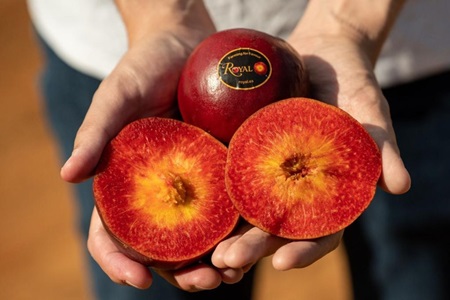
As a result, researchers can focus on traits that are increasingly valued by consumers and retailers alike, including red-fleshed peaches, raspberries with deeper colour intensity, blueberries with earlier flowering dates and fruit offering more balanced flavour profiles.
Plant Breeding in the Service of Consumers
At the same time, REDFRUIT incorporates the analysis of bioactive compounds naturally present in fruit to identify varieties with higher levels of polyphenols, anthocyanins, carotenoids and vitamin C, thereby enhancing their health-promoting properties.
"The challenge is to identify the varieties richest in these beneficial compounds so that we can develop commercial product lines specifically focused on health and nutrition," he adds.
According to José Gandía, this commitment reflects a clear shift in consumer preferences.
"The market does not always demand innovation; it also seeks standard products at highly competitive prices. However, we have always focused on creating added value, segmenting product categories and setting new market trends."
All of this serves a clear purpose: "to satisfy and surprise the end consumer," he concludes.
Innovation, Intellectual Property and Competitiveness
Developing a new fruit variety requires years of research and substantial investment. Protecting this knowledge is therefore essential to securing returns on innovation and maintaining a competitive position in the global marketplace.
In this regard, the company's Chairman stresses that "protecting our intellectual property is fundamental to preserving our competitive advantage. It enables us to offer exclusivity, control the volumes placed on the market, and balance supply with demand."
Molecular markers also play a key role in this area. In addition to accelerating the development of new varieties, they make it possible to identify each plant genotype unequivocally and safeguard plant breeders' rights against unauthorised propagation.
"The illegal propagation of protected varieties is becoming less common because breeders are very proactive, and molecular markers provide rapid identification that is recognised by the courts," he explains.
The Support of CDTI Innovación and the ERDF
Plant breeding programmes require sustained investment and development timelines that, for woody crops, can extend well beyond two decades. In this context, the support provided by CDTI Innovación and the European Regional Development Fund (ERDF) has enabled the company to maintain a long-term R&D strategy while strengthening collaborations with leading national and international research centres.
"Without these projects and the support of CDTI, it would have been far more difficult to maintain long-standing collaborations with institutions such as IRTA and universities in the United States," acknowledges the Chairman of the Andalusian company.
The company has now accumulated more than twenty years of projects supported by CDTI, providing the continuity needed to consolidate its research programme and translate scientific advances into practical applications for the fruit industry.
"Our relationship with CDTI spans more than twenty years of supported projects, giving us the stability required to carry out long-term research," he adds.
Innovating to Meet Tomorrow's Challenges
Climate change, evolving consumer preferences and increasing international competition are driving the fruit sector to continuously renew its varieties. For Rústicas del Guadalquivir, the challenge is to combine exceptional eating quality with greater resilience to high temperatures, water stress and other extreme climatic conditions.
The company believes that innovation will continue to be the key to addressing these challenges and maintaining its leadership in an increasingly demanding market by developing varieties that deliver value to both growers and consumers.
"None of the varieties we cultivated twenty years ago would still be commercially viable today. We have no alternative but to continue investing in research if we want to remain efficient," concludes José Gandía.
Image caption: REDFRUIT is driving the development of new fruit varieties, including this red-fleshed peach.
About CDTI Innovación
The Centre for the Development of Technology and Innovation (CDTI E.P.E.) is the innovation agency of Spain's Ministry of Science, Innovation and Universities. Its mission is to promote technological innovation within the business sector by helping Spanish companies transform scientific and technological knowledge into globally competitive, sustainable and inclusive growth.
In 2025, under its 2024–2027 Strategic Plan, CDTI provided €2.423 billion in funding to Spanish companies and startups to support innovation and technological development.
Web: www.cdti.es
Linkedin: https://www.linkedin.com/company/29815
X: https://twitter.com/CDTI_innovacion
Youtube: https://www.youtube.com/user/CDTIoficial

cloud technology axon
Developing new fruit varieties that combine outstanding flavour, high ...