Interview with Joaquín Querol, CEO of Endor Technologies: “CDTI Innovación financing and FEDER funds allow independent companies to bring oncological innovation to the clinical setting”
Born as a scientific spin-off, Endor Technologies is advancing the development of an innovative treatment for metastatic tumors based on a therapeutic paradigm shift. With the support of CDTI Innovación funding and co-financing from European FEDER funds, the company is conducting a Phase II clinical trial focused on non-cytotoxic biomedical innovation aimed at generating real patient impact.
Since its founding in 2007, Endor Technologies has followed an uncommon path in the Spanish biomedical sector. Originating as a scientific spin-off from the Catalan Institute of Nanotechnology (ICN), the company was established with a clear mission: to translate genuine scientific advances—particularly in oncology—into medical solutions with direct patient impact. “From the beginning, we wanted to develop deep science, with time and rigor, and do so independently, without external constraints that could compromise the quality or direction of the research,” explains CEO and founder Joaquín Querol.
A commitment to independence shapes the company
This commitment to independence shaped both the structure and strategy of the company from the start. Endor Technologies is a privately owned company controlled by its founding partners, growing without venture capital or external investment. Instead, it opted for an organic, self-funded growth model—a rarity in a capital-intensive field like biomedicine. “We chose not to depend on third parties in order to maintain a long-term scientific vision,” Querol emphasizes.
Deep science and a unique hybrid model
To make this approach viable, the company developed a complementary path that became key to its evolution. To fund oncology research without compromising autonomy, Endor Technologies launched a cosmetics line based on the same science underpinning its core research. “This step marked the beginning of a new path: a scientific cosmetics division,” notes Querol.
Over time, this line has proven successful in the market and has become a strategic tool for the company. Scientific cosmetics have generated internal resources that now finance oncology research, closing a rare loop of technological transfer. “This hybrid business model has allowed us to grow sustainably and take a crucial step in our original purpose: leading innovation in the oncology sector,” Querol states.
Currently, the company operates across three main areas: oncology research, with a Phase II clinical project exploring a novel mechanism of action for metastatic tumors; scientific cosmetics, supported by proprietary technology with clinical and scientific evidence; and the development of medical products aimed at managing chemotherapy side effects, following rigorous clinical standards.
A lean structure with an R&D focus
Endor Technologies currently has a team of around 17 people, three of whom work directly in R&D. Despite its small size, the company invests significantly in research, dedicating 25% of its revenue and nearly 100% of its EBITDA to R&D. “Our absolute priority is to sustain scientific development,” notes the CEO.
Recent technological achievements include the development of a disruptive theory on tumor dynamics validated in preclinical studies, the initiation of a Phase II clinical trial with a non-cytotoxic mechanism of action, the creation of a proprietary patented molecule with cosmetic and biomedical applications, and the setup of an in-house laboratory for the production of nanomolecules under medical device regulations.
Commercially, the company currently operates exclusively in the Spanish market, which accounts for nearly 100% of sales. Its main clients are specialized aesthetic medicine centers and individual consumers purchasing dermocosmetic products through its website. International expansion is planned for the future: “2026 will be the year we start entering foreign markets,” Querol reveals.
An oncological project aimed at a paradigm shift
The core focus of Endor Technologies remains its oncology project: a Phase II study of growth factors for metastatic tumor treatment, with particular attention to metastatic breast cancer. According to the company, this initiative addresses an unmet clinical need. “Metastatic cancer remains a leading cause of mortality, and many current treatments rely on cytotoxic strategies that do not always provide lasting responses,” explains Querol.
The project proposes a paradigm shift. “Our approach addresses a clear gap: exploring an alternative therapeutic strategy that does not aim to destroy the tumor, but rather modifies its environment to initially limit growth and subsequently induce necrosis,” Querol details. Instead of directly attacking tumor cells, the strategy stimulates a biological response that physically confines the tumor, preventing expansion and promoting natural necrosis.
“The innovation lies precisely in this paradigm shift,” he emphasizes. This non-cytotoxic mechanism of action, according to Endor Technologies’ CEO, is not being explored by other groups at the clinical level. This approach could complement existing therapies and positively impact patients’ quality of life.
From the lab to the clinic: meeting high standards
Advancing the project into clinical phases entails meeting some of the most demanding biomedical development standards. “The main challenge we face today is obtaining public agency approval to start clinical phases,” Querol acknowledges. This process requires compliance with the highest pharmaceutical industry standards for safety and efficacy demonstration.
The Phase IIa clinical trial will involve 15 hospital centers and approximately 90 patients, making it a large-scale multicenter study. Coordinating an initiative of this magnitude is, in Querol’s words, “a significant organizational and scientific challenge.”
Collaboration with the Fundació Món Clínic Barcelona and its academic CRO is key, providing clinical expertise, methodological rigor, and coordination capacity—all essential for the quality and credibility of the study. This partnership strengthens the project’s robustness and its integration into the scientific and healthcare system.
Public funding as an accelerator
Executing such a complex clinical project requires not only scientific excellence but also financial backing aligned with the timing and risks inherent to biomedical research. Endor Technologies benefits from support co-financed by CDTI Innovación and European FEDER funds, which has been decisive in the project’s development.
“The support from CDTI has been key to advancing clinical development without slowing down our other R&D lines,” says Querol. He notes that public funding not only provides financial resources but also serves as validation. “This type of funding validates the scientific solidity of the project and enables an independent company to bring real innovation into the clinical setting,” he emphasizes.
Beyond its impact on the company, Querol highlights the broader ecosystem benefits. “Economically and socially, this support strengthens Spain’s innovation ecosystem, facilitates the translation of scientific knowledge into medical solutions, and generates tangible benefits for patients, the healthcare system, and society as a whole,” he states.
Potential impact on the healthcare system
Metastatic breast cancer, especially subtypes like triple-negative, continues to show limited survival rates. In this context, Endor Technologies’ approach could have a meaningful impact if proven safe and effective clinically. “It could significantly improve patients’ quality of life, as it is a non-cytotoxic strategy,” explains the CEO.
The goal is not necessarily to replace existing treatments, but to expand therapeutic options. “We aim to offer new alternatives where current options are limited,” Querol adds. This aligns with the broader need for more personalized, less aggressive, and better-tolerated treatments.
Biomedical innovation with vision
Beyond specific clinical outcomes, the project demonstrates Endor Technologies’ approach to innovation. “This project shows the importance of pursuing unconventional approaches and bold biomedical innovation, grounded in solid science and long-term vision,” says the founder.
Querol believes that without such bold bets, it is difficult to achieve truly transformative advances in healthcare. The combination of deep science, strategic independence, and public-private collaboration is key to enabling high-risk, high-potential-impact projects to materialize.
If Phase II results are positive, Endor Technologies aims to progress toward more advanced clinical phases and maintain continuous dialogue with regulatory agencies. “We hope to consolidate the clinical development of this treatment and lay the foundation for this strategy to eventually reach real patients within the healthcare system,” concludes Joaquín Querol.
CDTI Innovación
The Centre for the Development of Industrial Technology (CDTI E.P.E.) is the innovation agency of the Spanish Ministry of Science, Innovation, and Universities, tasked with promoting technological innovation in the business sector. Its mission is to ensure that Spanish companies generate and transform scientific and technical knowledge into globally competitive, sustainable, and inclusive growth. In 2024, under a new strategic plan, CDTI provided over €2.3 billion in support to Spanish companies and startups.
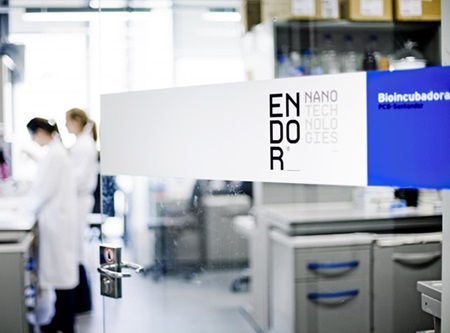
Image: Endor Technologies facilities
More info:
Web: www.cdti.es
Linkedin: https://www.linkedin.com/company/29815
X: https://twitter.com/CDTI_innovacion
Youtube: https://www.youtube.com/user/CDTIoficia

cloud technology axon
Over little more than a decade, Regenera has built a strong track reco...