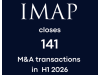
In 2025, the marketing, advertising, and AdTech sector in Spain reached a clear turning point: the definitive transition to a model in which technology, data and artificial intelligence are the main drivers of value in M&A transactions (the buying and selling of technology companies).
Following a period of valuation adjustments, the market has regained strong momentum, driven by two key factors:
In this context, business operations are no longer driven solely by growth, but by strategic positioning within the digital ecosystem.
M&A activity in the advertising sector in Spain has evolved into a more sophisticated model. Companies are no longer simply buying up business volume, but rather critical assets needed to compete in a technology-driven environment:
This change has raised the bar in the acquisition processes of technology companies, where due diligence is no longer solely financial, but also technological, operational and strategic.
For shareholders valuing a sale of their technology business, this presents a clear opportunity: companies that incorporate proprietary technology or data differentiation are commanding significantly higher valuations.
One of the most significant deals of the year has been the acquisition of Clear Channel España by Atresmedia.
Strategic key points:
Esta operación refleja una tendencia clara: la convergencia entre traditional media and advertising technology, a factor that is playing an increasingly decisive role in M&A processes. We discussed the details of this deal in our analysis published in September 2025.
The acquisition of Fly Me to the Moon by t2ó ONE, in which Baker Tilly acted as exclusive financial adviser to the seller, exemplifies the prevailing growth model: the integration of complementary capabilities.
Strategic rationale:
Transactions of this kind are becoming increasingly common in the sale and acquisition of agencies and technology companies, where value lies in the combination of creative talent and analytical skills.
La inversión de Seaya's investment in Adsmurai confirms the growing interest among private equity firms in technology companies operating in the advertising sector. Key factors:
For investors, the appeal is clear: business models offering recurring revenue, scalability and a strong technological component – three essential elements in any process of acquiring a technology company.
LLYC has continued to pursue its strategy of inorganic growth, combining international acquisitions with selective divestments. Strategic focus:
Such moves reflect a significant trend in M&A: not just growing, but optimising the asset portfolio to maximise value.
The consolidation of independent agencies is a response to structural market pressures, driven by the need to grow in order to compete with large groups, gain access to higher-volume clients and have the capacity to invest in technology.
In many cases, these transactions are a preliminary step towards broader processes involving the sale of technology companies or the entry of investors.
The advertising sector is now inextricably linked to the technology sector. In fact, many of the most significant projects stem from the intersection of IT consultancy and marketing. Clear examples include:
This has completely redefined the buyer profile: it is no longer just media groups, but also investment funds and technology companies.
Although the media spotlight is on major deals, venture capital remains key to understanding the future of the sector. Startups funded in 2025 share common traits such as the intensive use of AI and language models (LLMs), a focus on marketing automation, and lead generation using highly scalable models.
These companies represent a natural pipeline of future M&A deals. Over the next two to three years, many will be prime acquisition targets. For an M&A adviser specialising in the technology sector, identifying these trends is key to anticipating market opportunities.
Spain has established itself as one of the most dynamic markets for advertising M&A in Europe for three main reasons:
Spanish companies have swiftly embraced data and automation, creating assets that are highly attractive to international investors.
The existence of numerous independent agencies creates constant opportunities for consolidation and mergers and acquisitions.
Spain acts as a natural bridge to Latin America and, in many cases, to the US, which enhances the strategic value of local companies.
In an environment where value lies in intangible assets—technology, talent, intellectual property—the role of the specialist adviser is crucial. The difference between a successful transaction and one that destroys value often lies in the ability to execute these stages correctly.
Everything suggests that the trend towards consolidation in the sector will continue in 2026:
Companies that fail to evolve towards technology-driven models or achieve sufficient scale will struggle to compete. Conversely, those that combine data, technology and strategic positioning will continue to be prime targets in the buying and selling of technology companies.
M&A activity in Spain’s advertising sector is currently at a particularly exciting juncture. The combination of technology, consolidation and available capital is creating an ideal environment for shareholders looking to sell their tech companies, firms seeking to grow through acquisitions, and funds aiming to establish a foothold in the AdTech and MarTech ecosystem.
The key lies in understanding that the market has changed; it is no longer just about size, but about technological capability and strategic positioning.
By Diego Gutiérrez, partnet at Baker Tilly

cloud technology axon

Developing new fruit varieties that combine outstanding flavour, high ...