The AMBIT Living Spaces Cluster, the Catalan cluster for the habitat and contract sectors, together with the Tarragona-based companies PLASTICPeople, Inèdit, CitySens Lab and Aleteo Insight (located in Baix Ebre and Baix Camp), have launched an innovative project to transform interior design and the design of collective spaces using 100% recycled and recyclable materials. The initiative aims to develop these new materials and validate their use in professional environments to enable this model to be replicated in other spaces within the contract sector.
The project, called Habit Up Spaces, has received support from ACCIÓ (Department of Business and Labour) through a €150,500 grant from the cooperative project funding line of the Nuclear Transition Funds, which are intended to boost business projects in areas affected by the closure of nuclear power plants.
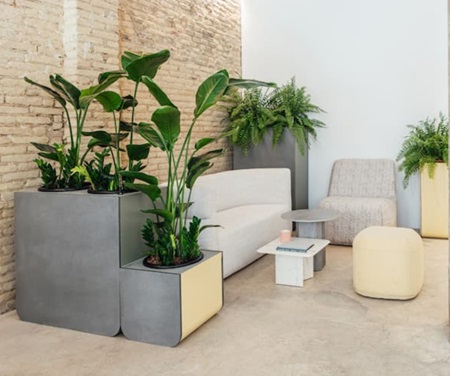
The contract sector is the area of design that manufactures furniture and equipment for collective, commercial or public projects—such as restaurants, hotels, offices or other spaces—meeting both functional and aesthetic requirements. In this context, Habit Up Spaces will focus on developing panel-format materials made from post-consumer plastic waste—that is, materials that have already been used and are now difficult to recycle due to their low value or complexity. Subsequently, two interior design interventions will be carried out in two pilot spaces: a wine promotion and tasting venue and a coworking space. These will integrate the materials into furniture and equipment solutions to study their use in different professional environments. As part of the project, a digital tool will also be developed to calculate the carbon footprint of the materials created, along with a life cycle analysis (LCA) and an environmental product declaration (EPD), in order to certify their environmental quality.
The proposal connects the use of locally sourced recycled materials with companies based in the same area. According to Julio Rodrigo, head of sustainability and circular economy projects at AMBIT, “this is a project that goes beyond sustainability; it is a place-based project, from the Terres de l’Ebre, for the Terres de l’Ebre.” Therefore, Habit Up Spaces aims to “boost new opportunities in interior design and collective and urban furniture in the area, while also creating tourism offerings and attractive spaces to attract talent profiles that have so far had little presence in the region.” In this regard, “all participating companies are rooted in the territory, and the project seeks to position the area as a pioneer and benchmark in circularity applied to the design and interior design of collective spaces, fostering the creation of an open innovation hub that strengthens the local ecosystem,” Rodrigo adds.
The project is currently in the conceptualisation and design phase of the two interior design proposals. The venues where the interventions will take place have already been selected: on the one hand, La Casa Ecológica of the Fatarella Town Council, a space dedicated to the promotion and tasting of wines from the DO Terra Alta and other local products such as olive oil and nuts; on the other hand, the coworking space promoted by Aleteo Insight, located in L’Ametlla de Mar.
This project is expected to revalorise more than two tonnes of plastic waste, transforming it into recycled panels for integration into the two pilot spaces. In addition, it is expected to generate direct employment through the creation of three new jobs in the participating companies during the project’s execution.
AMBIT, the coordinating cluster of the project, brings together 274 companies from the habitat and contract value chain—from manufacturers of raw materials or products such as furniture, lighting and home textiles to architects, interior designers and distributors. The cluster promotes innovation projects and strategic activities that support companies in areas such as marketing, internationalisation, product and space design, industrial processes and trend analysis. Among AMBIT’s most notable activities are the interihotel fair, the WEcontract project in Barcelona and strategic workshops for its members.
What is a cluster?
A cluster is a group of companies (SMEs, multinationals and startups) and supporting organisations (universities and technology centres) within a specific economic field that both compete and cooperate. It is a tool that helps improve the competitiveness of its members through the development of joint transformative projects and the definition of strategic challenges for the sector.
In Catalonia, cluster policy is implemented through the Catalunya Clústers programme, promoted by the Government through ACCIÓ for over 30 years. Currently, 27 Catalan clusters are part of the programme, bringing together 3,000 companies and organisations, with a combined turnover exceeding €80 billion and accounting for 36% of Catalonia’s industrial turnover.
This project is expected to revalorise more than two tonnes of plastic waste, transforming it into recycled panels for later integration.

cloud technology axon

The transaction will enable Catalonia Hotels & Resorts to optimise its...