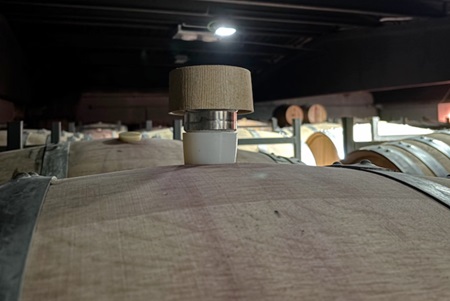
The Catalan wine cluster INNOVI and four sector entities — the wineries Herència Altés, Vinyes Domènech, Celler Masroig, and the technology center VITEC — from the Terra Alta and Priorat regions, have launched a project to develop an intelligent monitoring and automated management system for the wine aging process. The initiative aims to drive the sector’s digital and energy transformation through resource optimization and the use of technologies such as artificial intelligence (AI) and the Internet of Things (IoT), with the goal of facilitating the transfer of this innovative system to the wider wine industry. The project is expected to achieve up to a 40% reduction in energy consumption.
The project, called Winesmart, has received support from ACCIÓ — the business growth agency of the Department of Business and Labour — through a €109,000 grant from the Nuclear Transition Fund’s cooperative project aid program, aimed at supporting business initiatives in areas affected by the closure of nuclear power plants.
Technological development of the project: energy auditing and intelligent sensing
As part of the project, two main actions are being carried out. On the one hand, a comprehensive energy audit of the wine production process is being conducted — in collaboration with the technology center CTTC UPC — to identify energy consumption peaks and energy generation flows within the wineries. Using real data and advanced modeling tools, strategies will be designed to establish a self-sustainable energy consumption model based on green energy use.
On the other hand, a proprietary sensor system is being developed — in collaboration with Onafis, a company specialized in the digitalization of oenological processes — which, through technologies such as IoT and AI algorithms, will enable real-time monitoring of environmental and energy conditions in aging spaces and automate their adjustment according to the wine’s specific needs at each stage of the process. This will make it possible to measure variables such as temperature, humidity, and pressure, and automatically perform actions such as turning air conditioning systems on or off and adjusting room temperature.
Project impact and the importance of intelligent wine aging
According to Xavier París, head of the technical office and project manager at INNOVI, “many wineries still rely on manual regulation systems and fixed parameters for wine aging, which do not respond to the real and changing conditions of the aging rooms or to the specific evolution of the wine at any given moment.” These traditional systems “can generate inefficiencies and high water and energy consumption, ultimately reducing the quality of the final product and making strategic decision-making more difficult for wineries,” Paris emphasizes. In this way, the Winesmart project will implement “a new management approach that places the wine at the center, where the product determines the environmental conditions rather than the other way around, moving toward a new paradigm of intelligent and personalized wine aging.”
Currently, the project is in the analysis phase, during which technical teams are evaluating energy consumption and studying different environments to determine the most viable installation solutions. The installation of the sensor systems is expected to begin in the coming weeks.
The three wineries and the technology center leading the project are key players in the region and aim to “position the area as a hub for innovation and green transition,” highlights the head of the technical office and project manager at INNOVI. “Initiatives such as Winesmart help consolidate economic activity rooted in the territory and retain young and qualified talent,” he states.
What is a cluster?
A cluster is a group of companies (SMEs, multinationals, and startups) and ecosystem stakeholders (universities and technology centers) within a specific economic sector that compete and cooperate at the same time. It is a tool that helps improve the competitiveness of its members through the development of joint transformative projects and the definition of strategic challenges for their sector.
In Catalonia, cluster policy is implemented through the Catalunya Clústers program, promoted by the Government through ACCIÓ for more than 30 years. Currently, 28 Catalan clusters are part of the program, bringing together more than 3,200 companies and ecosystem stakeholders, with combined revenues exceeding €80 billion and representing 36% of Catalonia’s industrial turnover.
Key project data
Frequently Asked Questions
What is the Winesmart project?
It is a collaborative initiative developing an intelligent system to monitor and automate wine aging using advanced digital technologies.
What is the project’s main objective?
To improve wineries’ energy efficiency and optimize wine aging conditions, with the potential to reduce energy consumption by up to 40%.
What technologies are being used?
The project combines artificial intelligence (AI), IoT sensors, and automation tools to analyze conditions and act in real time.
Who is leading the project?
The cluster INNOVI, the wineries Herència Altés, Vinyes Domènech, and Celler Masroig, along with the technology center VITEC.
What phase is the project currently in?
The project is currently in the energy analysis and environmental assessment phase, with sensor installation expected to begin shortly.
The project will enable real-time monitoring of environmental and energy conditions in aging spaces and automate their adjustment.

cloud technology axon
Axon Partners Group, Tresmares Capital, Sabadell Venture Capital, Inve...