Forvis Mazars, an international firm providing audit, tax, legal, and consulting services, presents its global private equity market outlook for 2026, revealing that cross-border strategic growth and technology-driven value creation will be key to leading the sector in the coming year.
Based on the opinions of more than 800 private equity professionals worldwide, including Spain, the 2026 Global Private Equity Report shows an industry transitioning from prolonged disruption to a strategy-led value creation phase.
In the latest edition of the report, industry executives highlight improved confidence in market conditions, greater selectivity in capital deployment, and the growing influence of technology—particularly artificial intelligence—on investment and operational performance.
Agustín Fernández Miret, Partner and Head of Private Equity at Forvis Mazars in Spain, notes, “Private equity is entering a phase of consolidation and specialization. Funds show a clear preference for companies with the capacity for profitable growth, strong operational levers, and international ambition. Sectors such as technology, healthcare, and professional services are leading activity, driven by digital acceleration and the need to scale business models. Although the financial environment remains challenging, we observe greater clarity in valuations and renewed investor appetite, especially in buy & build strategies and companies with global expansion potential.”
Matthieu Boyé, Partner and Director of Private Equity at Forvis Mazars Group, explains, “Globally, market conditions are entering a period of stabilization, although uncertainty persists. After a prolonged phase of limited activity, deal-making is beginning to return, but in a more selective manner. In private markets, there is renewed willingness to close transactions as buyers and sellers gradually adjust valuation gaps. Technology, including AI, supports better decision-making, but expert insight remains central.”
Key Findings from the Report
Navigating Selective Market Stabilization
After years of macroeconomic and geopolitical turbulence, the private equity landscape shows signs of stabilization. Although financing conditions remain tight and exit timelines have lengthened, firms report greater conviction in portfolio performance and a more constructive growth environment.
Key challenges negatively impacting portfolio performance include:
To address these challenges, private equity firms are adapting their investment strategies. The study shows that growth capital remains the dominant global strategy, with 73% of respondents focusing on growth investments, far ahead of leveraged buyouts at 49%. This reflects a continued preference for strategies that support expansion while preserving flexibility in a higher-cost capital environment.
Redefining Performance and Value Creation
As market conditions stabilize unevenly, private equity firms are adapting strategies, capital structures, and time horizons to operate effectively in a more complex and demanding environment. While capital remains abundant, deploying it has become more challenging.
The report identifies a continued imbalance between capital availability and opportunities. Dry powder levels remain high, yet firms report difficulty finding assets that meet return expectations. Competition for high-quality assets is intense, and investment decision prudence is increasing.
Financing constraints have increased, with 58% of executives reporting that consolidation strategies were impacted—10 points higher than in 2025. Most respondents indicated they would have passed on at least 10% of deals, reflecting both higher confidence and selectivity.
Technology Surpasses Financial Services as Top Investment Target
In this context, strategy and sector focus are emerging as key differentiators. The TMT sector is now the primary target worldwide for 58% of respondents, slightly ahead of financial services (57%). Investors emphasize the growing importance of technology in supporting portfolio resilience and scalable growth. Sector focus and specialization are emerging as crucial differentiators in an increasingly competitive deal environment.
Operations and Longer Holding Periods Redefine Value Creation
With exits becoming more complex and valuations taking longer to align, private equity firms increasingly rely on operational levers. Report data shows:
As markets stabilize, the 2026 global private equity outlook clearly outlines the new path being explored in investment. Private equity firms capable of articulating and executing a compelling investment strategy will be better positioned to capture value in a more selective, performance-oriented cycle.
About Forvis Mazars Group
Forvis Mazars Group SC is an independent member of Forvis Mazars Global, a leading professional services network. Operating as an international firm across more than 100 countries and territories, Forvis Mazars Group specializes in audit, tax, and consulting services. The partnership leverages the expertise and knowledge of over 40,000 professionals worldwide to advise clients of all sizes at every stage of development.
Visit forvismazars.com for more information.

cloud technology axon
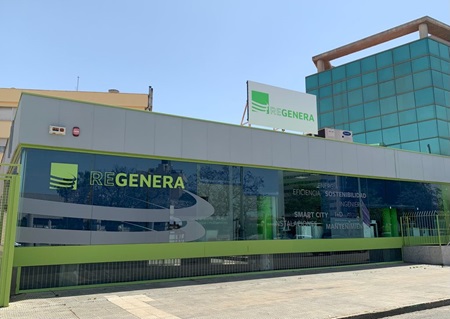
Over little more than a decade, Regenera has built a strong track reco...