A major 1G footprint, once sidelined, now indispensable for resilience
As wireless connectivity shifted to higher frequencies over the past 30 years, 450 MHz retained a distinct advantage with its wide propagation of affordable coverage and resilience. The 450 MHz spectrum embodies a clear paradox: modest bandwidth with high strategic importance. While it offers little glamour compared to the mass-market and high-speed bands of public mobile operators, its reach and reliability make it indispensable for wide-area, mission-critical communications. In this Viewpoint, we examine the evolution of the 450 MHz band and its promising opportunities.
THE EVOLVING LIFE OF 450 MHz
During the 1980s and early 1990s, 450 MHz was the spectrum band used for first-generation mobile networks by most countries in Europe and Asia. These networks primarily used the NMT-450 standard for analog mobile telephony. The 450 MHz band was an obvious choice, as its long wavelength provided exceptional coverage with low infrastructure costs, necessitating significantly fewer base stations compared to higher spectrum bands.
In the 1990s, 450 MHz lost competitiveness when GSM (2G) expanded into the 900 MHz band and shifted to low-cost rural coverage as a result of limited capacity and a weak device ecosystem. CDMA450 revived the band in 2001; consequently, many NMT-450 operators in Europe and Asia migrated, with new networks launching in Africa and South America. However, the 2x5 MHz limit and inadequate device support kept 450 MHz uncompetitive in capacity-driven markets, leaving viable use mainly in rural connectivity and Public Protection and Disaster Relief (PPDR) communications, where low device volumes further weakened vendor support.
Beyond the spectrum limitation, the 450 MHz ecosystem faced three hurdles: (1) adopting mainstream technology; (2) achieving sufficient device volumes; and (3) finding use cases that leveraged the band’s strengths as public mobile networks expanded. Then LTE support resolved the technology dilemma and utilities became the anchor segment, requiring resilient communications for grid operations and millions of smart meters driving demand for devices. In 2015, CDMA450 deployments in the Netherlands and Germany started validating this model, with the Netherlands alone deploying around 3 million devices.
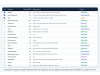
LTE 450 standardization increased momentum as the band offered secure, low-cost connectivity, while legacy private mobile radio (PMR) systems reached end-of-life, and Internet of Things (IoT) digitization created device volumes at scale. Large utility deployments in Germany and Poland accelerated ecosystem maturity. Adoption spread globally: by 2025, LTE in the 450/410 MHz range was live in 20+ countries (see Figure 1), with additional licensing underway, supported by standardized LTE bands in the 380-512 MHz range.


Nowadays LTE 450’s continuous growth is supported by a broad vendor ecosystem. Network suppliers include Airspan, Ericsson, Huawei, Nokia, and ZTE, while mainstream chipset, module, and device providers include Cisco, GE, Hitachi, Hytera, Motorola, Qualcomm, Quectel, Simcom, and Telit. Support from these entities has enabled diverse use cases. Public safety organizations rely on 450 MHZ for resilient communications, while utilities remain the dominant segment, using 450 MHz for grid management and smart metering, driving the largest equipment volumes, particularly through advanced metering deployments.
THE RIGHT APPROACH: OPTIONS & IMPLICATIONS
As 450 MHz grows in strategic importance across critical utilities, public safety, and other domains (see Figure 2), its developmental path now faces three challenges: (1) technology trajectory, (2) spectrum ownership, and (3) national positioning.

Each challenge, explored in detail below, reflects the push and pull between the band’s inherent capabilities and the shifting expectations of the market. While commercial spectrum (e.g., 3.7 GHz to 4.2 GHz) has been adopted globally by mobile operators, 450 MHz sits at a strategic fork as an essential enabler for applications constrained by bandwidth limitations and regulatory fragmentation.
LTE continues to anchor new 450 MHz deployments, but in a landscape where 5G is the new commercial reference, is a shift to 5G relevant for the band?
Persistent questions pertain to the technology trajectory of the band. Should it undergo a shift to 5G, or should the industry double down on LTE investments? While LTE offers reliability, 5G — complemented by the expanding role of 5G RedCap — is establishing itself as the key commercial reference point (see Figure 3).

But before we evaluate the band’s standing and future positioning, we must ask a series of guiding questions:
Technology trajectory — Our take
The move from CDMA to LTE in the 450 MHz band was a natural step that extended the band’s relevance for more than a decade. LTE still meets the long-cycle needs of utilities and critical infrastructure, offering stability, coverage, and cost-efficiency. Operators can already adopt a 5G Core running LTE radios while introducing 5G RedCap devices with LTE fallback to begin their 5G transition. Full 5G RAN deployment, supported by Release 18 and RedCap advances, enables selective higher-value, latency-sensitive, or integrated industrial use cases.
At the same time, deploying 5G in the RAN is limited by spectrum: LTE and 5G can share a base station (if 5G-ready and software-upgradable) but cannot share the small 450 MHz bandwidth efficiently.
Therefore, most operators must choose whether 5G is relevant. LTE remains the practical baseline, supporting mission-critical and IoT workloads, especially given the large installed base of LTE devices that will remain for years.
Still, operators must prepare for evolution by building neutral, interoperable platforms aligned with 5G standards and ecosystems — starting with moving to a 5G Core and introducing 5G RedCap devices as soon as viable. This strategy preserves 450 MHz as a resilient foundation for critical communications while enabling gradual evolution to LTE as the workhorse, targeted 5G where justified, and a path toward 6G capabilities, such as integrated sensing, native IP, and SIM-less IoT connectivity.
Should 450 MHz spectrum be licensed to telecom operators or industrial stakeholders?
Globally, 450 MHz spectrum is increasingly licensed to industrial players, primarily utilities, which deploy it as dedicated private networks. These networks meet mission-critical needs: coverage, resilience, and deterministic performance that public mobile networks cannot ensure. Incentives and deployment priorities are naturally aligned, as license holders are also the end users (e.g., grid automation, field operations, pipeline monitoring, industrial IoT). This alignment has underpinned successful programs like 450connect in Germany and Aramco Digital’s 450 MHz network in the Kingdom of Saudi Arabia, where ownership and operations sit directly with the industrial beneficiaries.
By contrast, 450 MHz licenses awarded to telecom operators have struggled due to the lack of an inherent customer base. Even successful telco-led deployments operate more like utility-grade parallel networks than extensions of consumer mobile services. The 450 MHz band follows a different business logic: nationwide deep coverage, low device density, and high reliability, none of which fit traditional mobile retail or wholesale models. Consequently, very few telco-driven consumer propositions in this band have succeeded.
In Germany, the 450 MHz band was split between Inquam and Deutsche Telekom from 2004, but both failed to establish a viable business due to limited spectrum. Sustainability emerged only when Inquam (later 450connect) began collaborating with utilities from 2016 to build regional CDMA450 networks, creating momentum for a national LTE 450 platform tailored to utility needs.
Responding to this alignment, regulator BNetzA prioritized critical infrastructure use, launching a 2020 process that awarded the band to 450connect in 2021. German mobile network operators did not bid, viewing the market as niche, politically sensitive, spectrum-constrained, and commercially unviable for them.
A similar pattern played out in Brazil. Mobile operators held but did not use 450 MHz licenses, prompting regulator Anatel to revoke or reassign them due to prolonged nonuse and the need to support mission-critical and utility applications. Litigation briefly slowed the process, but by 2023–2024, the market converged on a new model: private network authorizations for utilities, including Neoenergia’s April 2024 authorization and new station licensing and pilots by CEMIG and others.
These cases illustrate a clear regulatory trajectory: when 450 MHz is not tied to committed industrial use cases, regulators tend to reallocate it to players capable of deploying mission-critical networks.
However, when use cases and strategic partnerships are in place from the outset, telcos can be highly effective stewards of the 450 MHz band. The KPN-Alliander model in the Netherlands is a strong example: KPN deployed a dedicated 450 MHz network specifically to serve Alliander’s utility-grade requirements, combining the telco’s operational expertise with the industrial player’s clear use-case leadership. Similarly, we see other cases where telcos maintained their leading role over time in 450 MHz deployment.
When backed by industrial partnerships and long-term commitments, telco-led models can be both successful and sustainable; for example:
In general, a telco needs to have advanced commitments or high certainty of customer buy-in for its ownership and operator role. Otherwise, telcos risk deploying networks that have no business case.
Spectrum ownership — Our take
Successful 450 MHz deployments are consistently characterized by alignment between spectrum rights, investment incentives, and clearly defined use cases. When this alignment exists, the band has been dep

cloud technology axon

Avant Devices has launched an investment round on Startupxplore, Spain...