For years, business growth has been associated with moving faster than everyone else: generating more revenue, entering new markets as quickly as possible, or scaling without looking too far back. However, from day-to-day experience working with SMEs and investors, one thing becomes clear time and again: not all growth is attractive to capital.
Today, investors are looking for more than eye-catching figures. They are looking for projects that know how to grow thoughtfully, that understand their limits, and that build long-term value. This article outlines some of the sustainable growth strategies that, in practice, make a real difference when it comes to attracting investment.
1. A clear and scalable business model
It may seem basic, but it isn’t. Many interesting projects fall short on something as simple as clearly explaining their business model. When a company knows exactly how it generates revenue, what value it delivers to customers, and how it can grow without costs spiralling out of control, the conversation with investors changes completely.
Scalability does not always mean aggressive growth. In many cases, it means organising processes, standardising services, or leveraging technology to grow better, not just faster.
2. Growing with data, not just intuition
Entrepreneurial intuition is important, but when it comes to attracting investment, data is what matters. Companies that measure what they do, understand their numbers, and make decisions based on metrics inspire far greater confidence.
Indicators such as margins, customer acquisition costs, profitability by business line, or cash flow evolution are now part of any serious conversation with investors. It’s not about having perfect metrics, but about knowing how to interpret them and use them to improve.
3. Smart revenue diversification
One of the risks investors identify most quickly is excessive dependence on a single client, product, or channel. When an entire business rests on one pillar, any unforeseen event can put it at risk.
The most solid growth strategies usually focus on coherent diversification, such as:
Diversify, yes—but without losing focus.
4. An aligned and professional team
Behind every attractive project are people capable of executing it. Investors don’t just invest in ideas; they invest in teams. A complementary, aligned team with clearly defined roles provides enormous reassurance.
Moreover, knowing how to surround oneself with external profiles—advisors, mentors, or board members—is often a sign of business maturity. Acknowledging that you don’t know everything and relying on others is, paradoxically, a great strength.
5. Prudent and transparent financial management
Sustainable growth requires financial discipline. No one expects a company to have everything under control from day one, but there should be a clear understanding of the numbers and responsible capital management.
Companies that prepare their financial information properly, plan different scenarios, and remain transparent—even when facing difficulties—generate far greater trust. Transparency does not diminish value; it multiplies it.
6. Long-term vision and purpose
Increasingly, investors want to understand where a company is headed, not just what will happen next quarter. Having a medium- and long-term vision, a clear purpose, and a defined idea of the impact the company aims to create brings coherence to growth.
Sustainability, understood in a broad sense—economic, social, and strategic—is no longer an optional extra. It is part of the conversation and part of a project’s value.
Sustainable growth is not about slowing ambition down, but about channelling it effectively. Companies that grow with strategy, data, and the right people are the ones that ultimately attract quality investment.
At Foro Capital Pymes, we work precisely with projects that understand this way of growing and with investors who value solidity over short-term gains. Because when growth makes sense, investment follows.
Valerie Pérez
Head of Companies

cloud technology axon
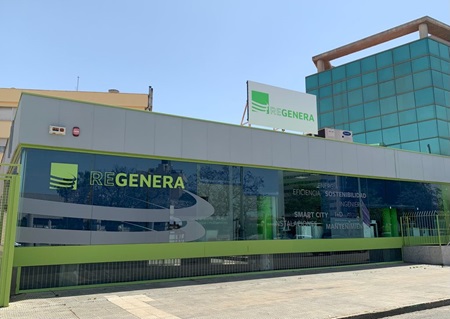
Over little more than a decade, Regenera has built a strong track reco...