The Spanish entrepreneurial ecosystem doubles its value since 2020 to exceed €110 billion in 2024 and establishes itself as a European benchmark in artificial intelligence and climate tech, according to the latest ‘The Spanish Tech Ecosystem Report’ by Dealroom and BBVA Spark.
With an increasingly diverse and attractive market for investment, the country consolidates as one of the major promises in European tech entrepreneurship.
A more mature ecosystem that generates traction and shows growth potential—these are some of the key conclusions from the latest ‘The Spanish Tech Ecosystem Report,’ produced annually by Dealroom in collaboration with BBVA Spark, Kfund, Wayra, Spaincap, Endeavor, GoHub Ventures, and Enisa. The report highlights how the value of Spanish startups has doubled since 2020, surpassing €110 billion in 2024.
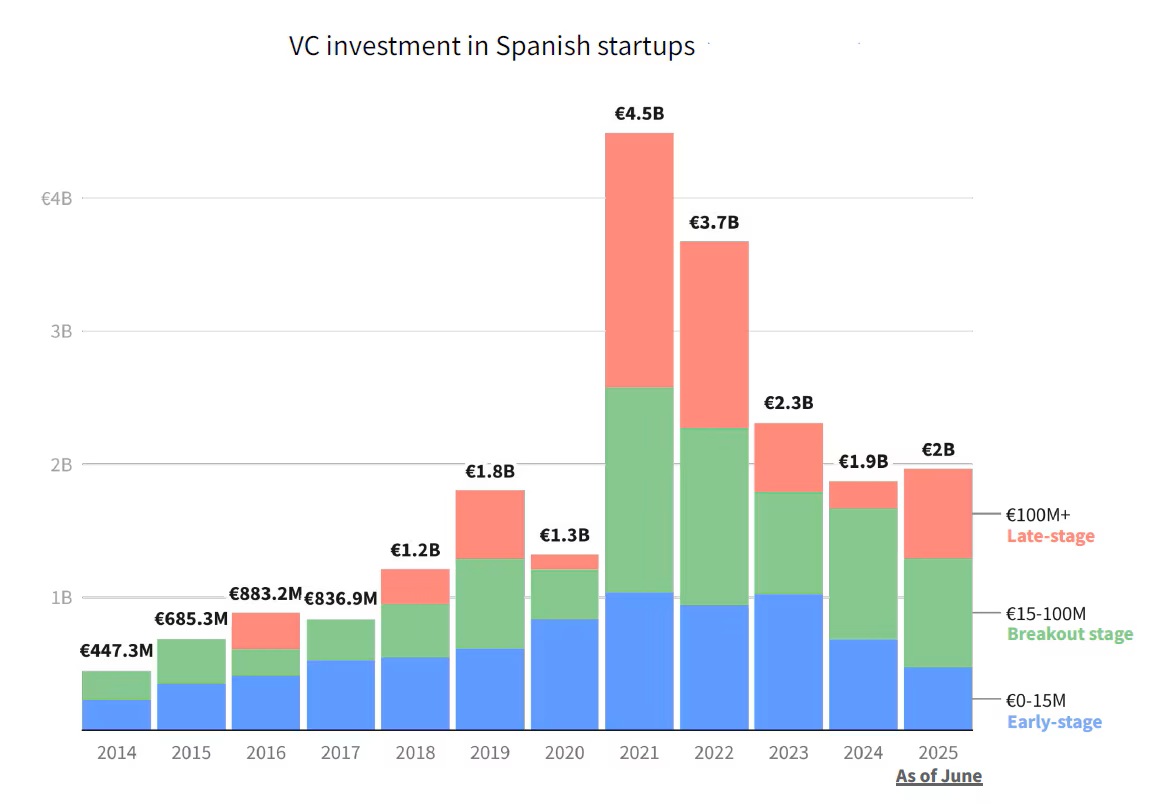
In the same period, thanks to an increase in early-stage investment, Spanish startups raised €1.9 billion in venture capital across 672 deals. This places Spain fourth in terms of number of funding rounds and fifth by total venture capital invested between 2020 and 2024.
Source: The Spanish Tech Ecosystem Report 2025
The outlook is optimistic. By mid-June 2025, Spanish high-growth companies had already secured €2 billion in investments, boosted by an increased number of later-stage rounds, including notable deals like the €25 million financing agreement between BBVA Spark and Exoticca.
These encouraging figures also reflect the entrepreneurial spirit itself, which “looks positively to the future and has a purpose that allows it to advance,” highlighted Lucía Hojman, Head of Business Development in Spain at BBVA Spark. She moderated a panel with prominent entrepreneurs such as Iván Rodríguez, co-founder of Parclick, VIVLA, and Modelia; Lupina Iturriaga, co-founder of Fintonic; Luis Bardají, co-founder and CEO of Trucksters; and Pedro Clavería, co-founder of Playtomic.
Currently, most venture capital is directed mainly at early-stage startups, while 32% finances high-growth companies at more advanced stages. By investor type, venture capital accounts for 32% of financing, while corporate financing makes up 17%—both record highs to date.
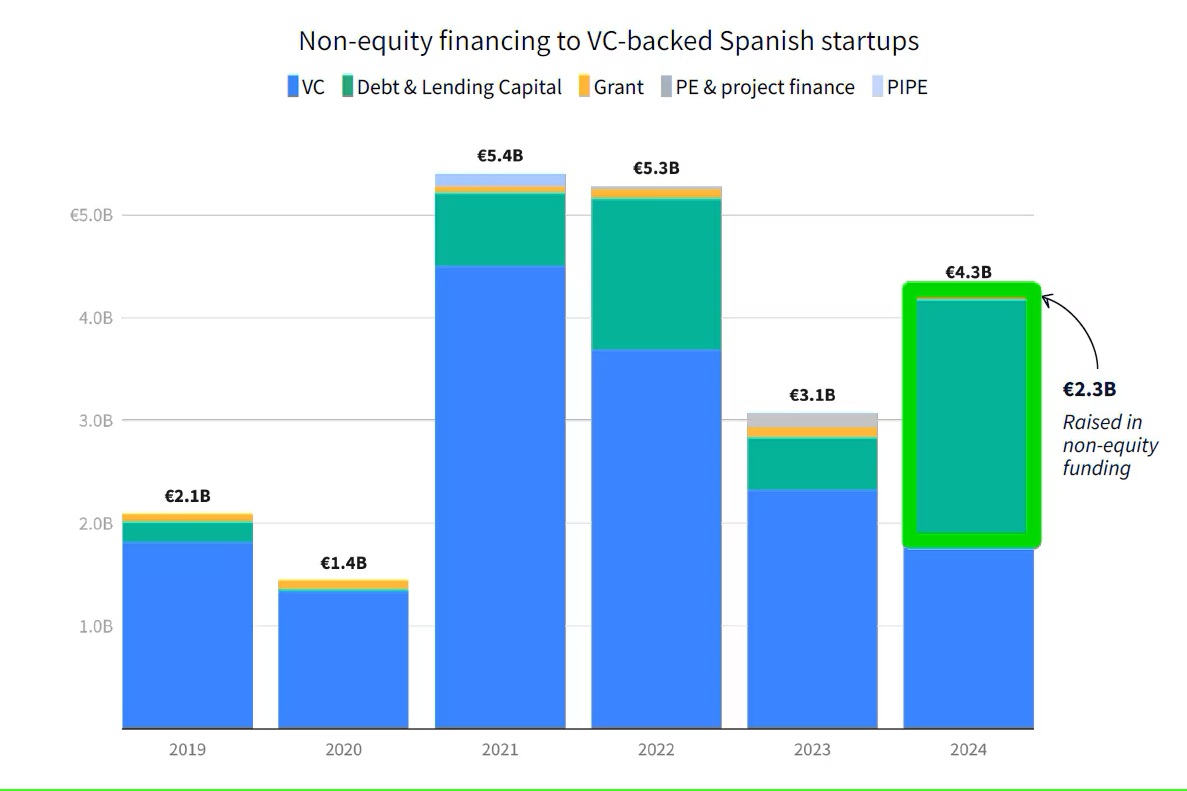
Among financing types, venture debt stands out as a key highlight of the report. Available through BBVA Spark’s offering, this non-dilutive financing solution has become crucial for scaling startups in later stages. In 2024, this financing alternative reached €2.3 billion.
Source: The Spanish Tech Ecosystem Report 2025
However, some challenges remain. Spain’s “Series A” round graduation rate continues to be below the European average, with only 20.4% of startups reaching this stage. Nevertheless, those that do pass this phase match or exceed the average performance of other European countries.
With the ecosystem’s strong performance in 2024 and impressive figures in Q1 2025, Spain is increasingly attractive to foreign investors. “Spain is back on the radar of major international funds, at the same level as France or Germany,” noted Tomás Güida, Investment Manager at Portuguese early-stage venture capital firm Shilling VC, during a panel moderated by Paloma Castellano, Managing Director at Wayra Spain, which also featured key players like Guillermo Palacios, Communications Lead at Enisa; María de Lera, Investment Director at KFund; and Rafaela Andrade, Partner at Mundi Ventures.
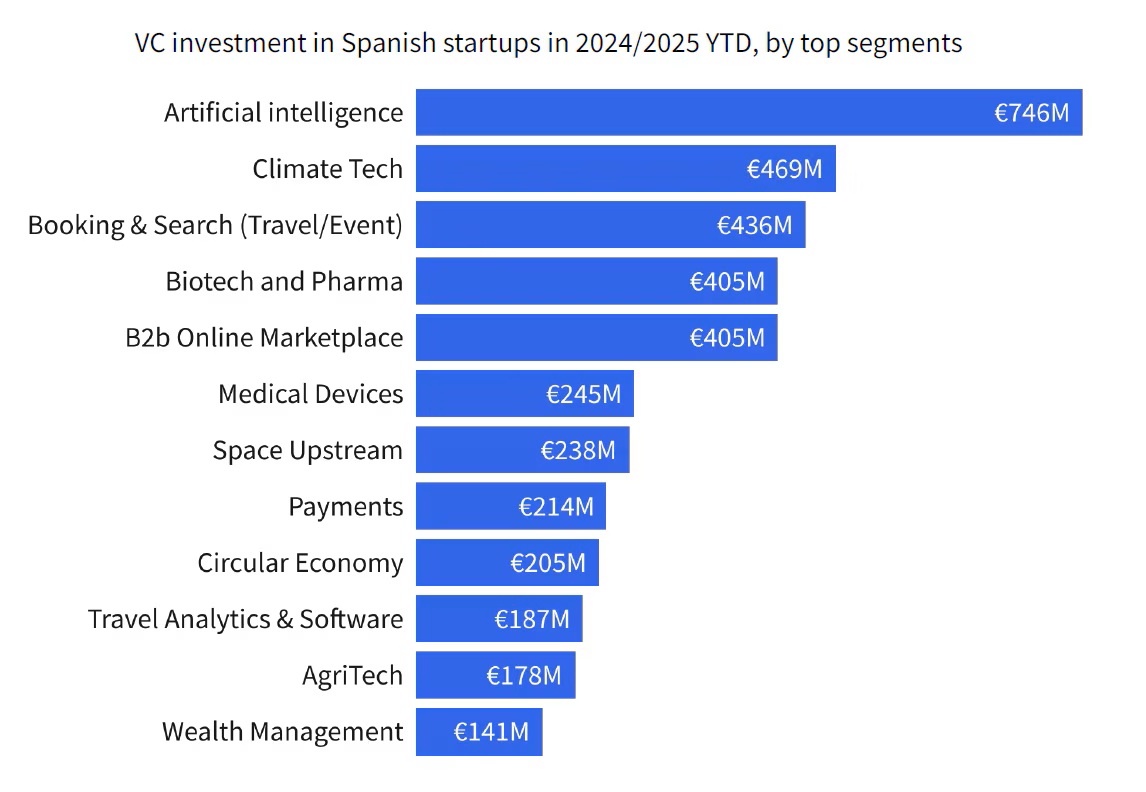
In 2024, AI and climate tech emerged as the top verticals attracting investment, each drawing more than €300 million. Investment in AI has positioned Spain as the fifth largest European hub for this technological trend: since 2020, AI has attracted over €2 billion, fueled by industries like healthcare, where over 250 startups develop AI-powered applications. “Spain is one of the countries with the highest life expectancy and boasts excellent public and private healthcare infrastructure. Combined with our great talent and AI, this creates a very attractive investment proposition,” said Guillermo Palacios from Enisa, the Spanish public entity that finances startups.
Climate tech follows closely behind, aligning Spanish entrepreneurship with global technology and sustainability priorities. “Spain’s historical leadership in renewables puts the country in a very strong position,” explained Rafaela Andrade from Mundi Ventures, a global venture capital firm investing in early-stage and growth tech companies.
Source: The Spanish Tech Ecosystem Report 2025
To boost Spain’s position as a tech hub, organizations like Estech and Adigital have proposed creating the España Tech Alliance, inspired by models like La French Tech. This initiative aims to align public and private efforts through a national tech agenda, global ambassadors, and campaigns such as Spain Up Nation. Proposed reforms include scaleup certification, promoting IPOs, and a “TIBI”-type model to attract institutional capital.
A second generation of leaders who found success with startups like Tuenti, Clicars, or Wallapop is driving the ecosystem’s momentum. Entrepreneurial talent is more prepared and connected than ever: 80% have postgraduate or higher education, and over half launch ventures in teams of two or more. Most successful startup founders were aged between 31 and 38 when starting their projects, like Lupina Iturriaga of Fintonic: “At first, I thought entrepreneurship was for others, until I understood it’s something you become. While working in banking, I saw things I wanted to change or do differently—that’s what motivated me to start.”
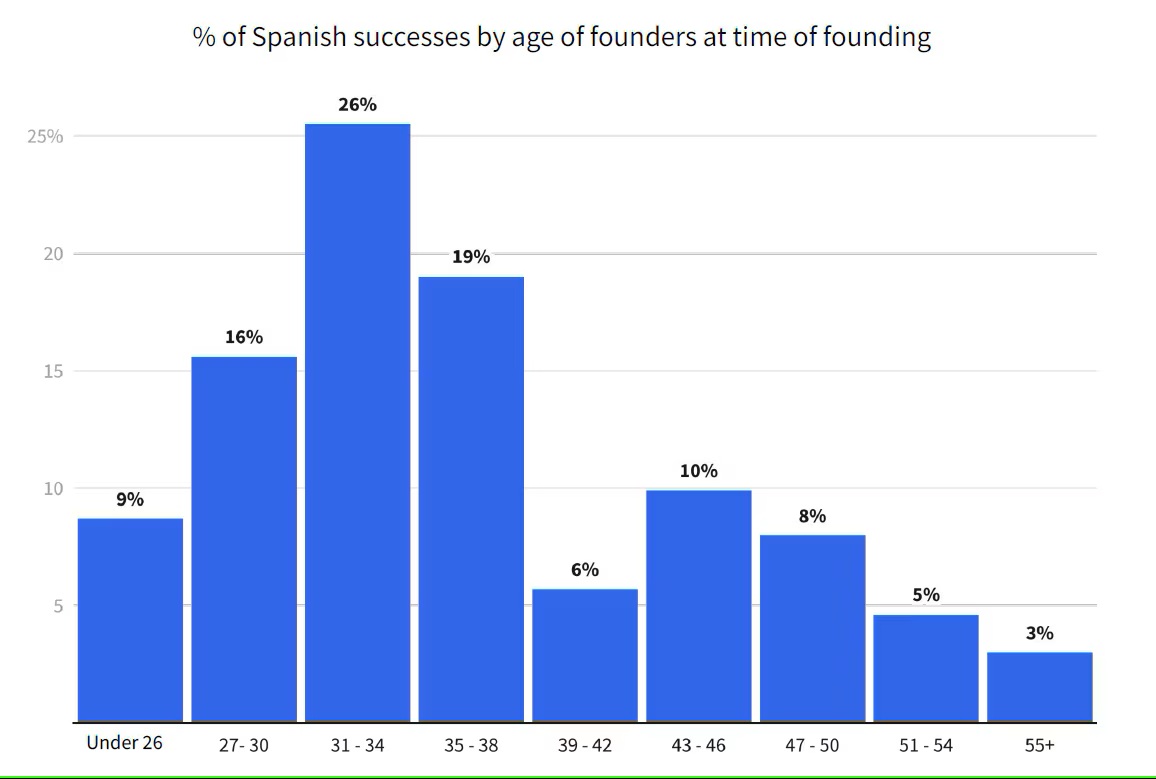
Source: The Spanish Tech Ecosystem Report 2025
Education and previous career experience explain part of Spanish founders’ success. The Polytechnic University of Catalonia, Polytechnic University of Madrid, and ESADE are among the main talent pools for the entrepreneurial ecosystem. Nearly 60% of entrepreneurs have business or economics training, and 23% studied engineering or computer science. Talent is becoming increasingly sophisticated and professional. “Having a tech background helps you face the abyss of entrepreneurship with less fear. Most successful entrepreneurs have two legs: they understand technology and business,” noted Iván Rodríguez from Modelia.
In short, the Spanish entrepreneurial ecosystem is at a critical point of consolidation and growth. With a more mature market, diversified funding sources, and a focus on AI and climate tech, Spain is positioned as one of Europe’s most dynamic and innovative hubs. The challenge now is to maintain this growth pace and ensure access to capital, talent, and international investors that high-growth companies need to compete globally. As Lucía Hojman from BBVA Spark put it, “With their spark, purpose, and mission, entrepreneurs are an example of how to keep contributing to the ecosystem’s growth.”

cloud technology axon

Global M&A activity remained resilient during the first half of 2026, ...